Effective spray criteria

In part two of this Insights focus on droplets, we look at how operators need to concentrate on five key aspects to achieve an effective spray application. These include:

  • Dose – Sufficient dose – μg/cm2 of plant
  • Concentration – μg/ml of spray mix
  • Target – most crop protection products only move upwards in the xylem tissue (cells)
  • Coverage%: Contact action products only kill or protect what they touch
  • Distribution: Qualitative – 50% coverage would be considered good, but not if it is all on one end of the leaf.

(μg = microgram)

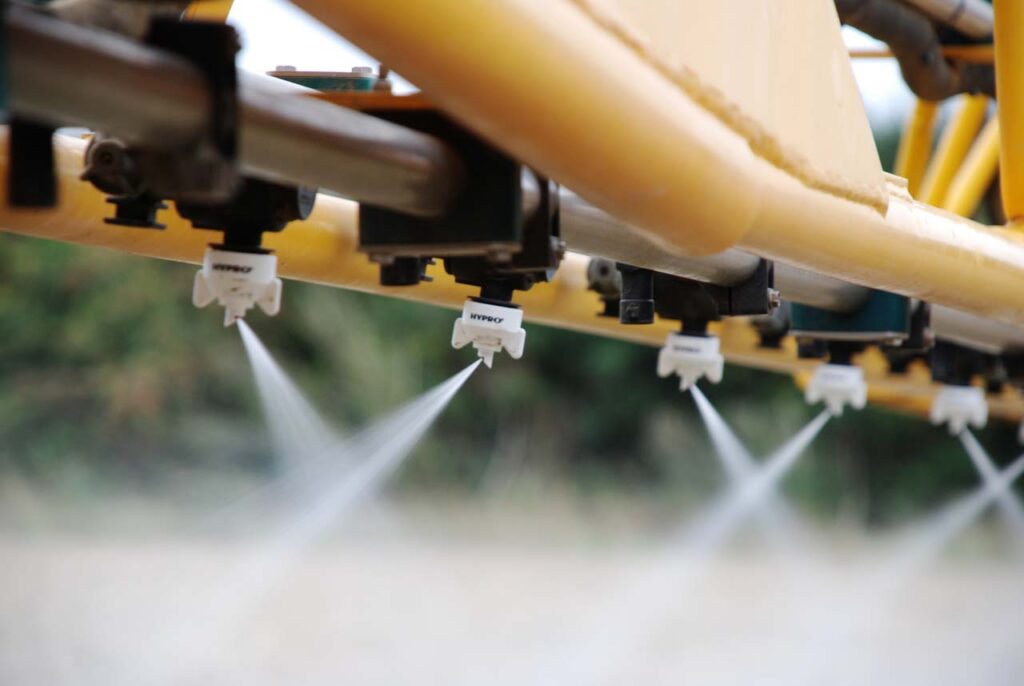
This is where careful nozzle selection plays an important role. Operators need to select the right size to apply the correct dose of the spray mix to the designated target, with the correct coverage and distribution to hit the pest or plant the right place on the plant.

Does drop size matter?

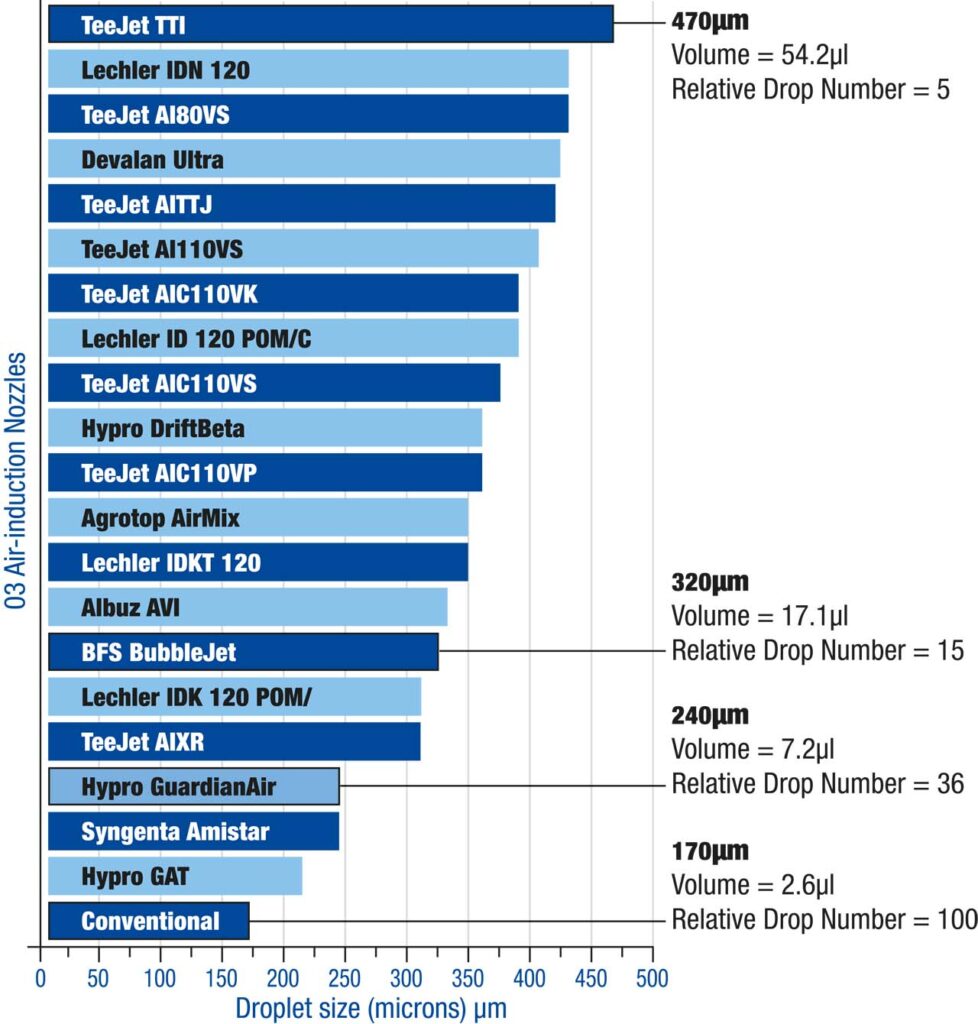
Ten years of research reveals a small drop air inclusion nozzle, such as the GuardianAir, outperforms the traditional fan jet in all trials. Similarly 20 year’s of cereal fungicide trials have found a small drop air inclusion nozzle outperformed the fan jet every time, as well as being more environmentally friendly.

The improved performance measurements – deposition, disease control, weed control, and yield, speak for themselves. The difference comes from the control of the spray. The larger drops carry momentum further into the crop so tend to go where they were pointed, rather than relying on luck for their deposition (dose). For the same reason their patternation (coverage and distribution) is likely to be better too.

Aim for the target

You will get more spray on any target, if you aim at it. A spray with an angled trajectory will apply more spray to small upright targets – such as grass weeds, and distribute more spray through a horizontal canopy – such as potatoes.

Conversely, a spray with a vertical trajectory will get more spray through a vertical canopy such as cereals and carrots.

Before angled nozzles became more common, fine, drifty sprays were the spray of choice for 1-2 leaf grass weeds. Trials have since proven a slightly coarser spray with additional energy, from a narrower fan angle performs much better, while minimising drift.

To benefit from an angled trajectory the drops need to have sufficient momentum to overcome the force of gravity. Otherwise the drops will tend to the vertical, because they lose speed after leaving the nozzle, which leads the nozzle designer down the route of larger and/or faster drops.

What about very big drops?

Many countries stipulate 75% to 95% drift reduction applications. In most cases this is achieved by deploying a nozzle that produces very large drops. There is plenty of data showing where such nozzles have produced good results.

However, the low drop numbers/unit spray volume make them vulnerable to poor coverage and poor distribution. This may be improved by increasing the water volume. Where water volumes are increased the concentration is decreased, which will reduce retention of the spray on a foliar target. This in turn may be alleviated by the addition of an adjuvant.

Nozzle choice recommendations

Drop size is just part of the equation for achieving a good result. There is no reason to justify using fine, drifty sprays, so select a small drop, air inclusion (AI) nozzle for most jobs. This is now the standard nozzle for applications in Holland, where traditional fan jets are no longer used.

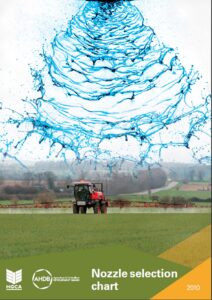
Use the AHDB nozzle chart to decide which one is the best for the task. Use an angled nozzle for the jobs where they have a proven benefit, except if operating in marginal conditions when a small drop air inclusion nozzle should be deployed.

You can download the AHDB nozzle chart HERE:

When selecting a 90% drift reduction nozzle, choose one with the VMD at the smaller end of the AHDB chart. Be prepared to increase water volume and use correspondingly extra adjuvant.

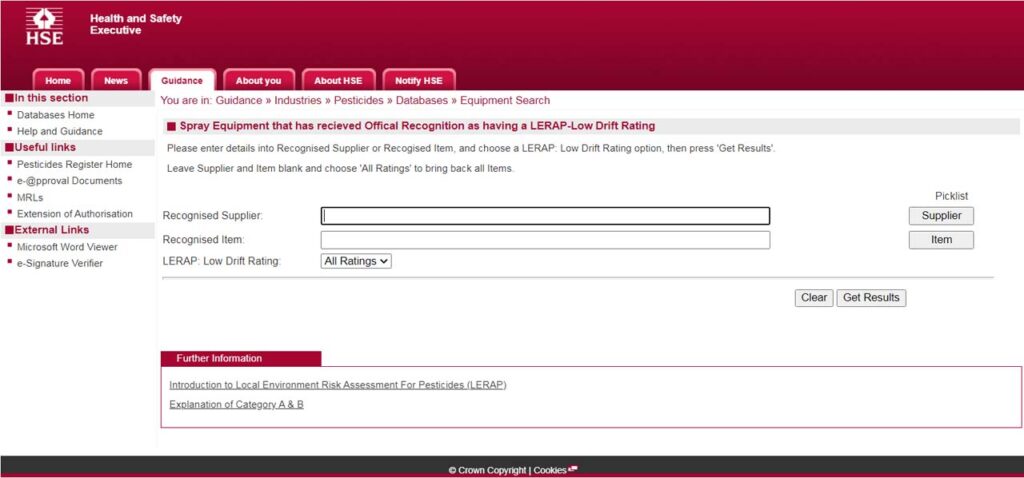
You can find all approved LERAP star rated nozzles HERE:

Need NRoSO or BASIS points?

Get ahead and earn points today with online training.