Essential record keeping
As well as being a legal requirement, pesticide application record keeping is also part of most quality assurance schemes, such as Red Tractor. Accurate and detailed pesticide records, which can be audited against legal and protocol requirements, are also a crucial and fundamental part of crop traceability.
Training records
Ongoing training is not just a requirement of farm assurance standards, but also a legal requirement under the Plant Protection Products (Sustainable Use) Regulations of 2012, which require operators to keep up to date with legislative changes.
Operators should use their City & Guilds/NPTC candidate number, and NRoSO membership number and the expiry date, as part of the record keeping exercise.
These need to be available for inspection and you should also be ready to show a record of the training/CPD undertaken.
Storage records
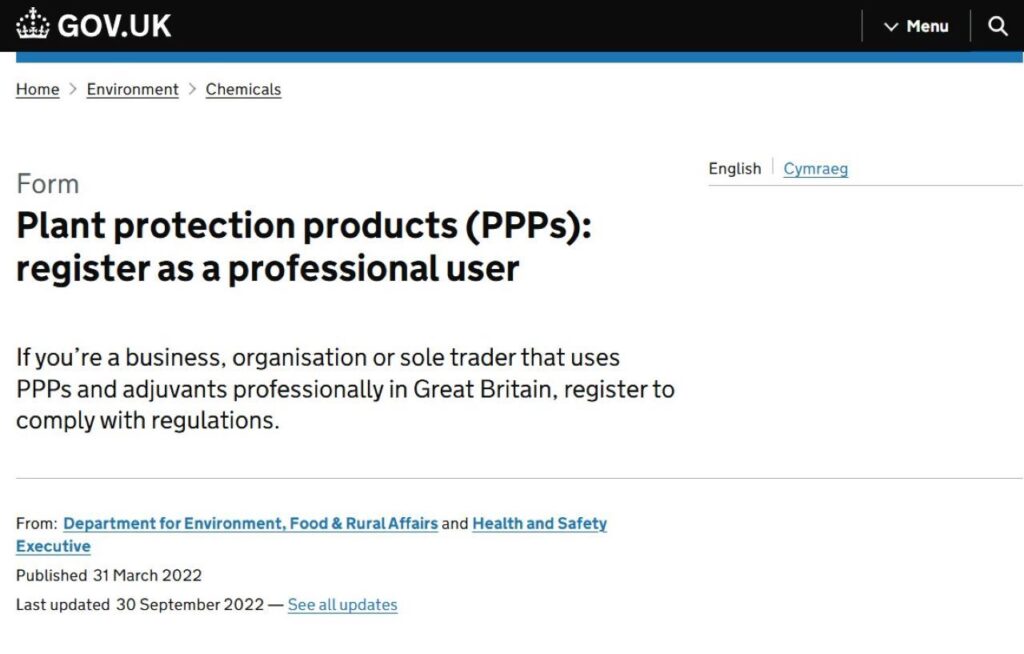
All professional users of plant protection products (PPPs) must register their storage and use on a Health and Safety Executive (HSE) database.
To do this download and complete a spreadsheet, which is available with instructions on the Defra website HERE:
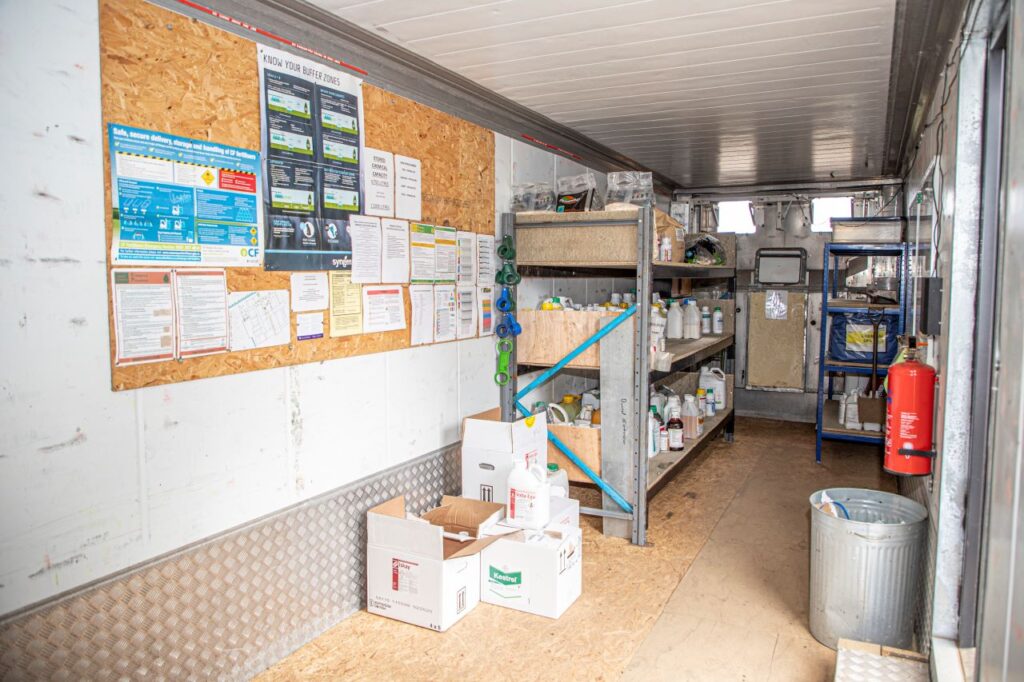
It is also important to maintain accurate and up to date records of products in the store. This should contain the delivery date, pesticide name and MAPP number and the quantity remaining in stock.
This record must be held in the store and a copy kept in a separate location, in case of an emergency. Safety Data Sheets and risk assessments also need to be available.
Applicator testing
While all pesticide applicators require some form of testing, the subsequent record keeping requirements can be complex.
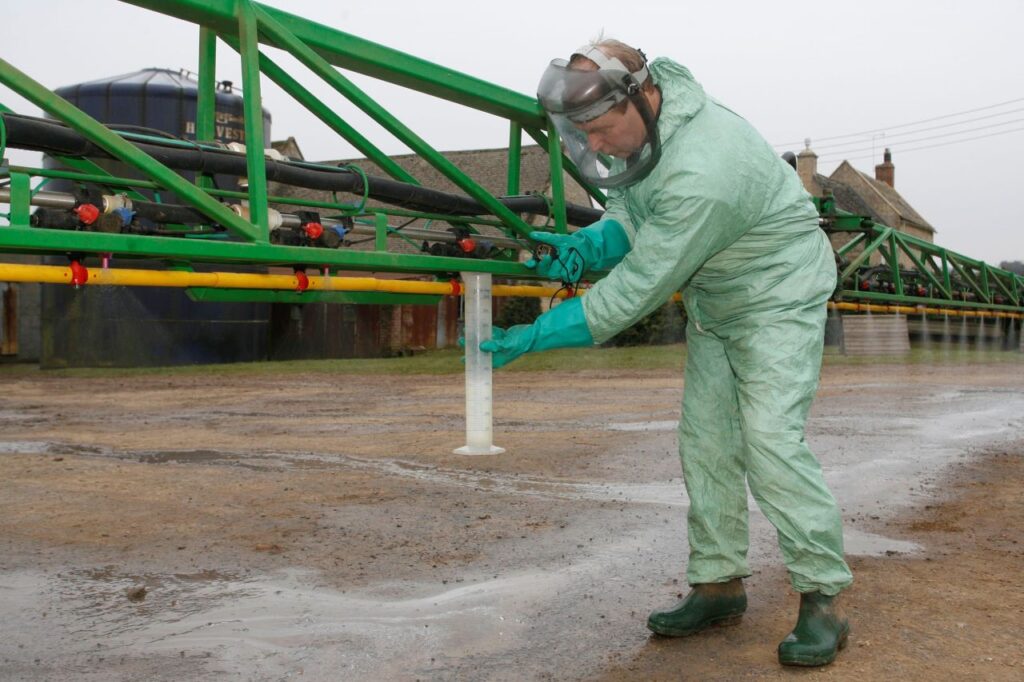
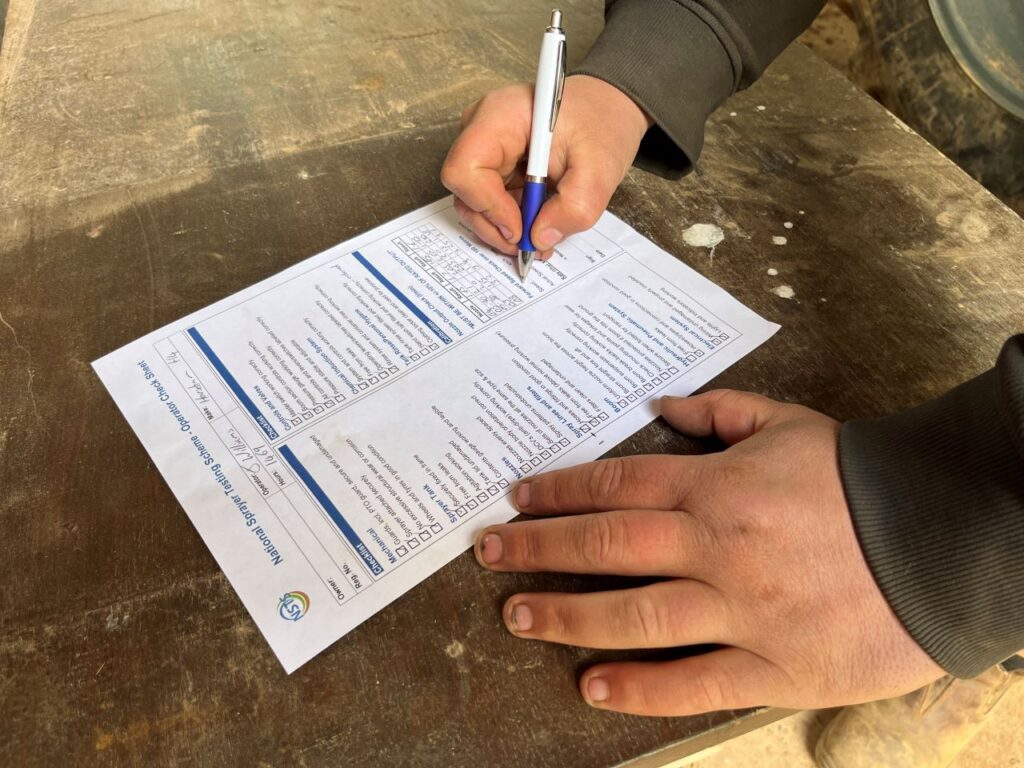
Farm assurance schemes typically require sprayers and applicators to be tested more frequently than the minimum required under the Plant Protection Products (Sustainable Use) Regulations of 2012. The National Sprayer Testing Scheme (NSTS) can provide further guidance on legal compliance.
Whatever testing is undertaken the NSTS test report should be kept as a record and be available for inspection. Records must show applicator testing is up to date and require results to be kept for up to six years to show compliance.
Operators must regularly calibrate applicators and retain a record of calibration for farm assurance standards. Sprayers must be calibrated at least once between seasons, while granular applicators must be calibrated whenever a product is changed.
Application records
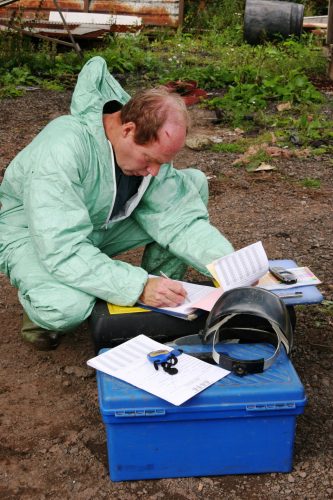
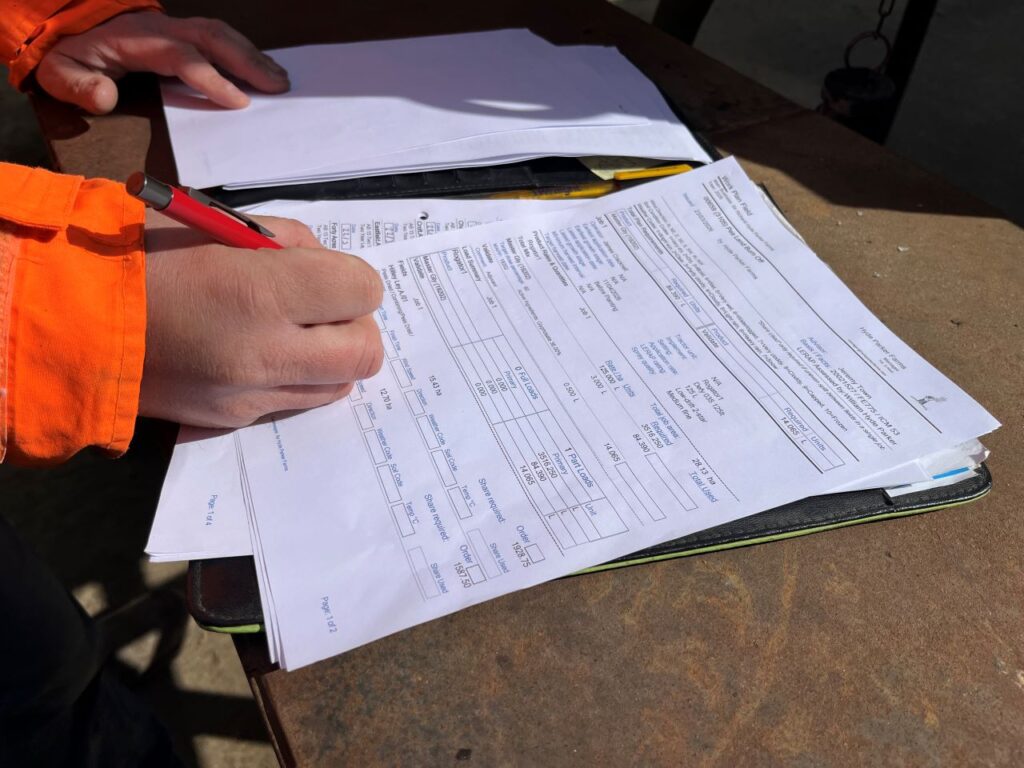
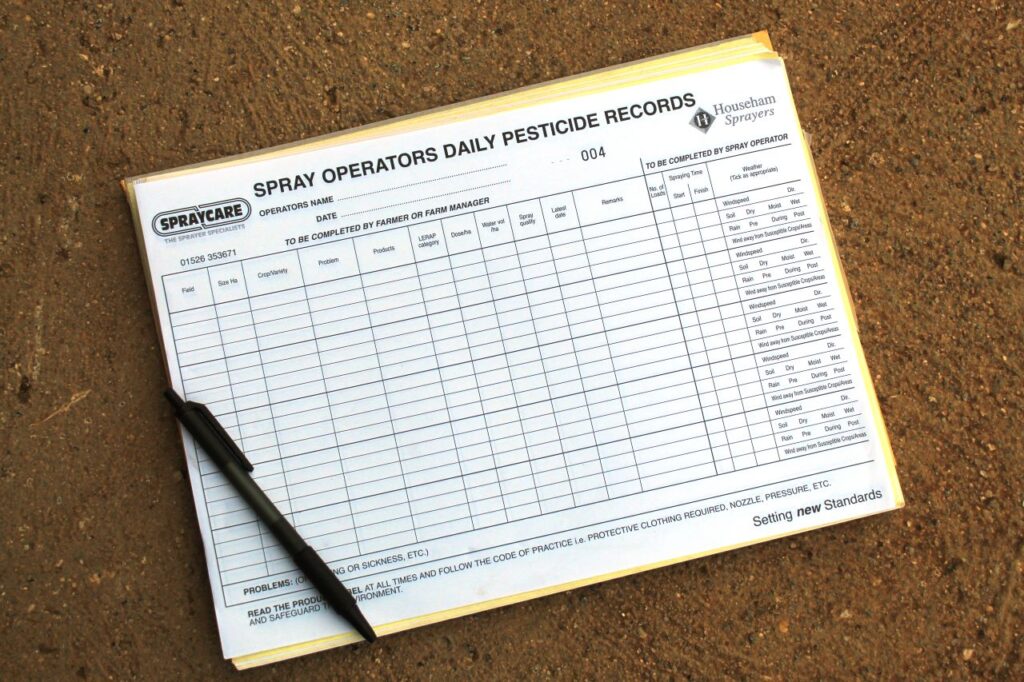
Application records are required by both the Code of Practice and farm assurance schemes and must be kept for a minimum of three years and made available for inspection.
As a legal minimum, the records must contain the name of the product, the time, date and dose of application the area and the crop where the product was used. Some farm assurance schemes also required additional details to be recorded.
Undertaking an environmental risk assessment, prior to spraying, is a requirement of the Code of Practice. Operators should note the risks associated with products, noting any areas of particular environmental importance and the steps taken to protect these.
Disposals
Operators must record the location of any disposals of washings and surplus, dilute spray mix. If sprayed onto a crop area the record should detail the location and show the maximum dose is not exceeded.
Biobeds, biofilters or other areas for product disposals must have a valid permit to show their status.
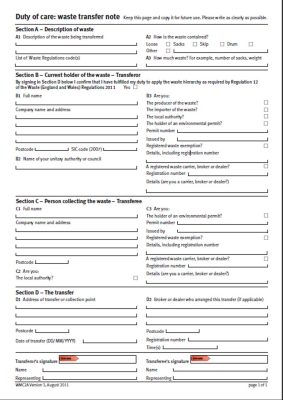
Waste transfer notices showing the disposal of empty containers or unwanted concentrates have to be kept and made available for three years after disposals have taken place.
Record format
It is the responsibility of those who are involved in the pesticide operation to ensure the required records are accurately kept and made available as required to anyone needing to know anything undertaken involving pesticides.
Records can be kept digitally or on paper. However, the law requires some records to be kept for a number of years, while others, such as storage records, are only of use if they are up to date.