Follow a clean nozzle regime
While nozzles may be the one of the smallest items on a sprayer they have a fundamental influence on the application that can determine the success of any treatment.
In practice, a best results and optimum efficacy can only be achieved with correctly functioning nozzles. The nozzle creates the spray pattern, it breaks the liquid into suitably sized droplets and then helps propel these to the target.
Damage, wear or any blockages will reduce the nozzles’ ability to achieve these important functions. At the same time, the nozzle determines the application rate and any blockages will reduce flow, while wear will increase flow – both reducing spray performance.
For a nozzle to successfully fulfil its purpose it must be working exactly as its manufacturer intended and operators must ensure they maintain sprayer nozzles to continue to achieve this.
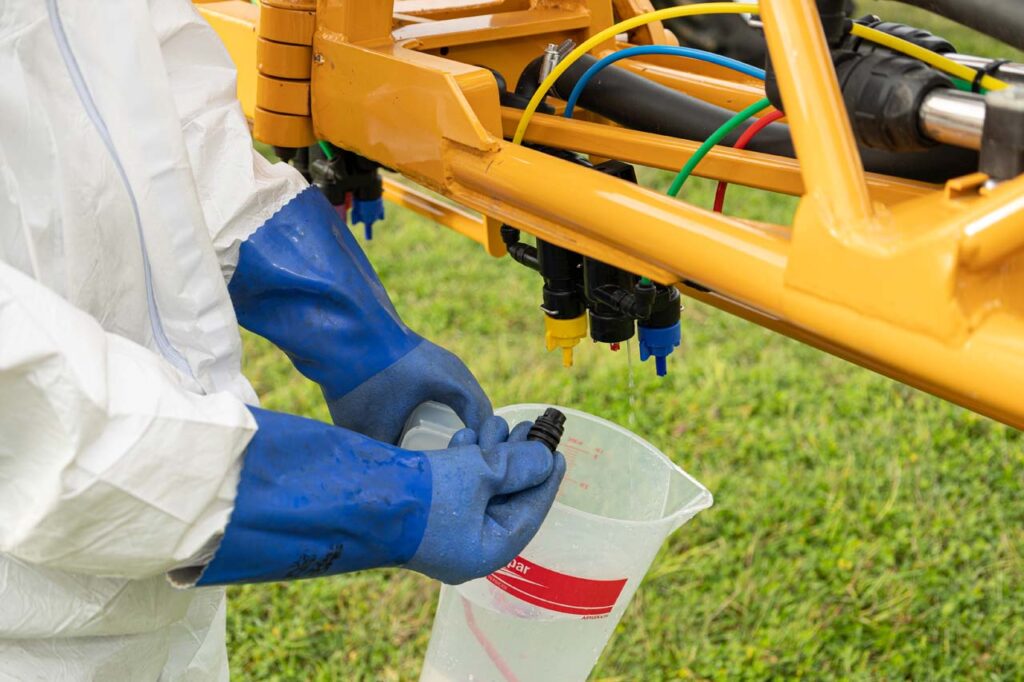
Nozzle checks
It’s important not to overlook operator safety when checking sprayer nozzles. Before carrying out any work or checks, operators should ensure they are wearing the correct PPE to protect them from contamination. Additionally operators need to be aware that nozzles are pressurised parts and need to protect themselves against direct liquid spray.
Visual sprayer check
Operators should first undertake a visual check of all nozzle positions, including the body and DCV, for any damage or missing pieces. They are easily damaged, even though many sprayer booms are now made with nozzles and nozzle bodies ‘shrouded’ by the boom structure or supplied with boom protectors to prevent the boom grounding. Damaged nozzle bodies and nozzles must be replaced.

Spray pattern check
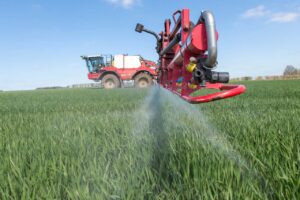
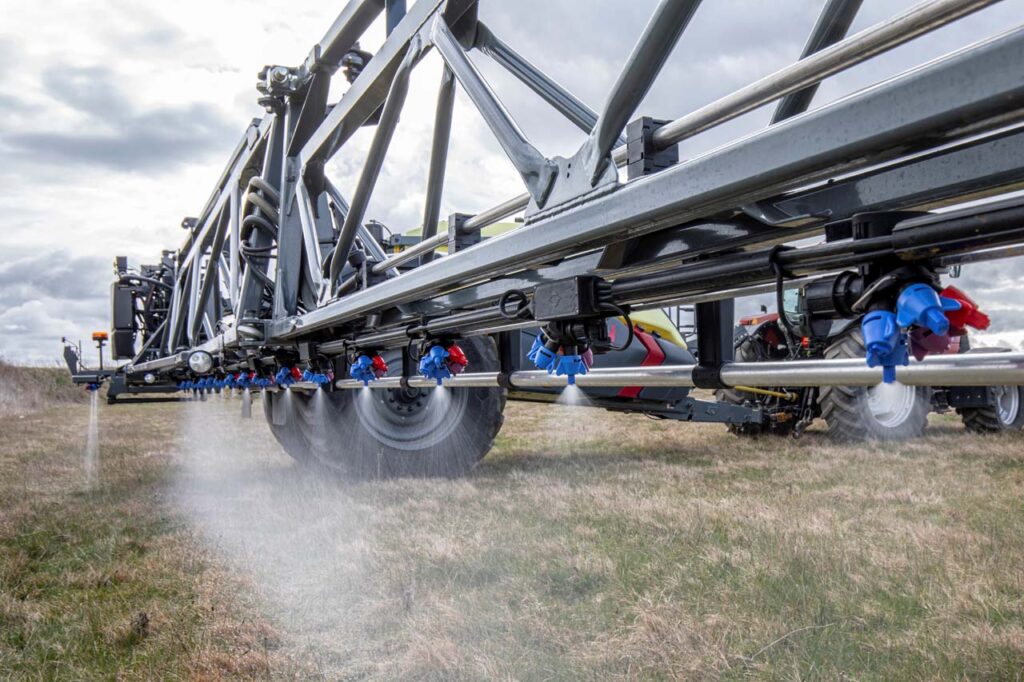
Take time to inspect the spray pattern coming from each nozzle on a static sprayer. The boom height above the ground should be set to the optimum nozzle height given by the manufacturer, typically 50cm above target and sprayer pressure should be higher than what’s typically used – at least 3 bar will normally suffice.
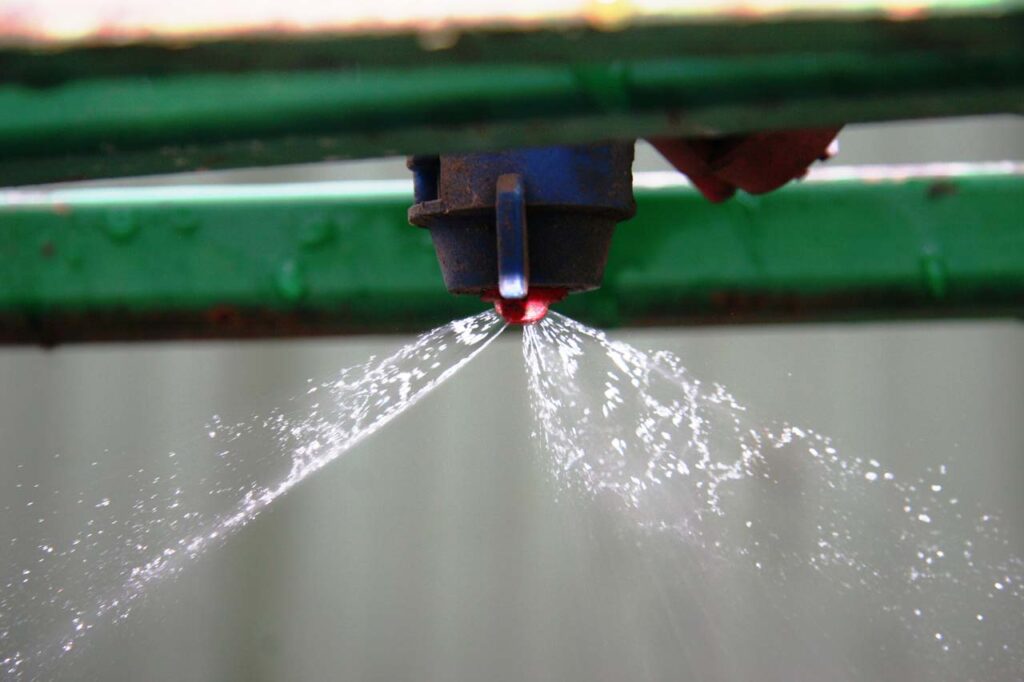
A slightly higher pressure will also help identify any leaks and help make it easier to see the spray patterns. Any nozzles not working correctly should be readily identifiable by an uneven spray pattern. Also, check for evenness of the overlap between nozzle patterns.
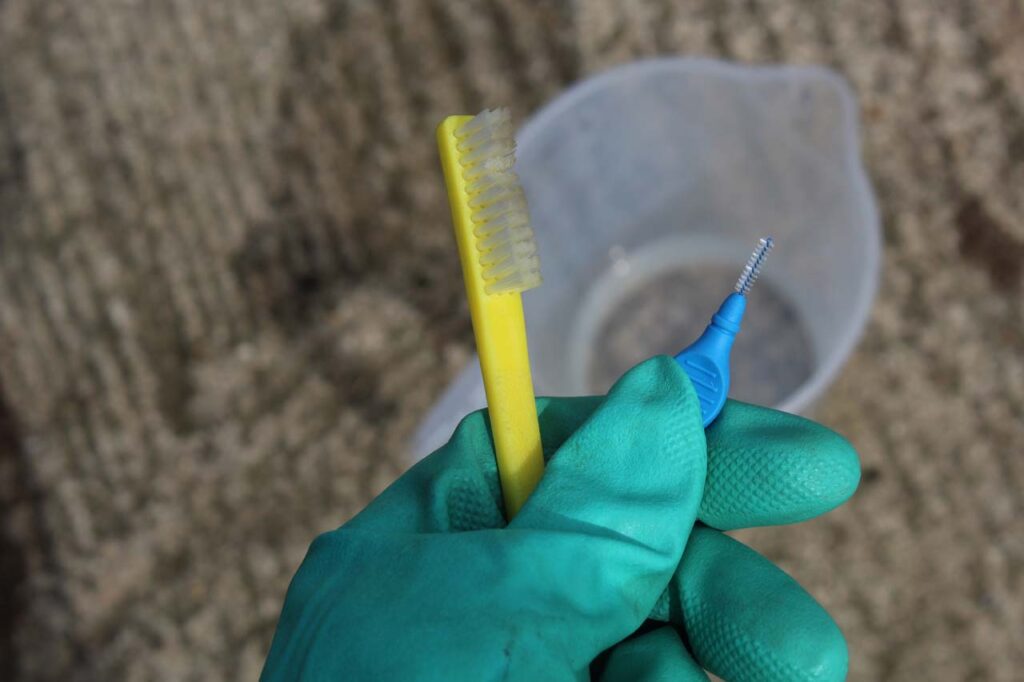
Only use soft brushes, such as toothbrushes, in a jug of water to clean nozzles.
Nozzle maintenance
Any nozzles that are producing an inconsistent spray pattern need to be removed from the sprayer for a closer inspection. They need to be cleaned carefully in a way that doesn’t cause damage. Most blockages can be removed by a soft brush in a jug of clean water.
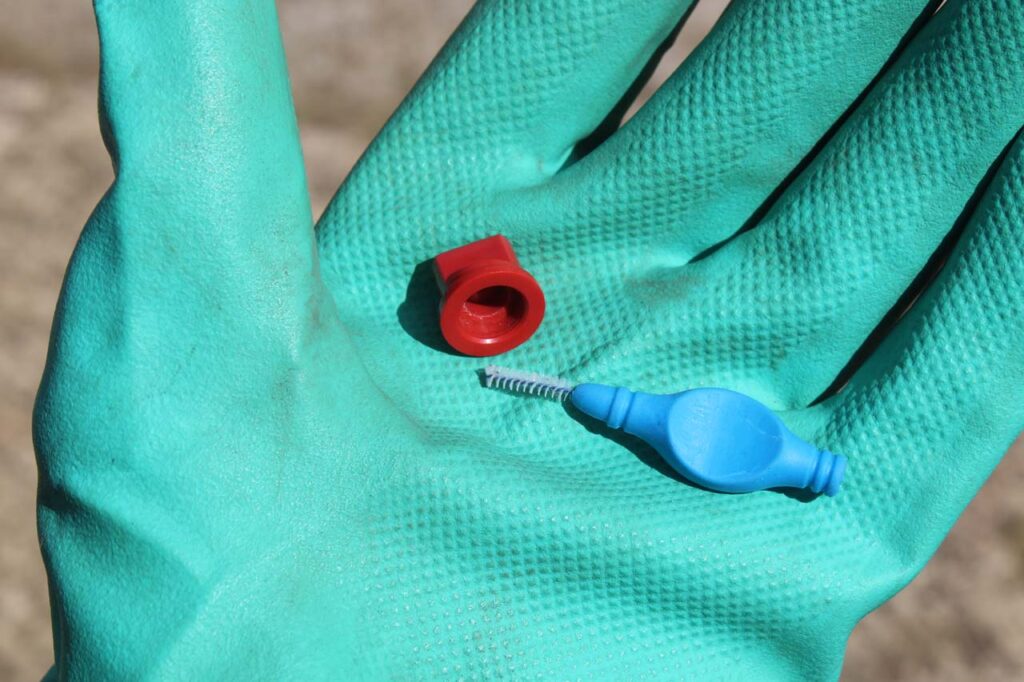
A soft toothpick can be used to removed items from within nozzles, but anything harder must never be inserted into the nozzle orifice, because this can damage the nozzle and cause uneven spray patterns
Nozzle flow rate check
Checking the flow rate (litres/min) will confirm its working correctly. Measuring the volume of liquid that comes from a nozzle in a minute will reveal the flowrate in litres/min. This can be done easily using a measuring cylinder or jug. Compare the output with the manufacturer’s figure for the nozzle and working pressure.
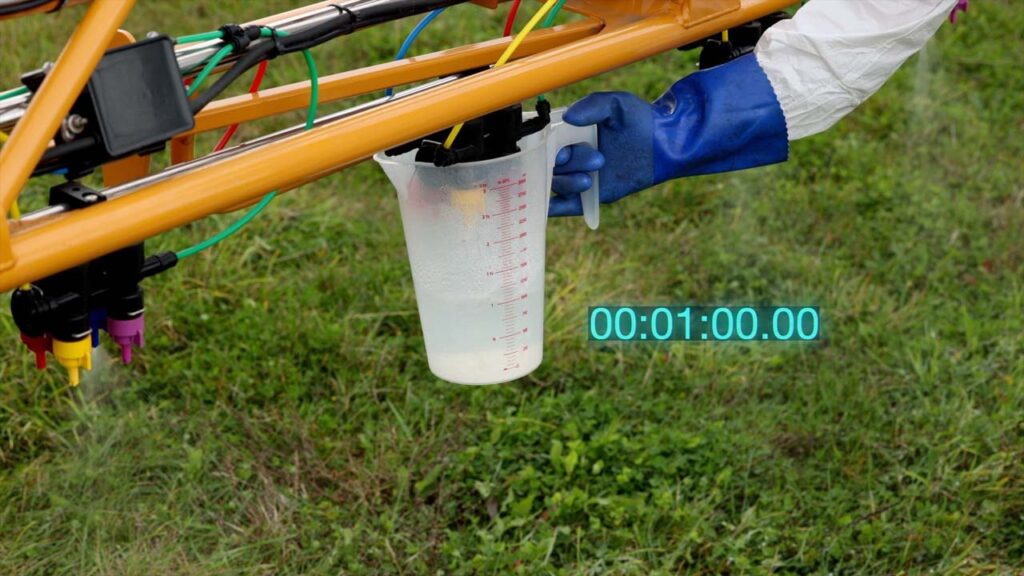
Some operators will check every nozzle on a sprayer, while others are satisfied by selecting individual nozzle points on the sprayer to be checked. Check at least one nozzle per boom section – similar to a calibration test.
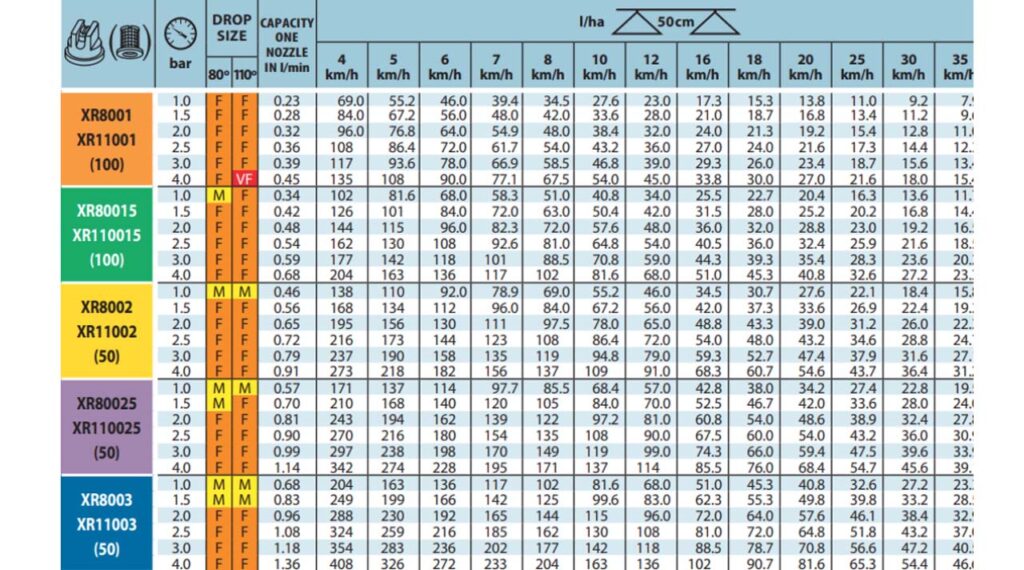
In general, nozzle flow rates should be within +/- 10% of the manufacturer’s stated figure, stated on the nozzle charts, but a more precise +/- 5% figure is readily achievable in practice. Operators should, however, bear in mind that the pressure gauge they are using may not be accurate enough to achieve either result.
According to current NSTS guidance, pressure gauges need only be within +/-10% of the target pressure to pass the sprayer test. This is why some operators will check nozzle flowrate by retaining some new, unused nozzles and comparing the flowrate of the working nozzles to this reference nozzle. This will provide a specific reference figure for their individual sprayer.
Recording the checks
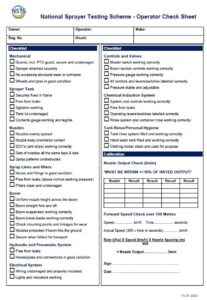
Problems with nozzles do not typically generate fault codes logged on control units, where present. This means operators should record the outcome of their nozzle maintenance checks on the NSTS Operator Check Sheet for future reference, which can be downloaded HERE: