Six steps to cut spray drift
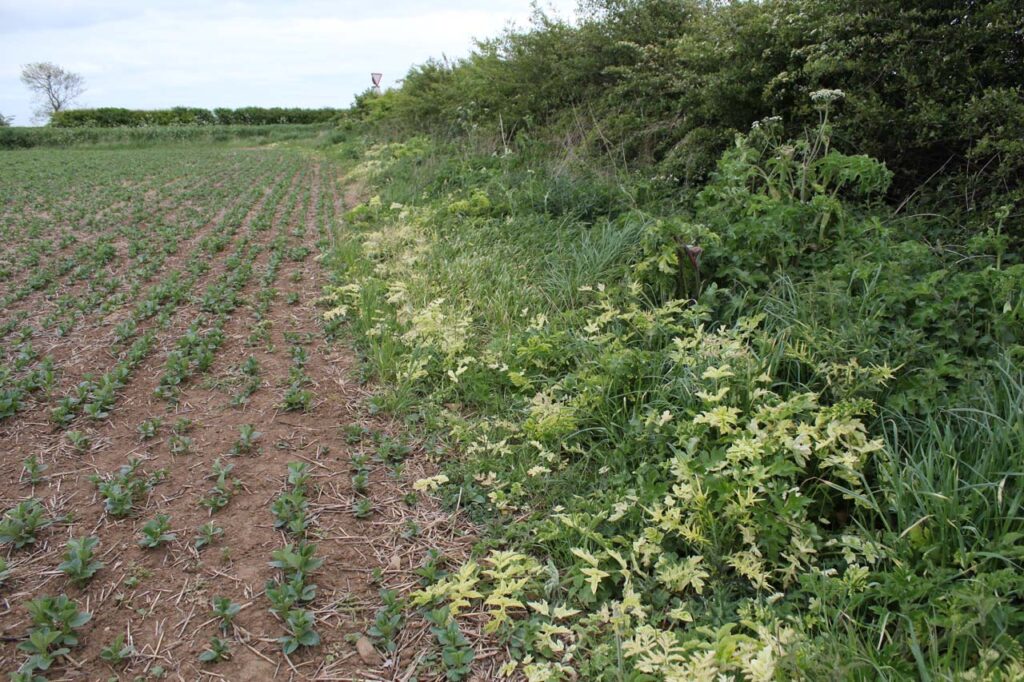
Spray drift is the most visible sign of poor practice, which harms the application, the environment and farming’s reputation. It is incumbent on all operators to understand what causes drift and take measures to prevent it.
All operators must comply with the Plant Protection Products (Sustainable Use) Regulations 2012, which state: “All pesticide applications must be confined to the land, crop, structure, material or other area to be treated. The spray must not drift outside the area of application.”
By paying close attention to each element in this straightforward six step plan can help to improve application efficacy and reduce the risk of drift.
Watch the weather
The weather, most importantly, the wind, has a huge impact on drift. The ideal wind speed for spraying is 1-2m/sec (3-6km/h). This is best measured using a hand-held anemometer, which costs from just £10 up to £50.
If the wind speed doubles, it creates twice as much drift.
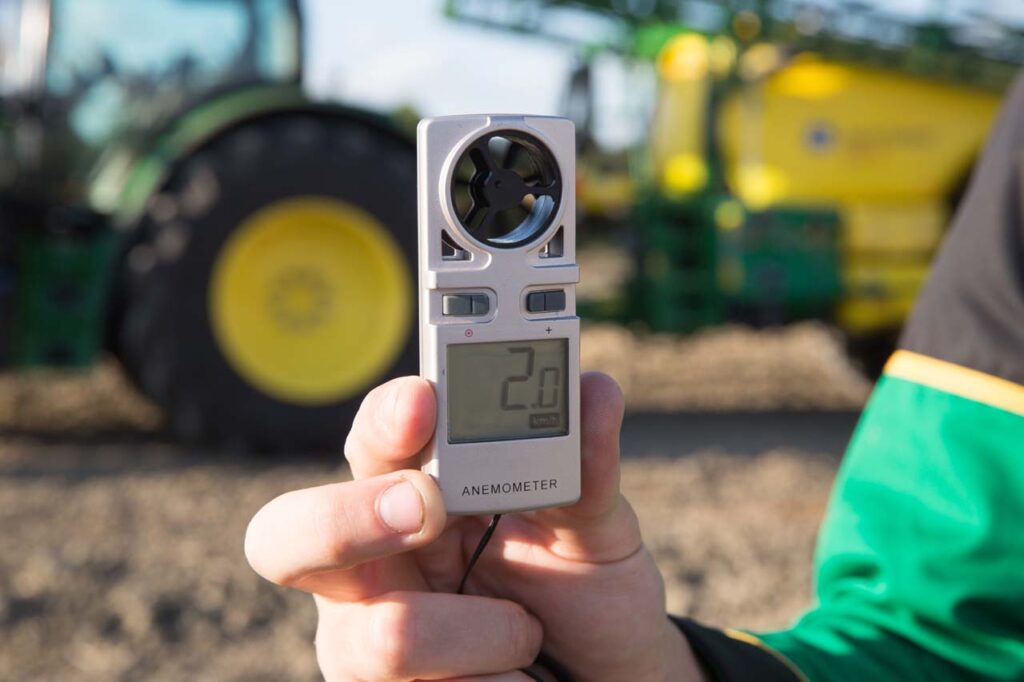
Accurately measuring wind speed at boom height (50cm) often reveals the actual reading is much less than forecasts, which conventionally take their readings at 10m. This can result in more spray days than indicated by the forecast alone.
Spraying with the wind behind you will reduce drift. If you spray into the wind it has the same effect as increasing forward and wind speeds.

Outside indicators can also be used to judge wind speed, with these observations measured on the ‘Beaufort Scale’. This shows in a ‘light breeze’, at between 1.5-3.3m/sec, you can feel the wind on exposed skin and leaves rustle in the tree. But, if leaves and twigs are in constant motion this indicates a ‘gentle breeze’ with a wind speed of about 3.3-5.5m/sec.
Boom height
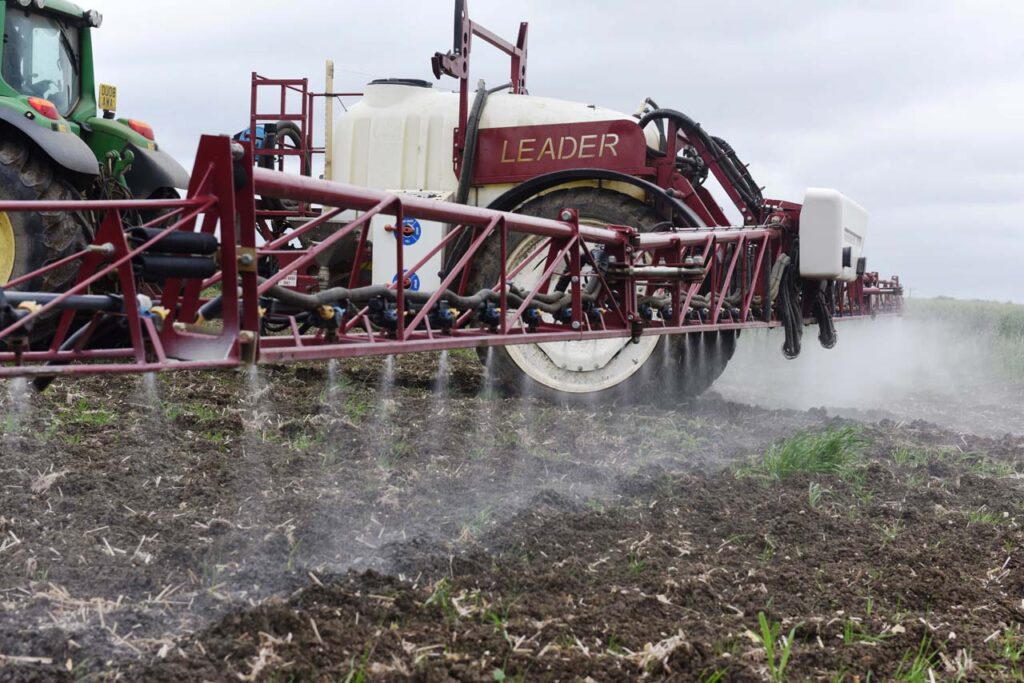
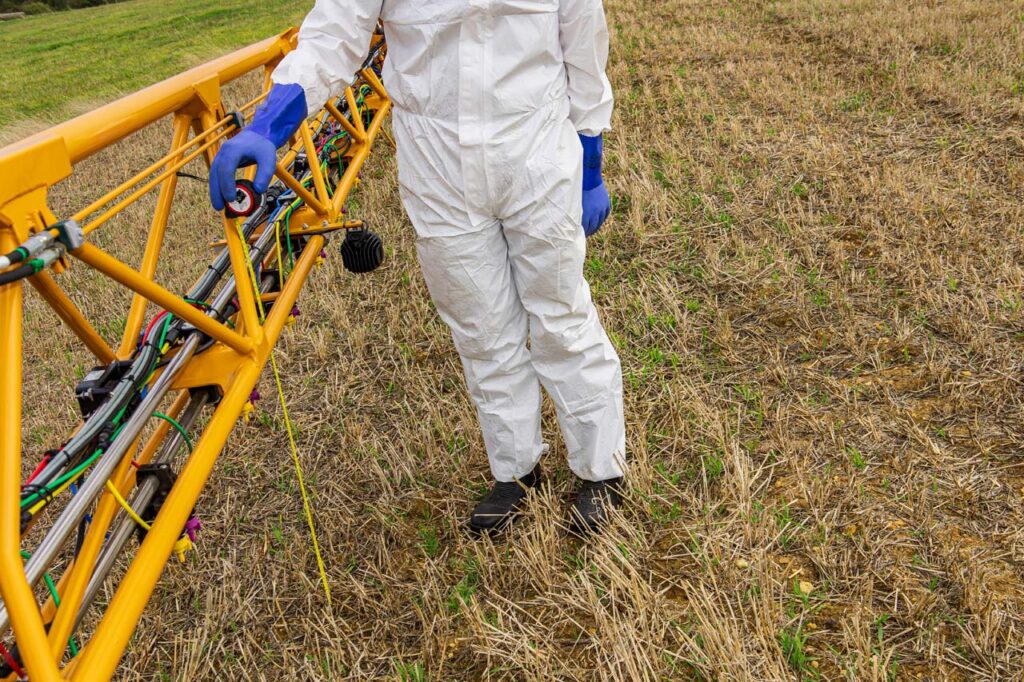
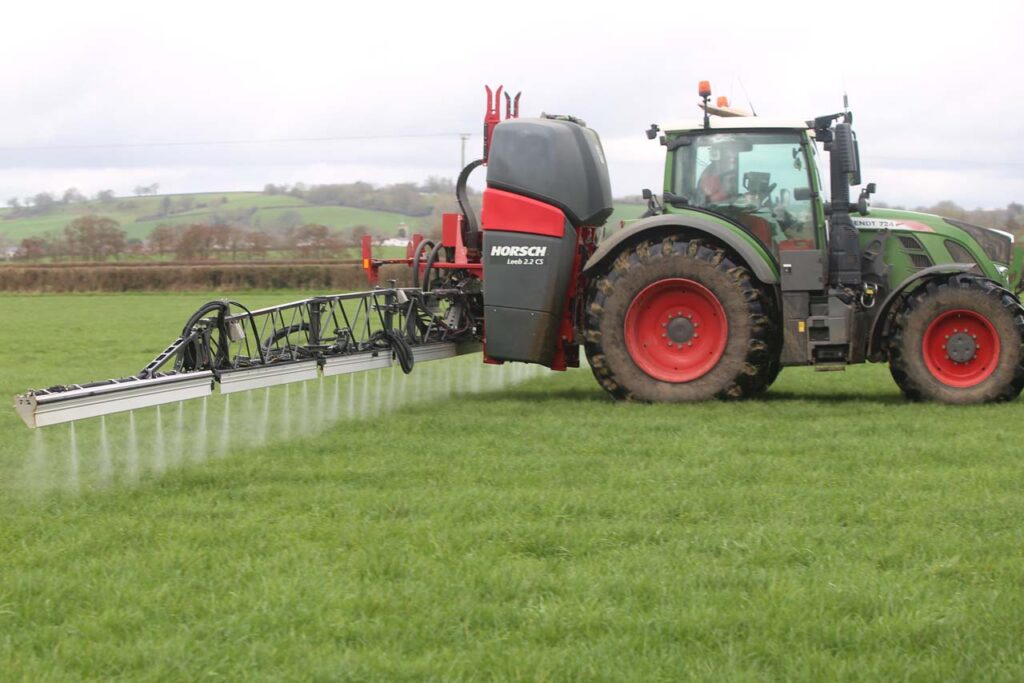
Boom height is the single biggest controllable factor to help prevent drift. The ideal setting for 110° nozzles, set 50cm apart, is 50cm. Maintaining the correct height will not only ensure minimum drift, but also provide maximum coverage for optimum efficacy.
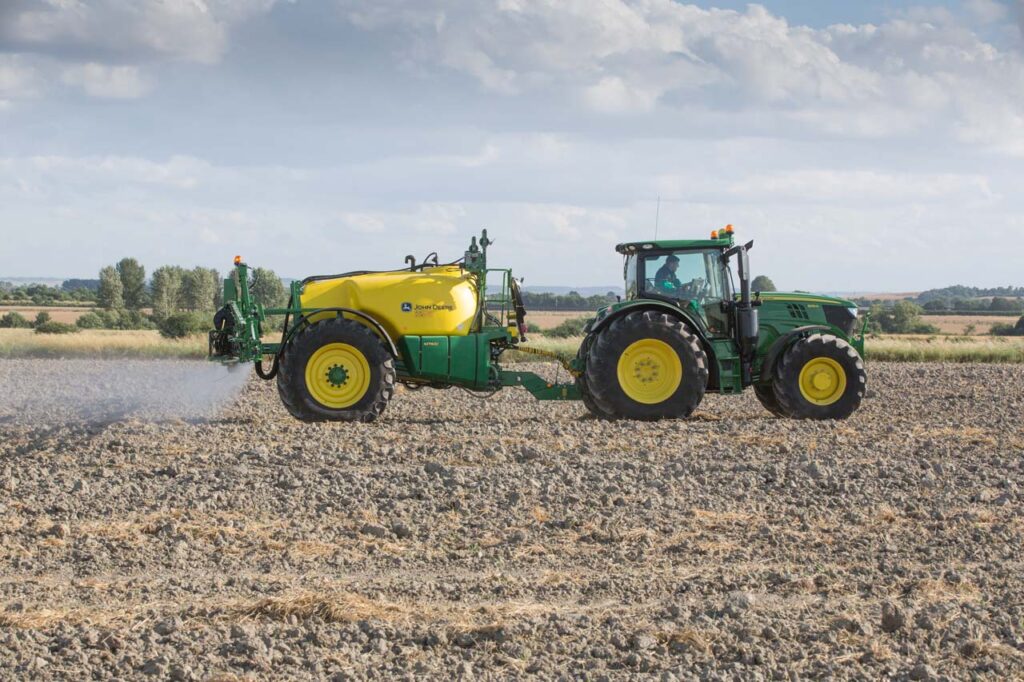
Simply doubling boom height from 50cm to 100cm will increase drift by ten times. Even if the boom is at 80cm – or 30cm above the target height, the drift increases by six times.
A simple way to check the boom is at the correct height is to fit a 50cm long cable tie on each boom tip.
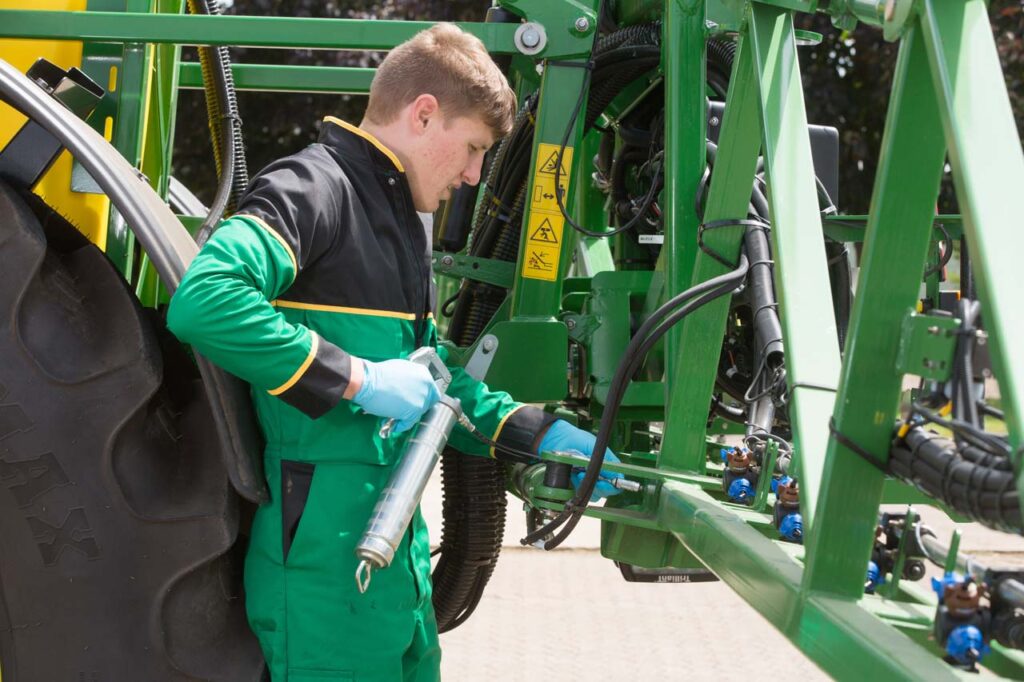
Keeping the suspension system well-lubricated and maintained is key to ensuring the boom reacts smoothly and effectively. This will also help keep it at the correct height.
Many machines are now equipped with automatic levelling and height control, it’s still important to periodically clean the sensors, check the system is functioning correctly as well as test and adjust the sensitivity.
Forward speed
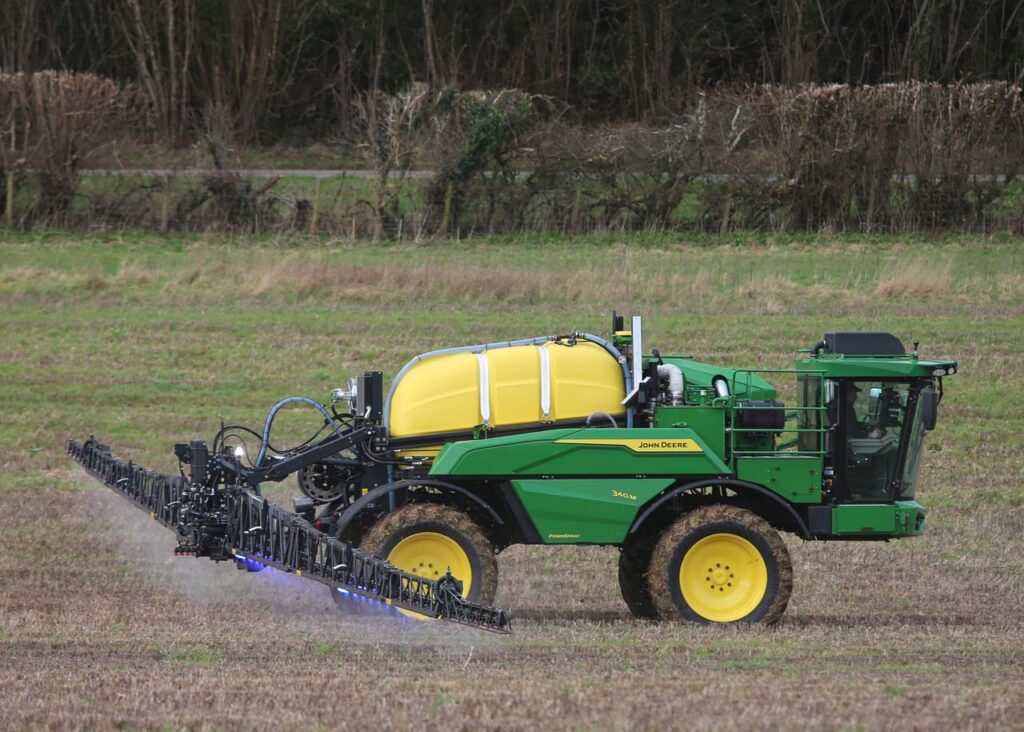
Faster forward speeds create more turbulence behind the boom and have a big influence on drift, making it more difficult to control the spray. This will also have an impact on the droplet distribution and could result in poorer control.
The energy required to push through the air is the square of the increase in speed: Drag = Mass x Velocity². Basically, this means when you are spraying if you double your speed you generate four times the turbulence.
Independent research shows there is a 51% increase in airborne spray drift when forward speed increases from 4km/hr to 8km/hr and by 144% when the speed increases to 16km/hr.
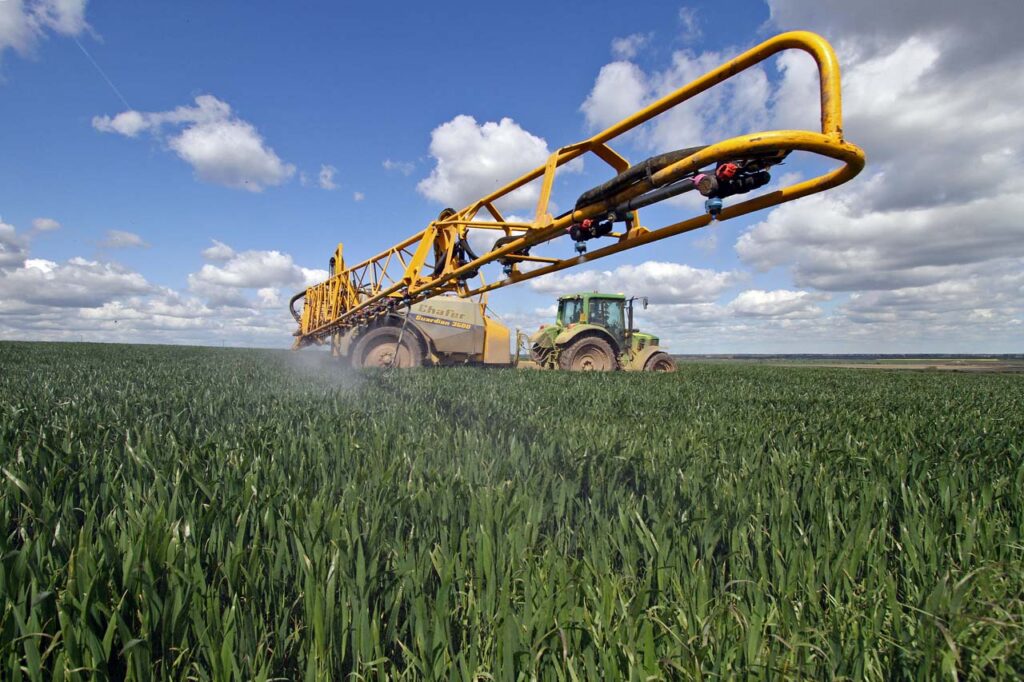
At the same time, the faster the sprayer operates the greater the boom instability. This will cause uneven coverage because the nozzles are not being maintained at the correct height.
Here, independent research shows boom movement almost quadruples when forward speed increases from 4km/hr to 12km/hr.
Other disadvantages of driving at higher speeds include:
- Too low pressure when slowing down leading to poor distribution of spray = less efficacy
- Too high a pressure to maintain application volume = more drift
- A need to raise the boom to prevent it hitting ground and causing damage = more drift
- A less stable boom – more drift and poor distribution of spray = less efficacy
Don’t forget if you drive into the wind it has the same effect as increasing forward speed. Always drive with the wind to reduce drift in sensitive areas.
Select the right nozzle
While there’s a wide choice of nozzles available for all types of applications, air induction (AI) nozzles are designed to cut drift. They do this by mixing the spray solution with air, which creates larger, coarser droplets that are less prone to drift.
Flat fan nozzles produce droplets that range in size from 1-500 microns. The smaller of these have a high velocity when they exit the tip, but slow down within 10cm from the outlet.
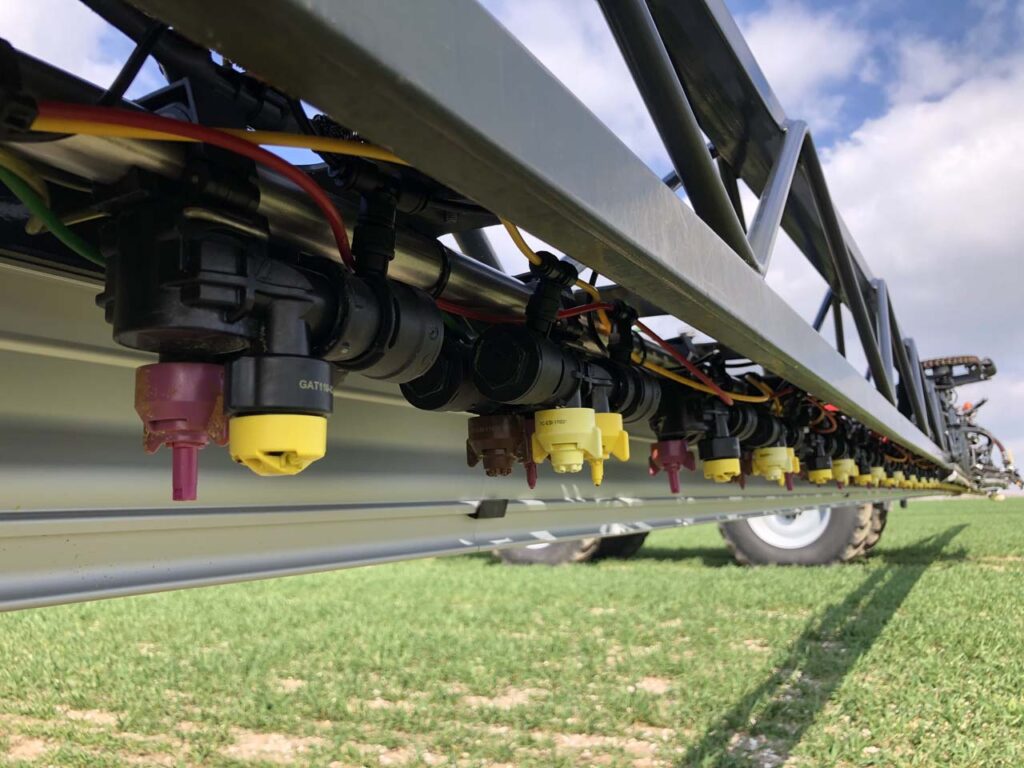
These small droplets travel with little momentum, which makes them very susceptible to drift. They also carry such small amounts of spray solution that they offer little benefit to the efficacy of the application.
Tests show droplets from AI nozzles vary in size from 250 microns up to more than 400 microns. Due to their larger size they exit the tip at a slower velocity, but have much more momentum, which makes them less prone to drift.
LERAP assessment
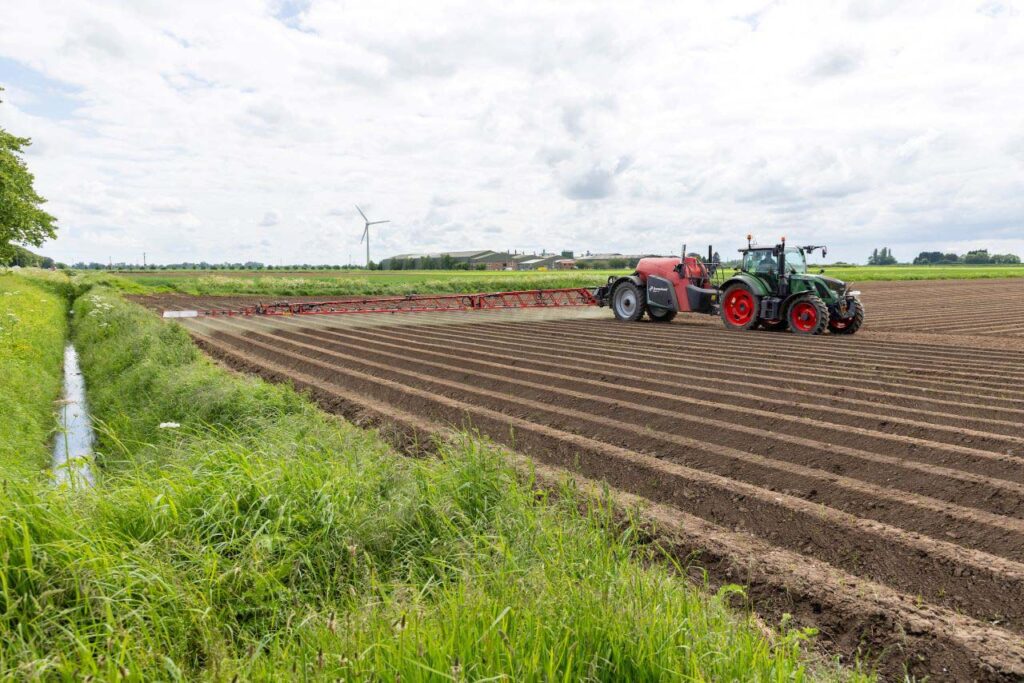
Statutory rules on pesticide use also require all operators to undertake a Local Environmental Risk Assessment for Pesticides – LERAP – prior to spraying applicable products near water.
Many pesticides now have a minimum buffer zone that must be adhered to when applying next to watercourses. Some buffers are legally required, while others are voluntary or a requirement of a stewardship scheme.
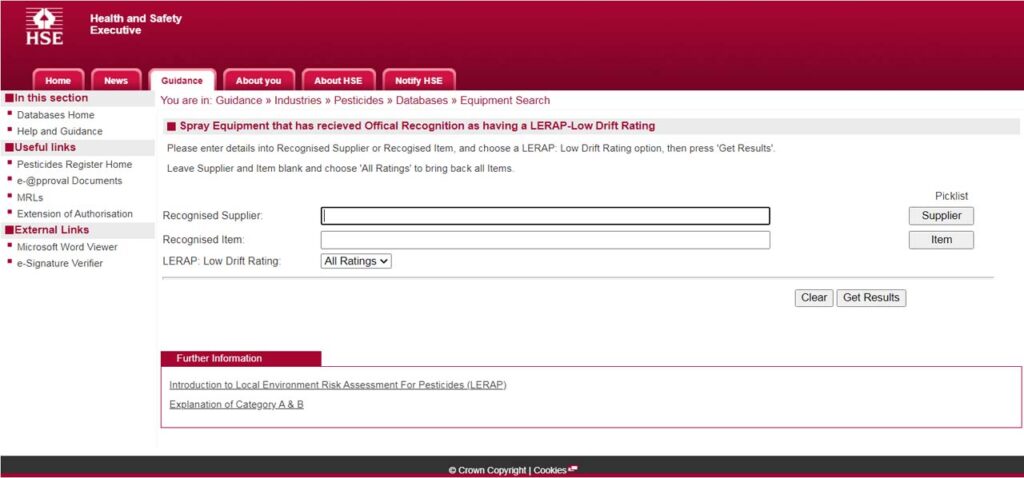
LERAP schemes will stipulate the use of 2* or 3* drift reducing nozzles. This will usually involve some form of air-induction nozzle, used at the appropriate pressure, to achieve these reductions.
A 2* LERAP requires a 50% drift reduction
A 3* LERAP requires a 75% drift reduction
This percentage reduction refers to it being compared with a standard 03 flat fan spraying at 3 bar, at 8km/hr with a boom height of 50cm.
All LERAP accredited nozzles receive their rating at a set pressure. Obviously, if this is exceeded it will create smaller droplets and invalidate its rating.
You can search the LERAP rating HERE:
Boom stability and tyre pressures
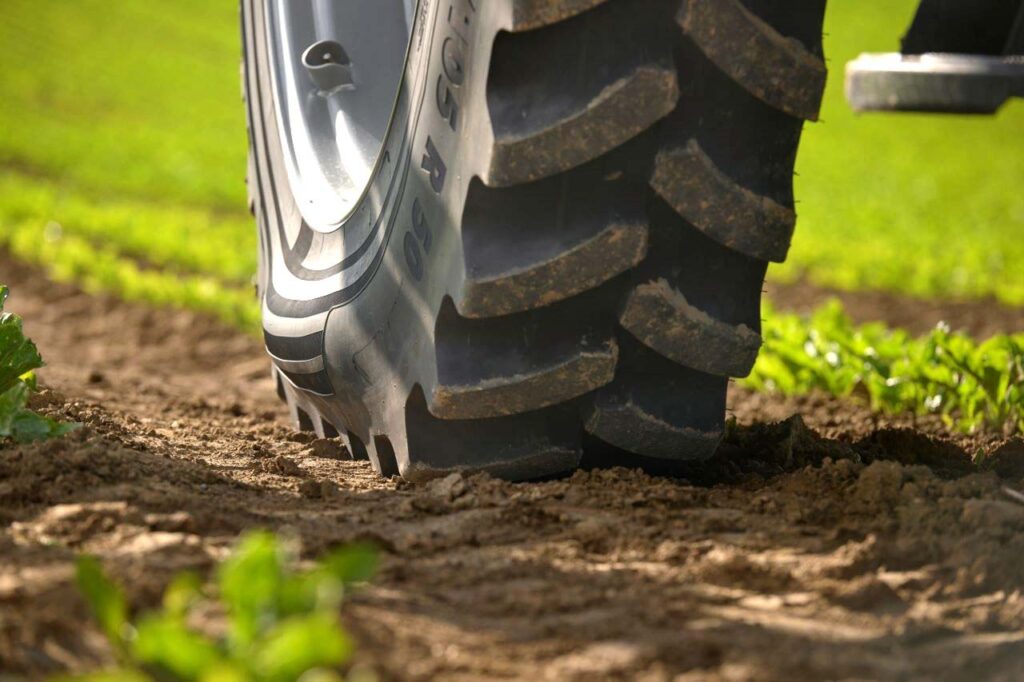
Boom stability is one of the most critical factors when it comes to controlling and setting the correct tyre pressures can have a big influence. They act like springs and shock absorbers, helping to isolate the boom from movements caused by travelling over rough ground. Newer, VF – Very Flexible – tyres run at lower pressures and improve stability.
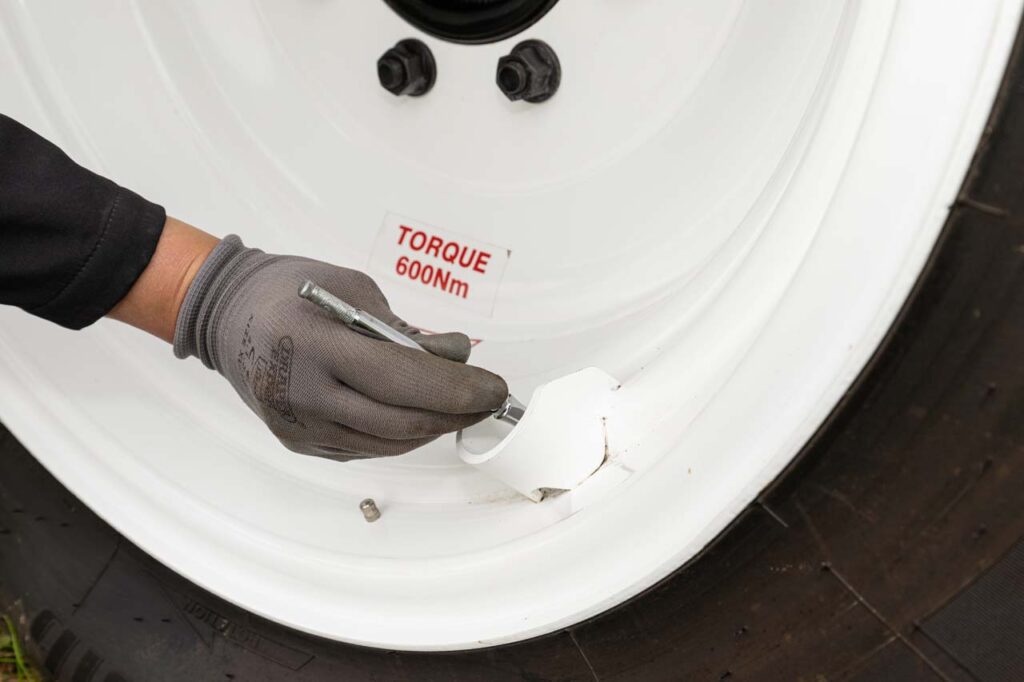
Key to maintaining the correct pressure is a good quality, accurate gauge, which costs about £20. New tyres on sprayers are often fitted over-inflated, which cuts the flexibility in the sidewalls and directly transfers any undulations in the field directly to the boom.
Make sure the pressure is equal on both sides of the tractor and machine. If not the boom will not sit level.