
FSOOTY finalists 2026 - Jack Williams
It’s the second year running that Jack Williams has reached the FSOOTY final.
“While it would be great to win FSOOTY, I entered again because I really enjoyed the whole experience last year and I learned so much, not just from the judges but also talking to the other finalists. In fact, I have changed my nozzle set-up after a really detailed conversation with a previous winner I met at the presentation,” he explains.
Previously working as an agronomist, a few years ago Jack switched back to operating a sprayer for W.J. Watkins & Son, Arkstone Court near Hereford, where he remains today. “I prefer the practical side of applying products rather than just advising. However, I am now hoping to take a BASIS Advanced Crop Module for potatoes,” he adds.
“This will provide me with more in-depth knowledge about the crop, application advice and timings to improve efficacy. I’m also going to rejoin the BASIS register so I don’t have to rely on agronomists for timings etc,” says Jack.
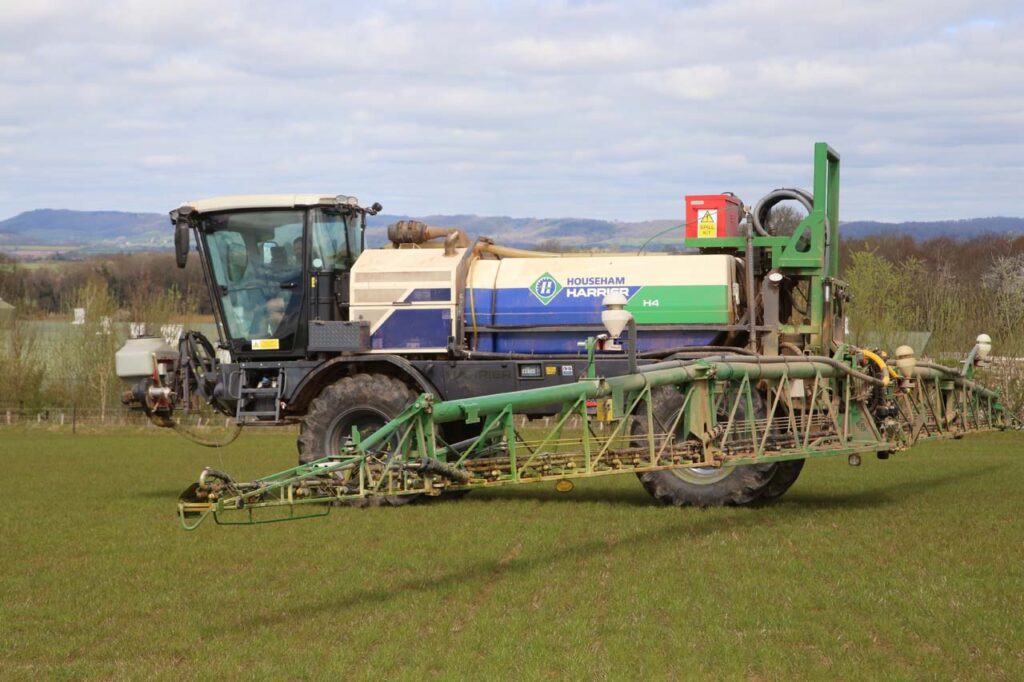
Potatoes are an important crop on the farm, accounting for 220ha of the total 1,200ha of cropping, which also includes winter wheat, oilseed rape, combining peas, grass seed, barley and oats. “We have recently expanded taking on 260ha of extra land – but it is in 63 different fields and 20 miles away, which presents its own problems,” he explains.
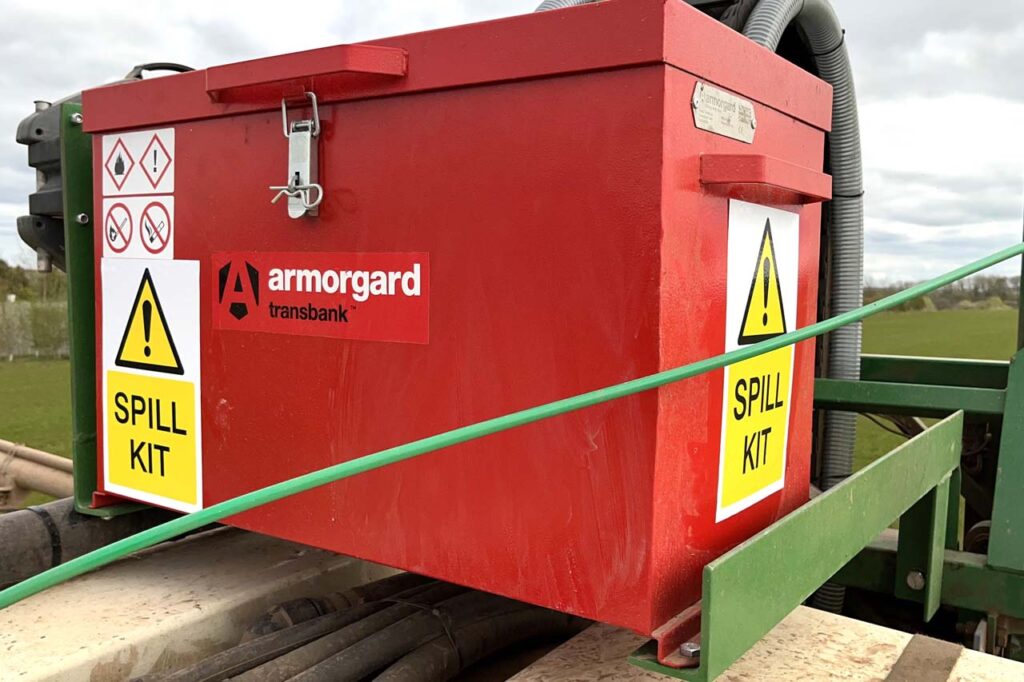
Spill kit on board
One issue, he realised, was a big concern about having an accident or incident on the road or in the fields so far from home. He’s now addressed this by installing a comprehensive spill kit (for chemical and oils) on his sprayer.
“My difficulty was where to fit this on the sprayer. The Harrier doesn’t have much storage as it is – and the only place I could find was at the back on the tank. But then came the problem of safe access – it’s very hard to climb up there. I also wanted a bigger toolbox and space to carry more spares, so I extended the footplate besides the cab to hold the toolbox, which also serves as a safe step up,” says Jack.
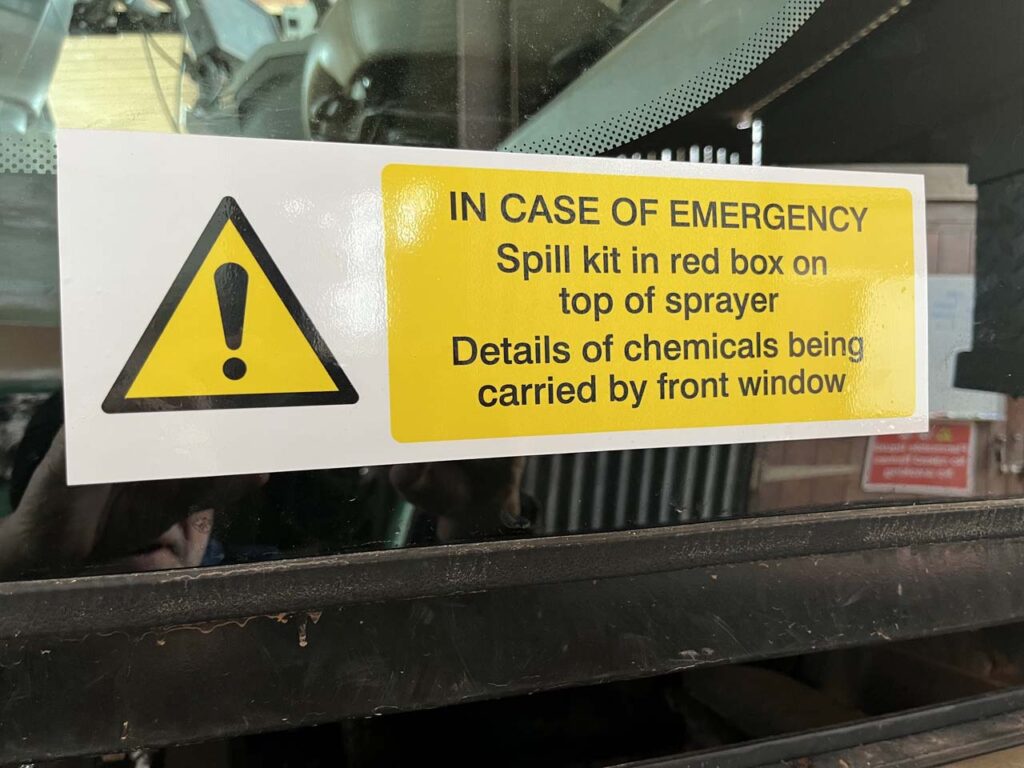
A neat finishing touch is custom printed emergency stickers on both doors highlighting the location of the spill kit and Safety Data Sheets for each load, which he carries in the cab.
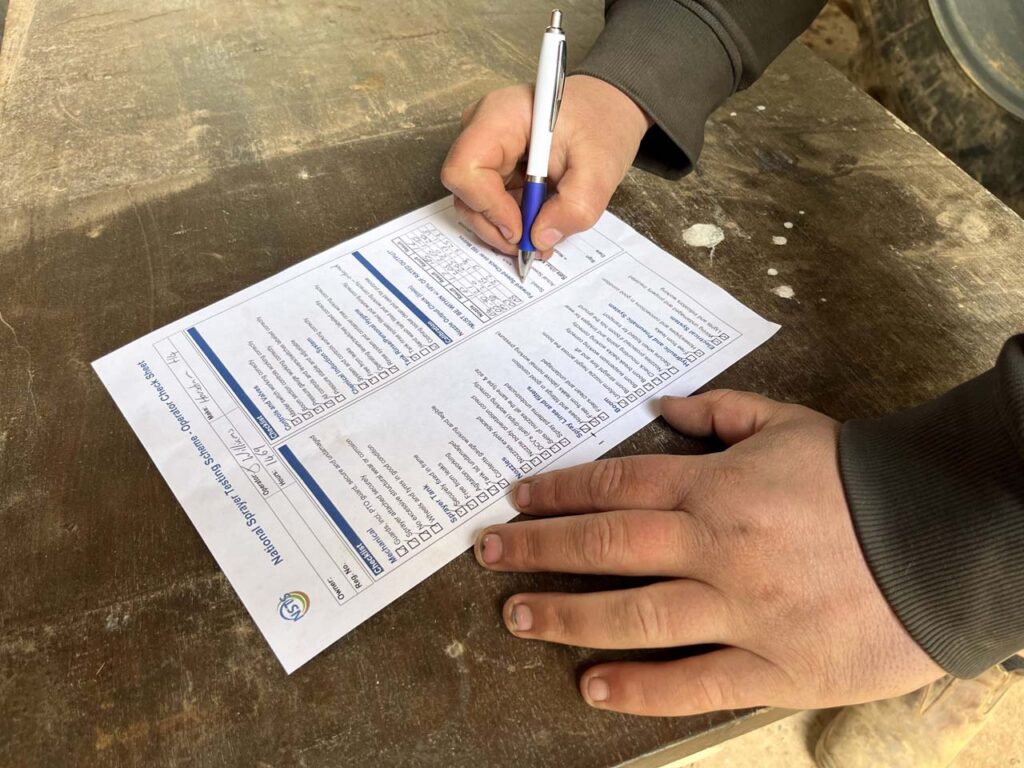
NSTS check sheet
Jack keeps on top of routine and maintenance as he goes. “But, at least once a month, I will give it a full check-up. I follow the NSTS operator check sheet and record this, including results from a jug test. It’s really helpful and I’ve noticed the Defy 3D nozzles wear a bit faster than others,” he explains.
Elsewhere the two-year old Househam Harrier 4000 remains largely unchanged. Jack has, however, repurposed some unused blanks on the joystick to hold switches to make it easier to control the Techneat slug spreader.
Auto-steer is guided by a Novatel satellite receiver to help follow semi-permanent tramlines and he specced a 500 litre/min filling pump. He already uses a Fastran closed system for filling Crown MH from IBCs and would like to extend this for filling RoundUp as well.
Twin outlets
On the 30m wide boom twin outlet nozzle bodies provide flexibility, with a quad cluster in the front and a single behind, with the ability to select A, B or A plus B.
Jack has made some changes to his nozzle set-ups after talking to a past winner at last year’s event. “I’ve replaced 03 Defy 3D angled forwards and back for T0 to T3 to now using an 04 GuardianAir Twin. This is now my main choice for cereal fungicides,” he explains.

For pre-em herbicides for cereals, oilseed and rape he sticks with the 05 Syngenta 3D ninety at 200 litres/ha, while switching to an 08 GuardianAir Twin at 300 litres/ha for pre-ems on potatoes and peas.
He is now also trialling the 05 Syngenta 3D ninety facing forward with an 05 Defy 3D facing back at 400 litres/ha for potatoes, as well as an 08 Lechler IDTA for potato desiccation at 300 litres/ha.
Bowser back-up
“Although four of the farms have spray stores and filling areas, I have two bowsers to cope with the distances and high water volumes. If I have to fill in the field I use drip trays under the induction hopper and always have the spill kit on the sprayer,” he says.
At Arkstone Court he has an undercover filling area, a 12,000-litre water tank with a small store alongside. This drains to a biobed with large, underground collection tank.
He hopes to update this whole area in the future.
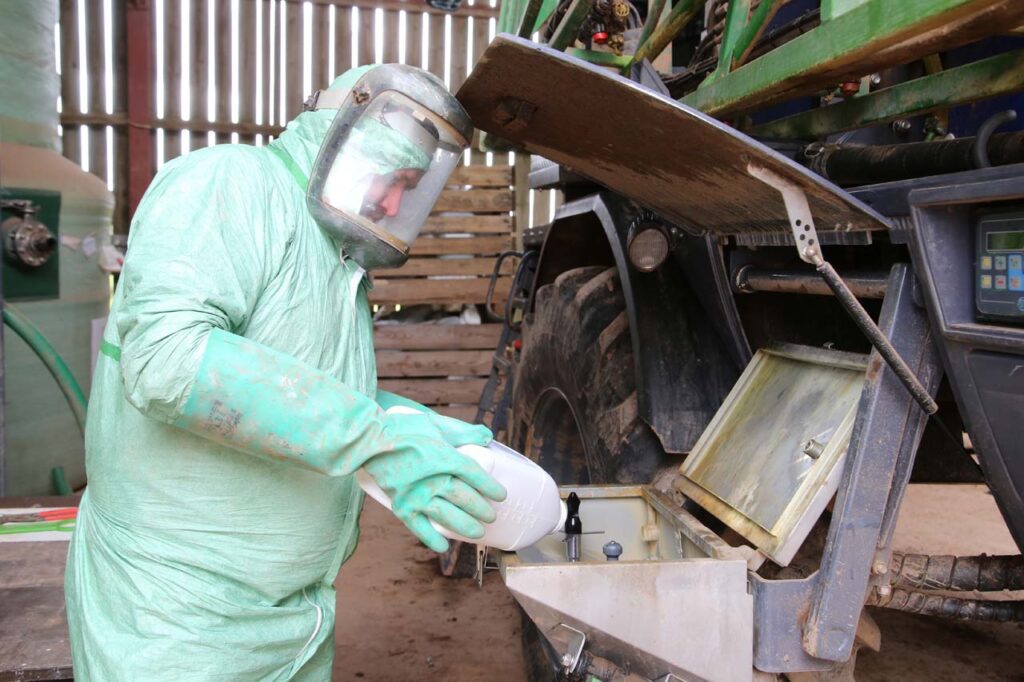
Jack arranges the products required for each tank load in the store the day before spraying – endeavouring to work in 10ha units and keep to using full cans wherever possible. “Not having to measure is quicker and safer. I also don’t want loads of part-cans dotted around in four different stores,” he notes. Before filling, he writes the products for the mix, in order, on a white board near the sprayer.
He already uses a Fastran closed system for filling Crown MH and RoundUp from IBCs and would like to extend this for blight sprays as well.
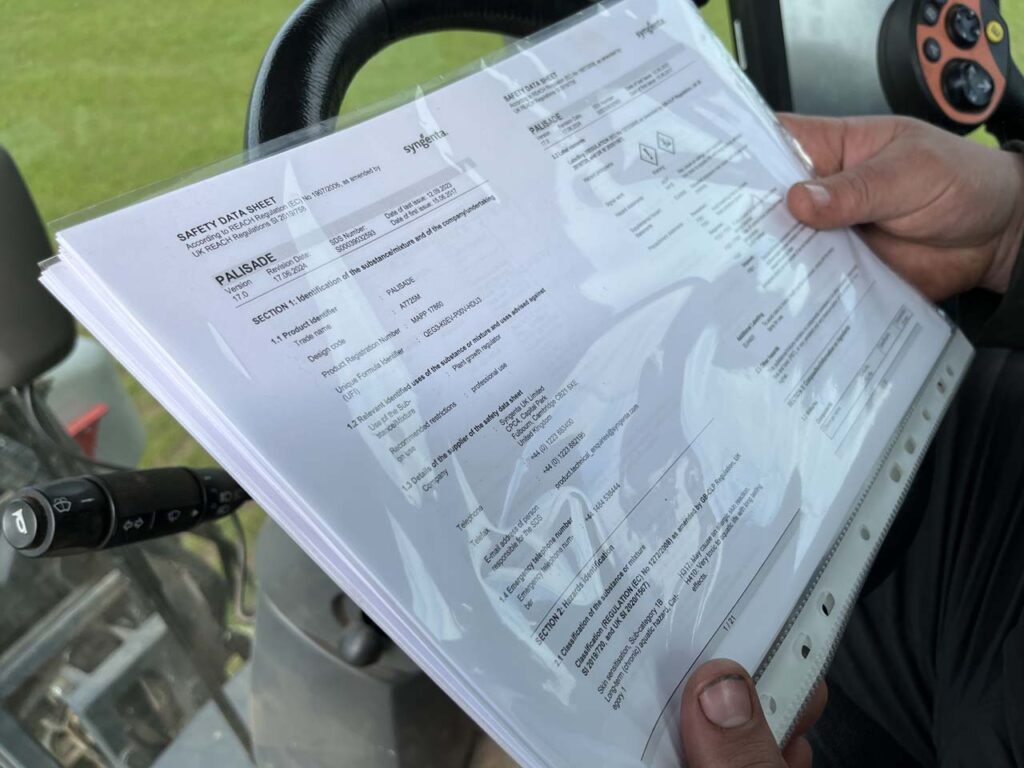
Recommendations come from Frontier via the Telus MyRecs App to an iPad in the cab. He also prints out each product’s Safety Data Sheet, which he carries in the cab.
Farm facts
Business:
W.J. Watkins & Son,
Arkstone Court, Hereford
Cropping:
1,200ha winter wheat,
oilseed rape, combining peas,
grass seed, barley, oats and
including 200ha of potatoes.
Sprayer:
Househam Harrier 4000,
30m boom, twin nozzle outlets,
Househam terminal, Novatel RTK
GPS receiver.
Modifications:
Toolbox and step extension, spill kit, emergency stickers and rewired switches for slug pelleter operation.