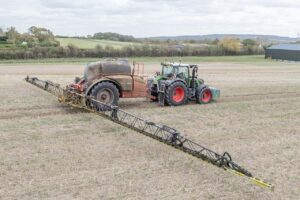
FSOOTY finalist - James Cracknell
Encouraged by his farm manager to enter FSOOTY, Suffolk-based operator, James Cracknell has reached the finals at this first attempt.
“My manager, Shaun Keal, has made the FSOOTY final twice himself. So, I was proud to be acknowledged by him when he suggested I enter,” says James, who has worked at Hyde Parker Farms for four years, and carries out all the spray and liquid fertiliser applications.
Currently cropping covers 400ha, including winter and spring barley, first and second wheats, winter oats and combining peas. The area is set to expand to 600ha this coming season, after more land comes out of environmental schemes.
James operates a 2016, 5,000-litre Rogator 6450, which was on the farm when he arrived and is due for replacement. “I do like the spacious, comfortable cab with two Fendt terminals as well as the adjustable height, which is useful for beans and oilseed rape (when they are in the rotation). But I find it hard to access the nozzles, which are too enclosed on the 30m Pommier boom,” he explains.
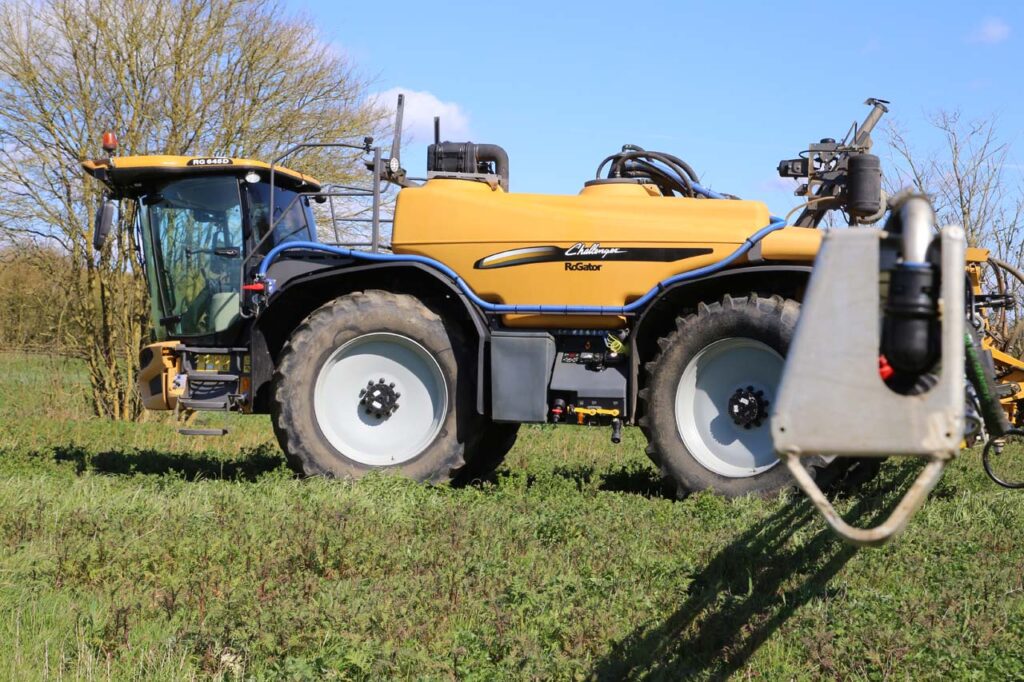
He has made a few modifications to the machine, including fitting mudflaps on the boom to protect the nozzles, routing an airline down to the induction hopper, a 2in fill coupler for liquid fertiliser, extra blue worklights and adding a spill kit. In the cab he’s fitted a bracket to hold a first aid kit, plus put up a height warning reminder in the cab.
John Deere StarFire provides RTK accuracy for section control and steering, which James uses to set the semi-permanent tramlines with the sprayer. “I am, however, discussing changing the tramlines to a more logical layout, which will make the fields easier to spray and combine.”
Spray operations manual
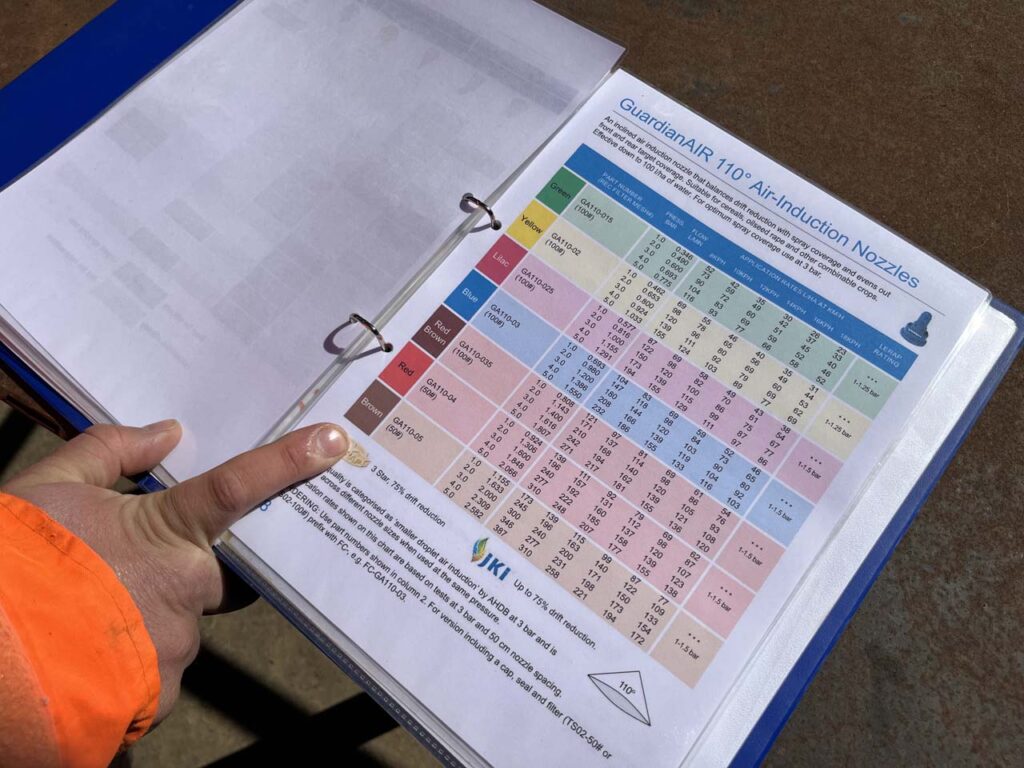
Together with Shaun, James has created a comprehensive ‘Spray Operations Manual’. This contains all the essential information including his Emergency Action Plan and procedures, a watercourse map and copies of nozzle charts. Here he’s also gathered a lot of other useful information from product and nozzle manufacturers.
James has a straightforward nozzle choice and set-up. 035 GuardianAirs are used for the cereals from T0 to T5 – usually at rates of 100-125 litres/ha. He then switches to 035 Defy 3Ds for the ear wash.
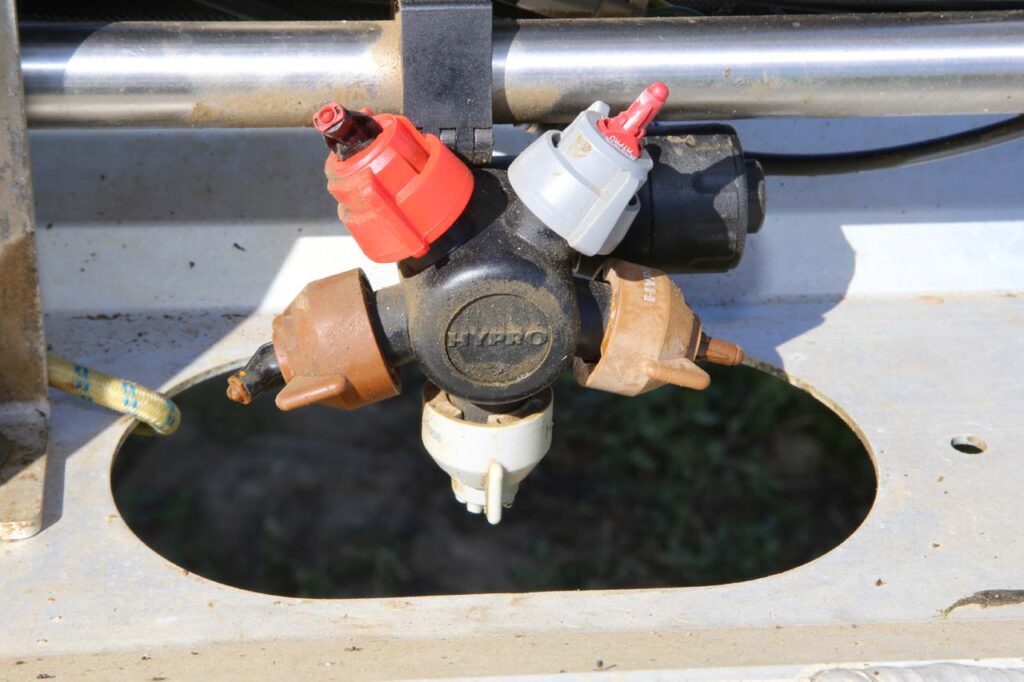
For pre-ems he moves to 05 Defy 3Ds at 200 litre/ha or 05 GuardianAirs, because they have a 3* rating for when more drift reduction is required. “I have a map of all the watercourses, coloured to show the ditches above and below 1m for LERAPS. They are also protected by 6m to 18m buffers.
In all applications the nozzles are fitted alternating forwards and backwards.
“This set-up has always worked well for me and I am pleased to have that confirmed by Tom Robinson – the well known independent sprayer specialist, who presented a very interesting course for at the local, Eastern Training Alliance,” says James.
Convenient store
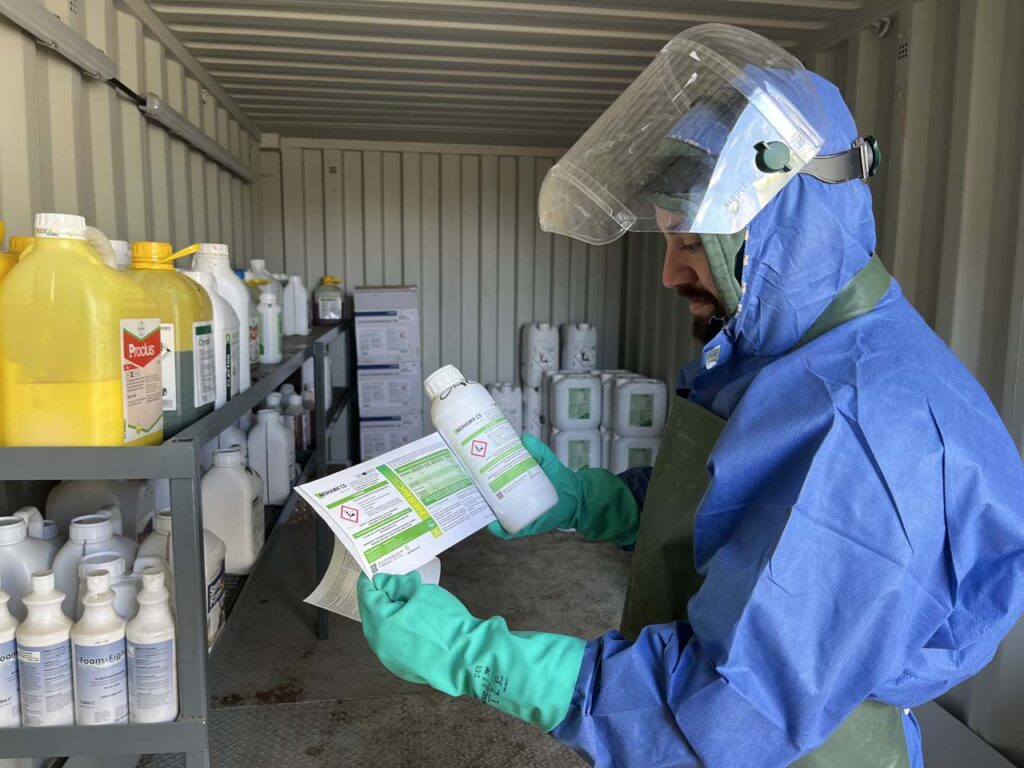
Like the sprayer, James inherited the existing chemical store and filling area. “While the fixed facilities haven’t changed much, apart from extra water storage, I have rearranged the layout and added a few extra things to increase efficiency and safety. I’ve arranged everything so it is convenient and fits with my filling routine,” explains James.
His chemical store is a properly converted container with lighting, heating and ventilation. A spill kit hangs inside the door and labelled shelves segregate products by type. A folder, fixed to the wall, holds the delivery notes.
Efficient layout
Opposite the store is a metal bench, above and behind which is racking that holds products in IBCs above. Behind this is a 15,000-litre water storage tank, which is a new addition to the existing 6,000-litre tank. There are plans to connect these to a rainwater harvesting system. The filling hoses from the tanks are routed under the racking, where they won’t cause a trip hazard.
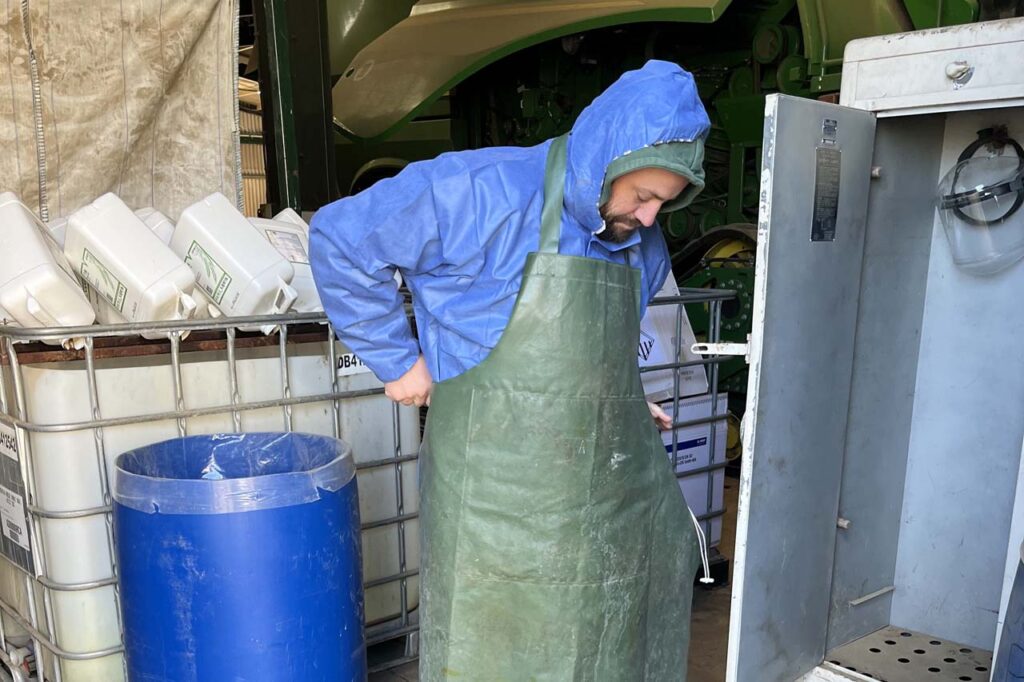
Inside the large barn door, to the side, is the store stock list on a white board. To the right is a dedicated, labelled PPE cupboard and used PPE waste bin (new PPE is kept in separate cupboard in a different area). There’s are also three converted IBCs – one with a rack with cleaned jugs for measuring, next to this is a container draining rack with huge recycling sack behind and two IBC baskets for cardboard. A round bin in front holds the caps and foils – ready for recycling.
Safe and efficient filling
James receives paper recommendations that are printed out from Gatekeeper and handed to him. “I usually fill them out in the field when the job’s complete and hand back. I also keep my own diary for each day, with notes on things like the tank mix, area, water volume, whether I washed out etc.
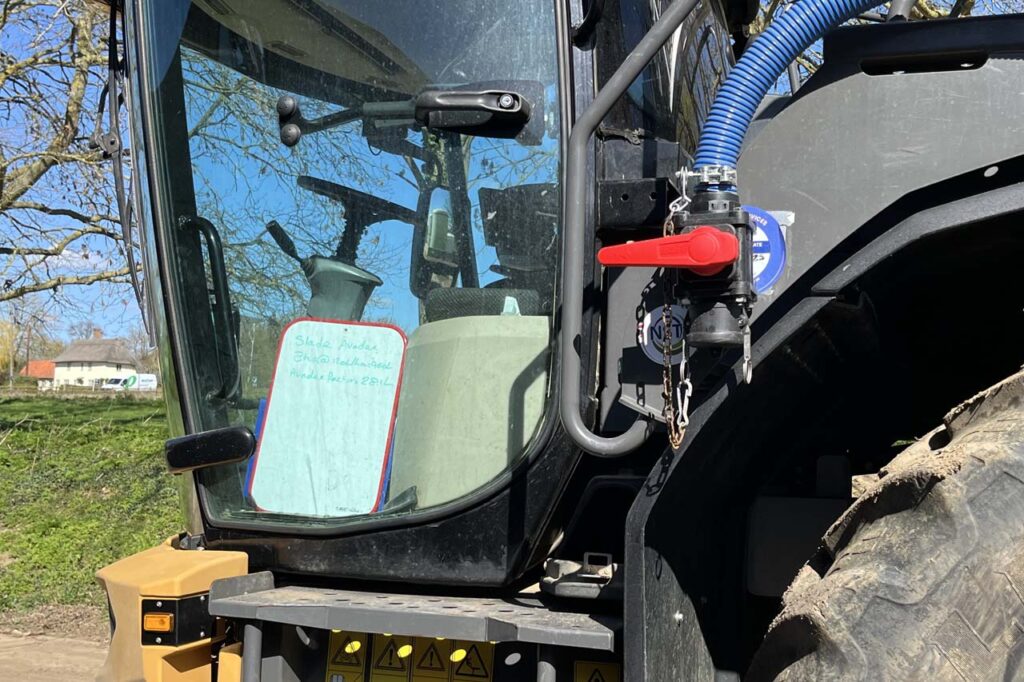
Before filling, James first writes the mix for the tank load, in the correct order, on a white board that is placed in the cab door window. “Then I put on my PPE, always including an apron, and gather the mix and lay it out in order. I try to avoid part cans, but if any do need measuring I do this inside, on the rack on the IBC.
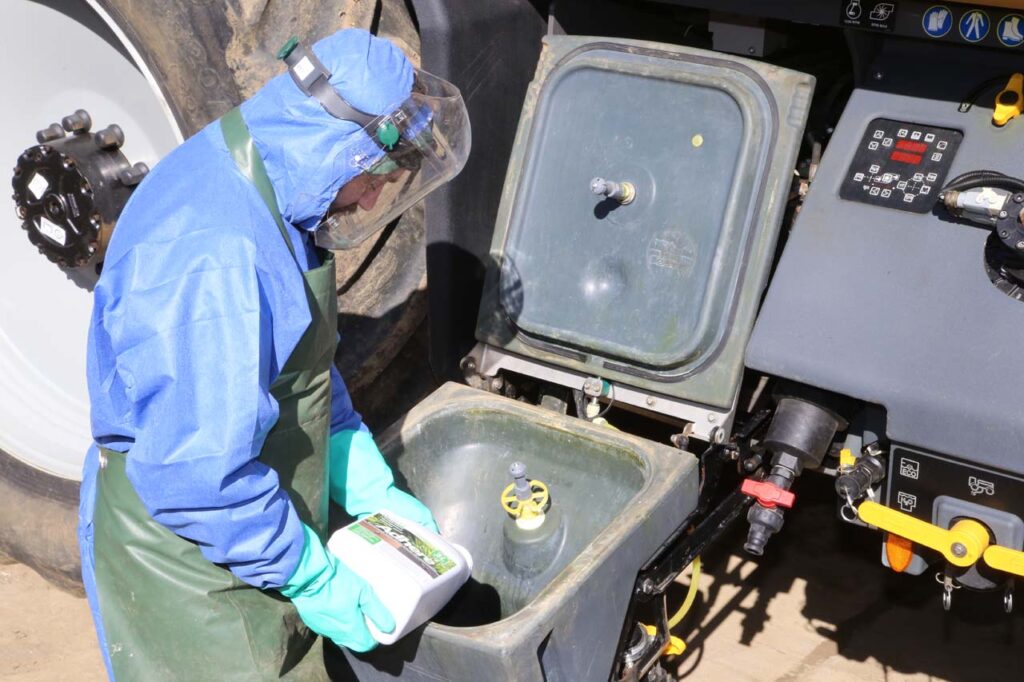
“I place a cut-down barrel under the induction hopper before filling. Then I can connect up the water and start filling using the remote panel by the hopper. Setting a routine and keeping to it, reduces the risk of making mistakes,” he adds.
The farm has a home-made, 10,000 litre capacity bowser, which is mainly used for liquid fertiliser, but carries water when he is working at higher rates on pre-ems. Shaun usually takes this to the field and James fills the sprayer, using the cut-off barrel under the induction hopper as well as the on-board spill kit for protection.
Farm facts
Business:
Hyde Parker Farms,
Sudbury, Suffolk
Cropping:
400ha winter and
spring barley, first and second
wheats, winter oats and peas
(area is set to expand to 600ha)
Sprayer:
5,000-litre Rogator 6450,
30m Pommier boom, John Deere
StarFire RTK GPS with two Fendt
control terminals.
Modifications:
Boom-mounted
mudflaps, spill kit, extra airline,
2in fill coupler, worklights, first
aid kit and height warning sign.