Assess the risks
Under the Health and Safety at Work Act (1974) all operators have a ‘duty of care’ to protect people from harm during a pesticide application. This will involve carrying out risk assessments for the task, as well for compliance with COSHH to use and apply many pesticides.
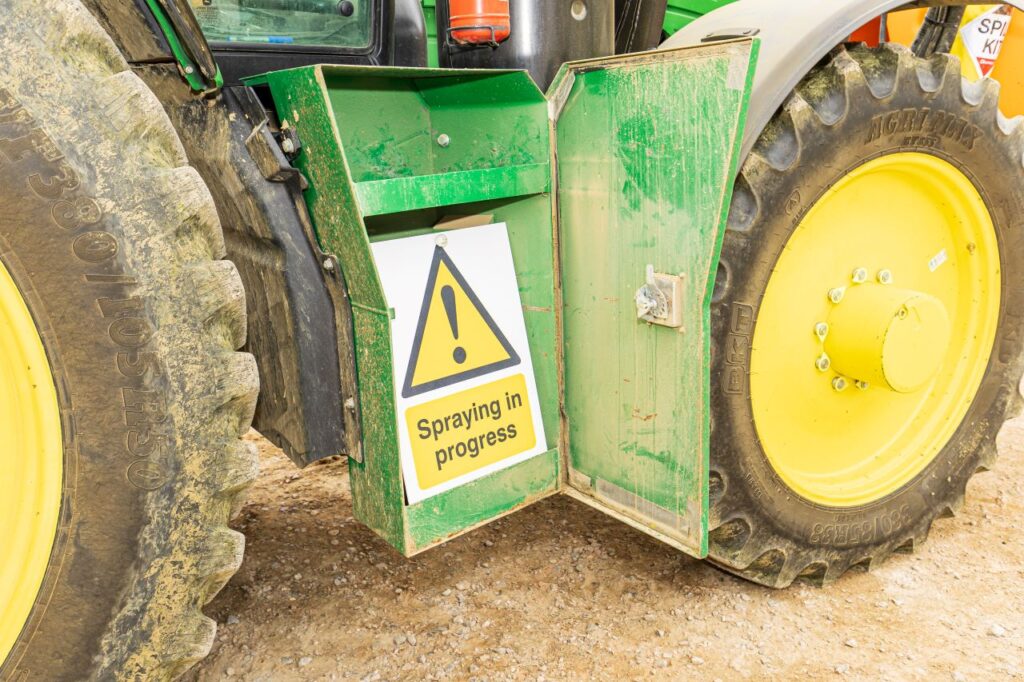
In a risk assessment operators will need to identify the hazards, the likelihood of anyone being impacted by the operations and select controls to ensure they do not harm personnel. Pay attention to the public who may access the work area on, for example, a footpath and consider placing using warning signs.
Before applying pesticides operators are legally required to assess any potential impacts to wildlife and the environment and any take any necessary protective measures.
The Plant Protection Products (Sustainable Use) Regulations require all those who use and/or permit the use of pesticides to take reasonable precautions to protect all parts of the environment (habitats, water, birds, mammals, insects, etc.) when storing, handling, using and disposing of products.
Crucially these regulations require product applications to be confined to the intended target, and operators must consider and address hazards such as drift and runoff.
Read the label
It is a legal obligation to read the labels on all the products you intend to use before application. Users must follow the statutory ‘Important Information’ on the product label, which will relate to safe use for the operator and the environment. Not complying with this could result in legal action.
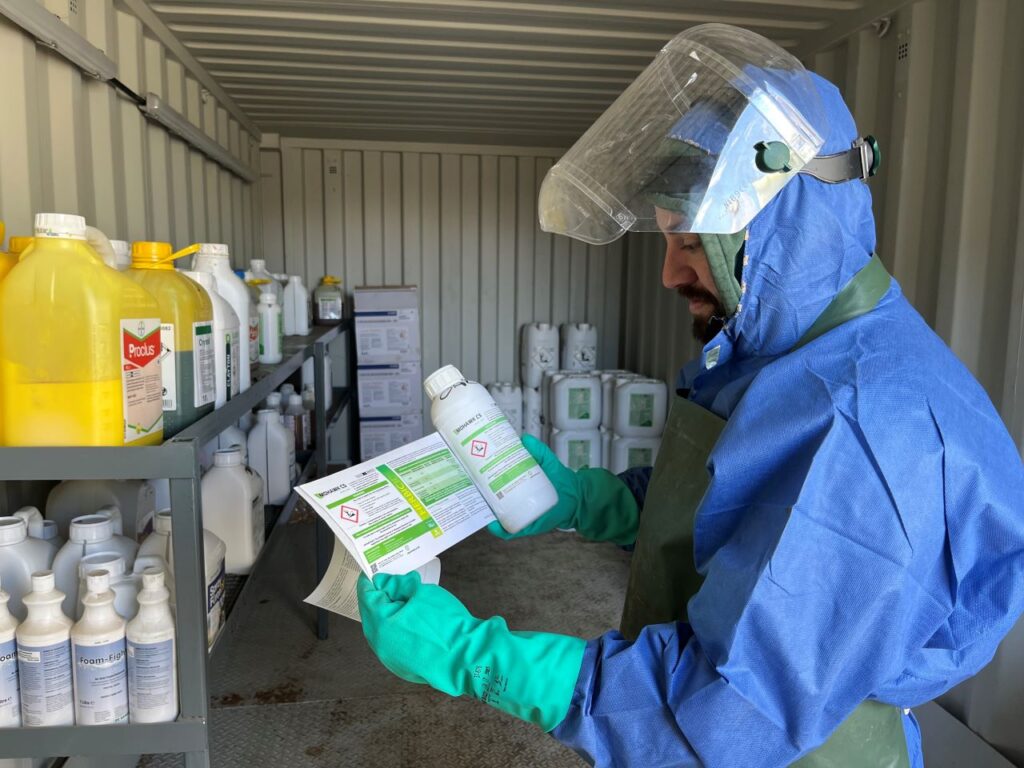
The conditions will be shown in the Important Information section on the label.
Some of the items in the important information are:
- Product type or industry sector
- What it can be used for
- Maximum dose rate per application
- Maximum total dose or number of applications
- Latest time of use, the time before harvest, growth stage, etc
- Any buffer zone requirements
- Any other specific limitations.
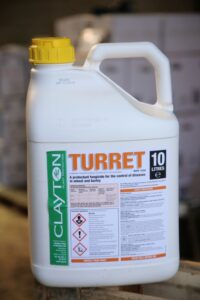
Look out for LERAPs
Statutory rules on pesticide use require all operators to undertake a Local Environmental Risk Assessment for Pesticides (LERAP) prior to spraying certain products alongside water courses.
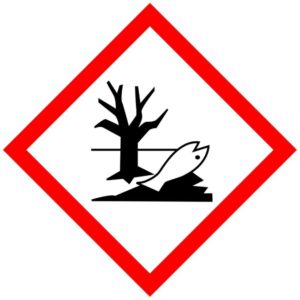
Watercourses are particularly vulnerable to the effects of pesticides because some active ingredients can harm aquatic life and may contaminate drinking water. This means these types of products will often have an aquatic buffer zone requirement when being applied alongside a watercourse.
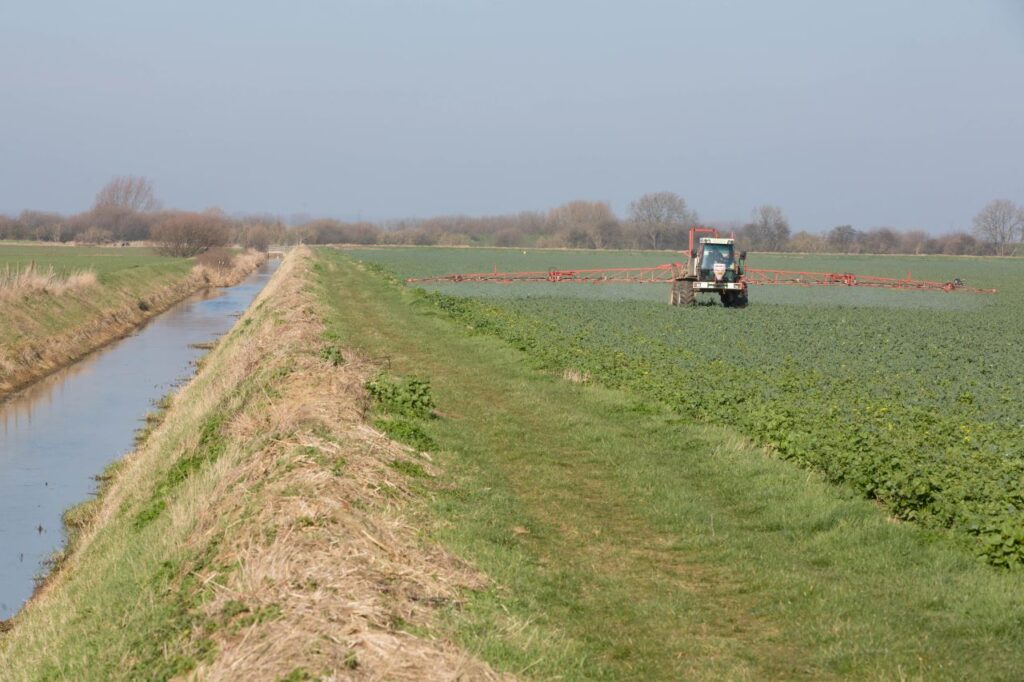
For horizontal boom sprayers it is only possible to reduce buffer zones of 5m. If operators want to reduce this aquatic buffer zone, there is a legal obligation to carry out and record a LERAP. Buffer zones greater than 5m cannot be reduced.
If operators choose to apply the buffer zone, without a reduction, this decision should be recorded in the spray records.
Product labels provide the information required by the operator to follow during application. Any aquatic buffer zone requirements are stated in the ‘Important Information’ section of the product label, while full details will be found in the ‘Environmental Protection’ section.
Some product labels will specify drift reduction technology (DRT) with LERAP three star low-drift status ratings and a buffer zone of 6m to 18m as a condition of authorisation for horizontal boom spraying. These buffer zones cannot be reduced.
Further information on LERAPS, including the records required to be kept, can be found on the HSE website HERE.
Drift Reduction Technology
‘Drift Reduction Technology’, probably better known as ‘low drift nozzles’ enables operators to reduce the buffer zone width in compliance with the label instructions.
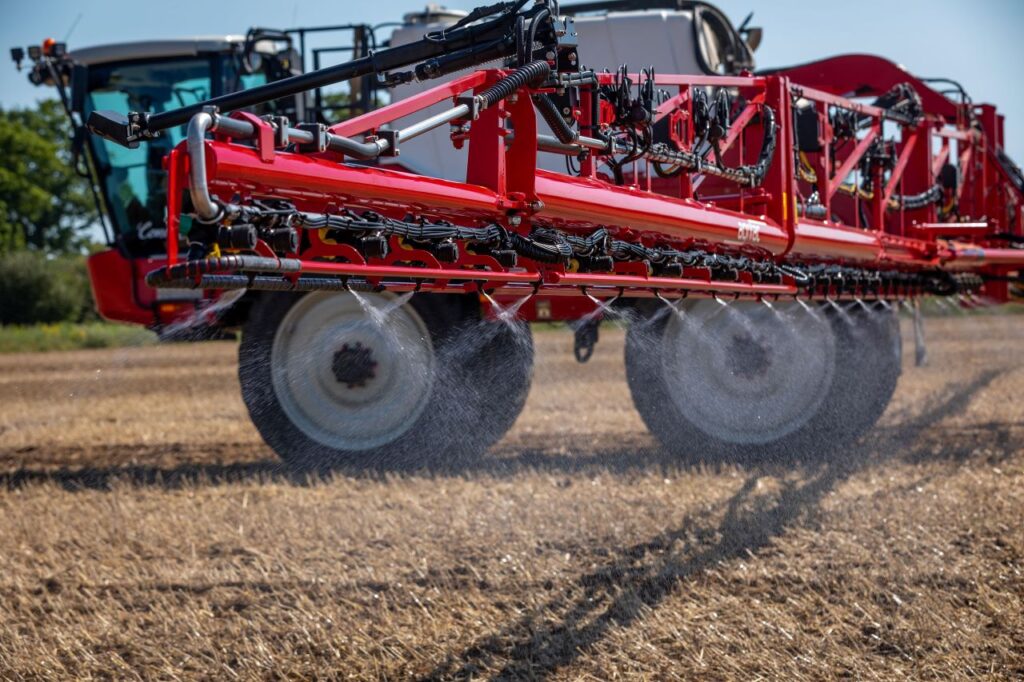
Tested nozzles provide a reduction in drift, shown as a percentage compared with a reference 110/1.2/3.0 nozzle operating with a nozzle height above the target of 0.5m.
These are given a ‘star rating’ by the HSE:
No LERAP-Low drift rating
Drift levels greater than 75% of that from reference system
LERAP-Low Drift – one star *
Drift levels greater than 50% and up to 75% of that from reference system.
LERAP-Low Drift – two star **
Drift levels greater than 25% and up to 50% of that from reference system.
LERAP-Low Drift – three star ***
Drift levels up to 25% of that from reference system.
A list of all HSE star-rated nozzles can be found HERE.
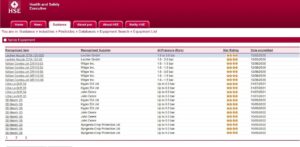
The database now includes nearly 50 different nozzles with an approved ‘4-star rating’, which relates to a 90% reduction in drift. However, product labels and LERAPS have not caught up with this development, and it’s currently not a stated requirement.
These nozzles are, however, now popular options for operators looking for optimum drift reduction – common names include the BFS ExRay XC, Syngenta/Hypro 3D Ninety, Lechler ID3 and IDTA, Wilger Combo-Jet and Hypro Ultra Lo-Drift.

Check the pressure
When using any low drift nozzle it is vital to check the pressure at which it received its star rating. There is a huge choice now available in the three-star category, but the pressures at which they operate to achieve the rating vary widely.
For example, a typical 03 nozzle, the Turbo TeeJet Induction 110 03, operates from 1.0 to 5 bar, while for the GuardianAir GA110-03 it is 1.0 to 1.5 bar.
In the four-star category the 3D Ninety achieves its rating at up to 5 bar for sizes from 03 to 08, but for an 035 it is 4 bar. For the Lechler IDTA 120-03, the maximum pressure for the four-star rating is 2 bar.