Set in place an emergency procedure
No matter how careful you are there is always a risk something could go wrong –accidents happen, so it’s vital farms and operators prepare to prevent a spill becoming a calamity.
Most accidents are preventable, but that doesn’t mean they do not happen. Even with good organisation and planning the very nature of handling, storing and using crop protection products is such that an accident or other emergency could happen.
Just simple common sense and following label safety precautions will always reduce risks to a minimum. However, the possibility of a problem, such as fire, spillage or theft, can never be eliminated.
The Code of Practice for using Plant Protection Products says it is a requirement for those using pesticides to have a planned response in place to deal with fire, personal contamination, minor and major spillages and poisoning of wildlife. You should also consider other problems, such as product theft, flooding and electrocution.
All operators – whether employed, self-employed or a contractor – must have access to up-to-date emergency procedures to ensure they can take quick and effective action to reduce any impacts on people, property and the environment.
Worksite map
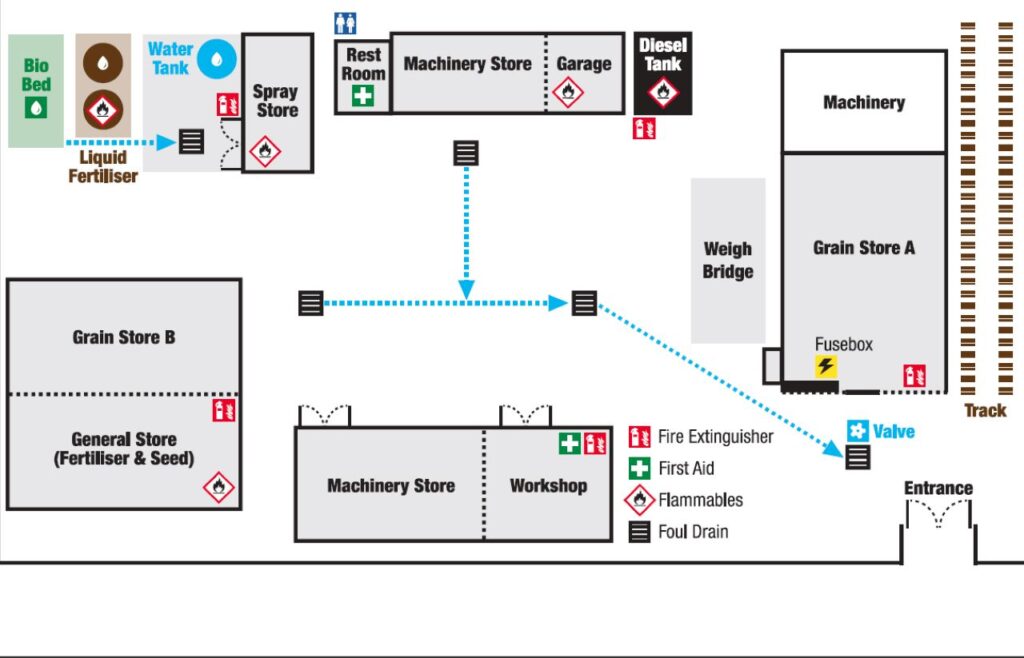
A worksite map that highlights the location of hazardous items, such as flammable materials and yard drains, is key. It illustrates to those using pesticides the potential problem areas. It must also show the location of safety equipment (fire extinguishers, spill kits, etc) and information about services, such as gas or electricity isolation points. It must be available to all staff and, particularly, for any emergency services.
Correct response
Product spills and leaks must be dealt with quickly and safely – watercourses and drains must not be contaminated. If a product container is leaking, decant it into a sound container of the same product, mark as transferred and attach the product label/leaflet.
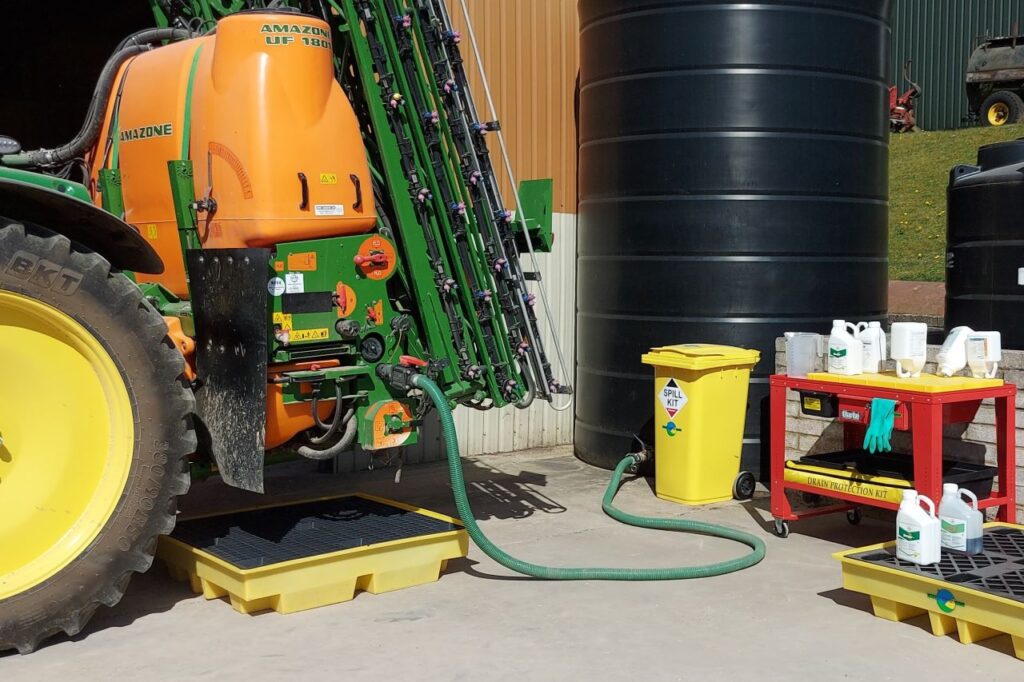
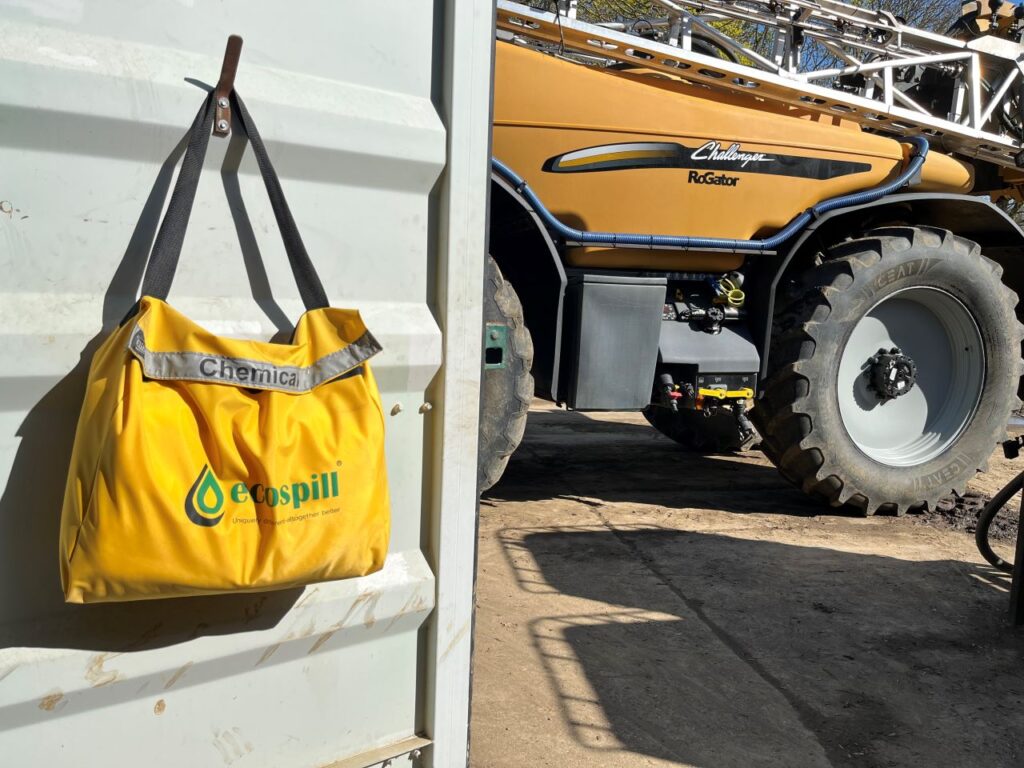
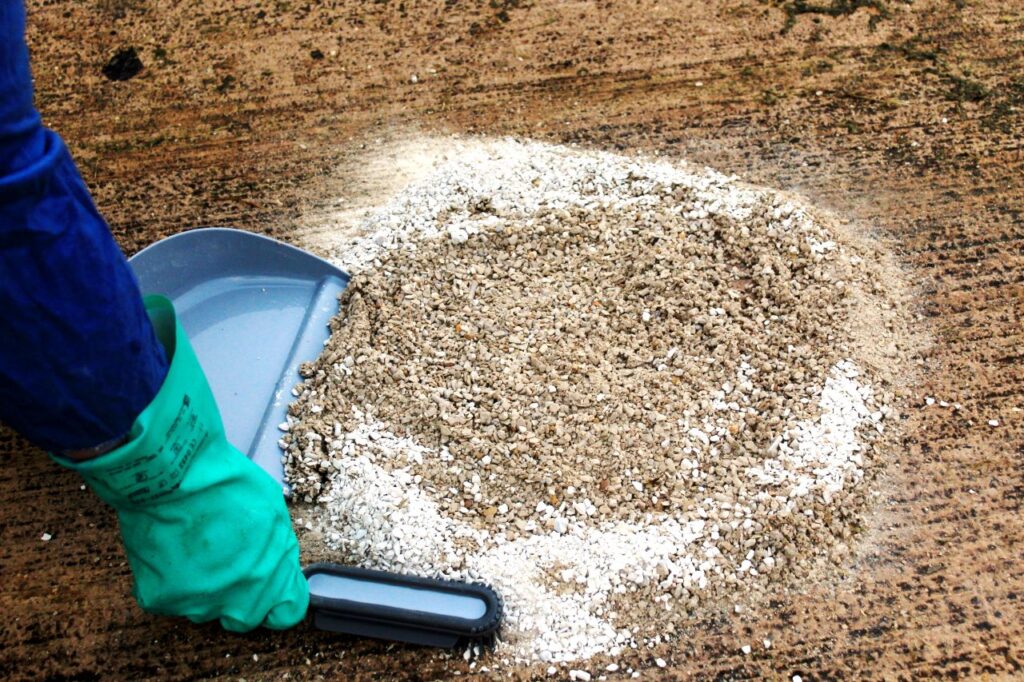
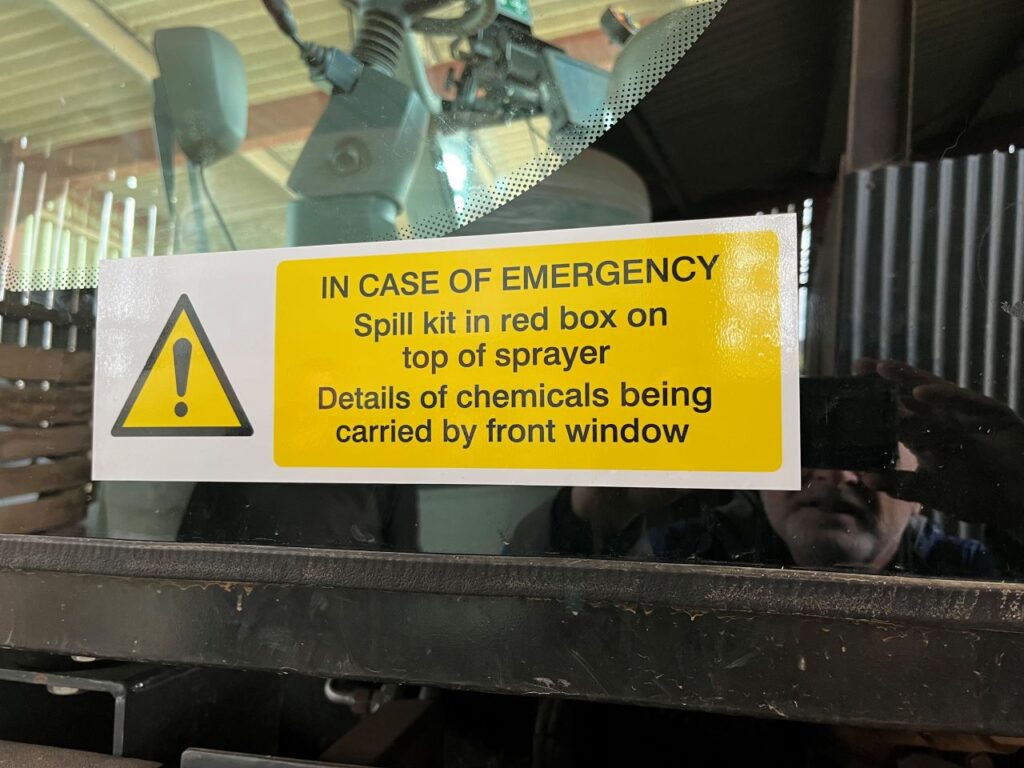
For minor spills and leaks use absorbent materials (cat litter, granules) to soak up liquids and clean up solids. Store material securely prior to disposal. PPE storage, drains and spill kit locations should be marked on site map.
If the spill is large and/or there is a risk of the spillage entering drains or water courses contact the Environment Agency immediately on – 0800 80 70 60.
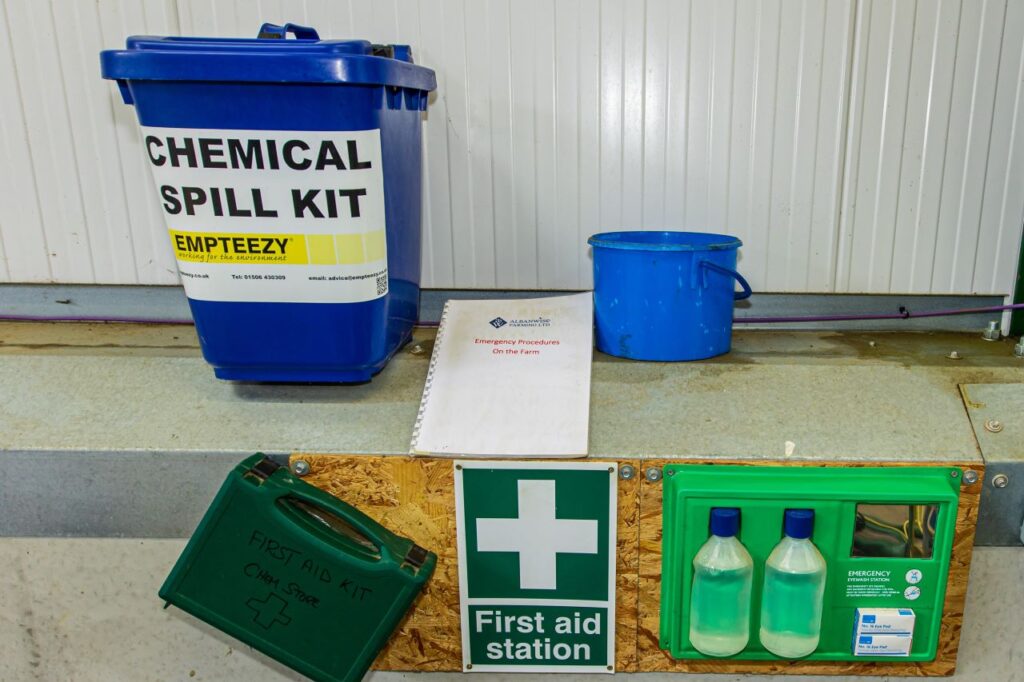
If anybody becomes contaminated with concentrate or dilute products remove any contaminated clothing and wash contaminated skin and hair with plenty of clean water. Flush eyes with clean running water or use any eye wash facilities. Mark the location of eye washes and clean water supplies on the site map.
If mains water is not available at filling points, make sure 20 litres of clean water is available in a container, while a supply of 10 litres should be available at the application site or on the applicator.
Seek medical advice as quickly as possible after contamination and remember to provide the doctor with the product label and safety data sheet (MSDS).
Fire precautions
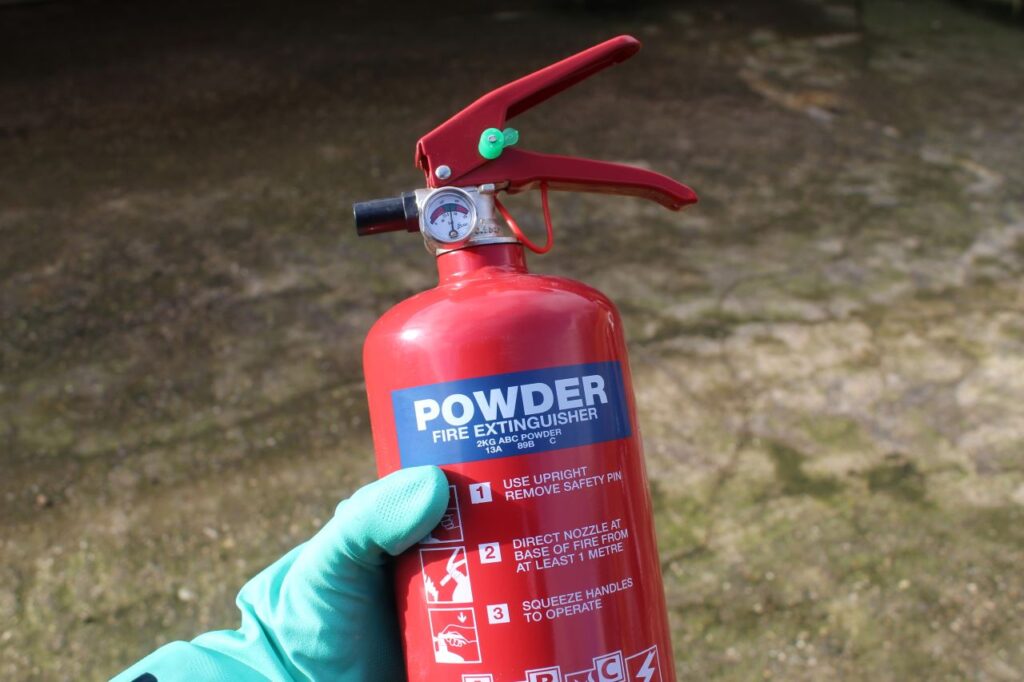
Operators must be prepared for the possibility of fire. If a small fire can be extinguished quickly, and without risk, operators need to be ready to use appropriate firefighting equipment, such as a powder extinguisher.
For larger fires call the Fire Brigade and Police, and provide them with a list of products in the store. They must be made aware of the presence of any moisture activated gassing products. Site maps should include the location of flammable materials (gas cylinders, chemicals or fuel).
If products have been stolen, call the Police immediately and provide a list of products that have been taken.
Call for help
Those dealing with an emergency need to be able to raise the alarm. In addition to calling the emergency services (999 or 112) operators may also need to contact information for service providers (electricity, gas, etc.), the Environment Agency, WIIS and any local services (waste disposal, doctor, etc). These numbers need to be displayed on site along with the site location details.
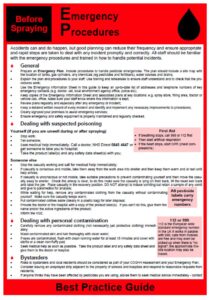
You can download the VI Emergency procedures advice sheet, including an Emergency Information plan, from HERE:
Up to date
Once the plan has been established it needs to be kept up-to-date. The information has to be regularly checked and updated as necessary. All those handling and using pesticides will also need to be updated so they are aware of any changes.
Animal poisoning
Emergency plans must include procedures to deal with an animal/creature that is suspected of being exposed to pesticides. If possible, get the animal away from the contamination and contact a vet. Provide product labels and MSDS where possible.
The Wildlife Incident Investigation Scheme (WIIS) must be contacted on 0800 321600 to report any incident involving any creature, including pets and birds. For incidents involving fish contact the Environment Agency.