Slowly finding its spot
Precise applications using optically guided sprayers to apply chemicals to a patch size less than 25cm, and as small as 4-6cm, offer the potential to cut chemical costs, reduce phytotoxicity and may play a role in protecting active ingredients against future legislation.
While initially promoted as a means to save chemical costs, recent research shows the gains from reduced phytotoxicity from selective herbicides produce much higher returns.
Syngenta trials in Germany tested spot spraying sugar beet from a ‘prescription map’ from images scanned by drone – rather than spot spraying in real time. This technique generated huge gains with the chemical savings of up to €45/ha (£38/ha), but these were dwarfed by up to a €300/ha (£250/ha) benefit from a 10% increase in sugar yield, due to reduced phytotoxicity compared with blanket spraying.
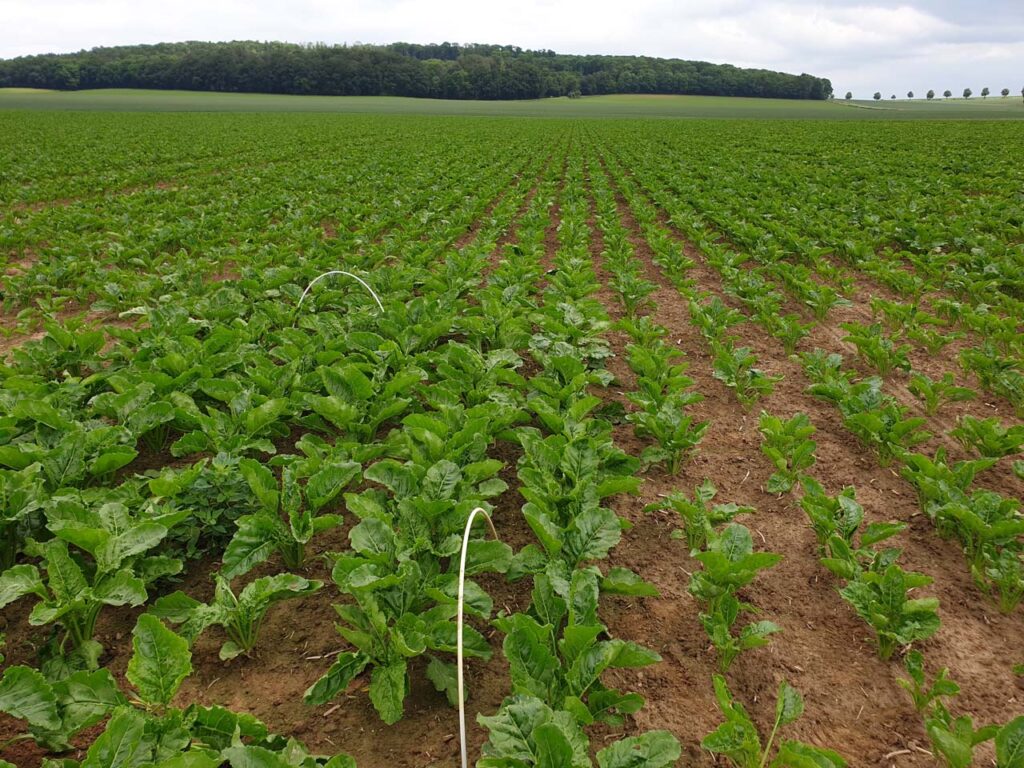
The stunted crop (right) clearly shows the phytotoxic effect of the conventional treatment, compared with the spot sprayer crop (left).
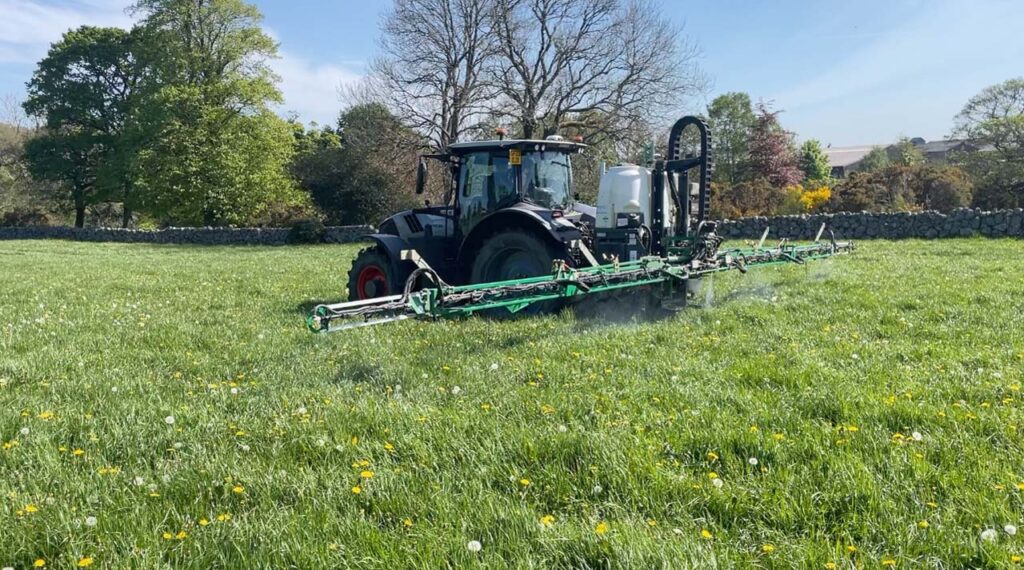
In Ireland the Syngenta study employed an on-boom crop scanner and real time spot spraying to control weeds in grassland. It produced considerable chemical savings, but the higher economic benefit came from up to 30% increased grass yields – compared with a blanket selective herbicide application.
Specialists lead the field
While all the main manufacturers now offer some form of on-boom camera/sensor systems for conventional sprayers, the most progress in the UK is being made by specialist machines or adaptations.
Weed Wizard
Developed and manufactured by Techneat Engineering and software specialist Tillett and Hague Technology, Weed Wizard is aimed at contractors and growers of onions, leeks and carrots.
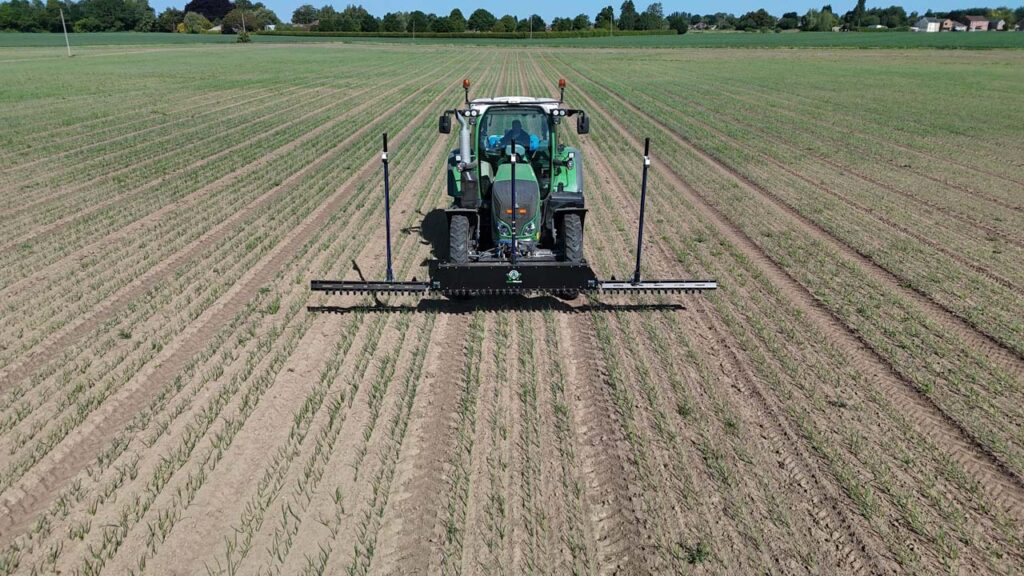
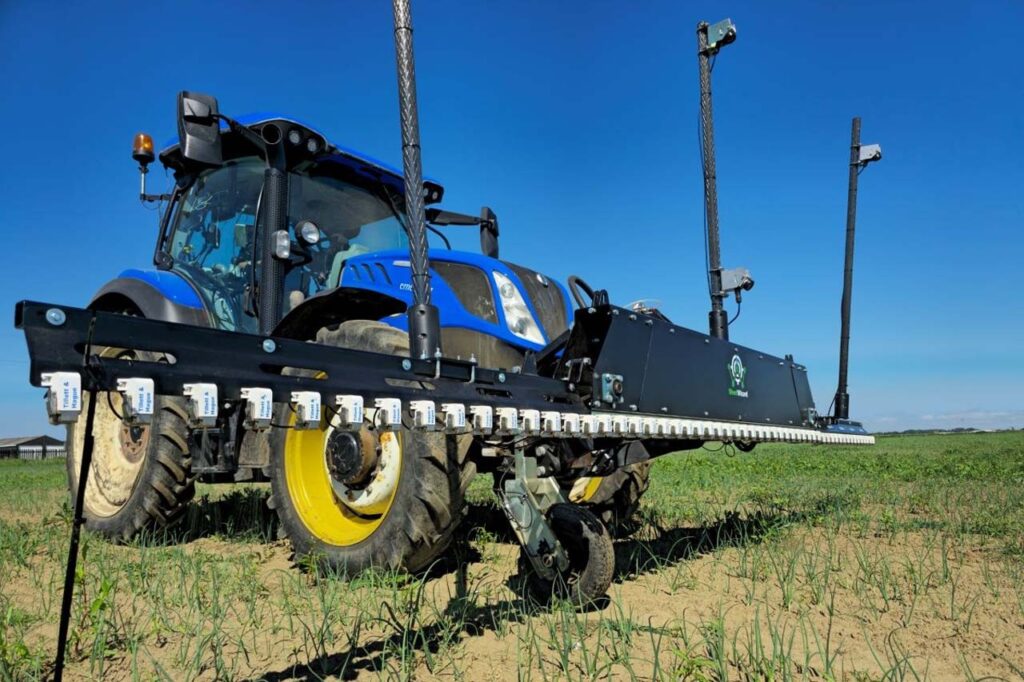
It is designed to differentiate the weeds from the plants and target them accurately with selective herbicides.
“A blanket application to onions takes the wax off the leaves, so you can’t apply any other products for two weeks without damaging them. After spot spraying, you can go in with other applications as required,” explains product specialist James Everitt.
Using high-speed, narrow jet nozzles spaced every 100mm across the full width of the boom, Weed Wizard’s three-camera system identifies and tracks weeds as they come into view, applying spray onto each weed as it passes under the nozzle.
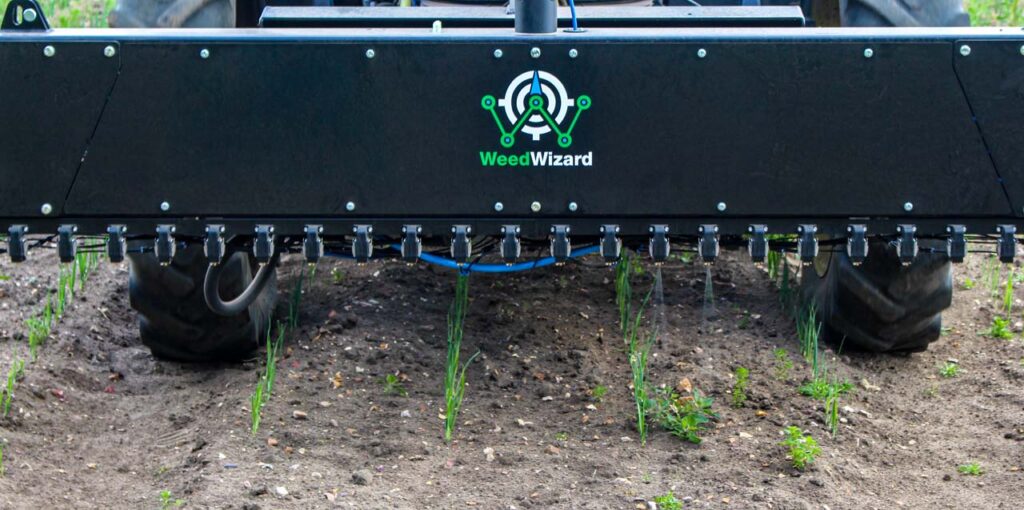
Weed Wizard is configured for a three-bed system with a working width of 1.83m. It now uses Techneat’s own design of narrow 15° nozzles for better chemical-to-weed contact. Recent updates include the ability to adjust the boom height, improved weed recognition, updated software as well as changes to the side-shift system.
Spot on for onions
Martin & Sons of March, Cambridgeshire purchased a Weed Wizard to use on 34ha of onions, part of a rotation that includes cereals, potatoes and sugar beet.
“We make three applications during the growing season with the Weed Wizard, and by targeting only the weeds we avoid knocking back the crop growth. This also helps the onions mature more quickly,” says Andrew Martin.
“The weeds need to be big enough for the cameras to pick up – spot spraying is best for targeting larger weeds rather than a mat of small weeds, so an overall spray is applied soon after planting to gain the initial control,” he adds.

The software can be set to put the onion rows in an ‘exclusion zone’ – used at the early stage of crop growth – or to limit the target size to hit the weeds in a small area around it.
Andrew says initially it is difficult to exactly calculate the total spray volume required, but this becomes clear after a few applications. “Savings on chemicals are significant because we are only spraying 1.5%-2% of the field now,” he comments.
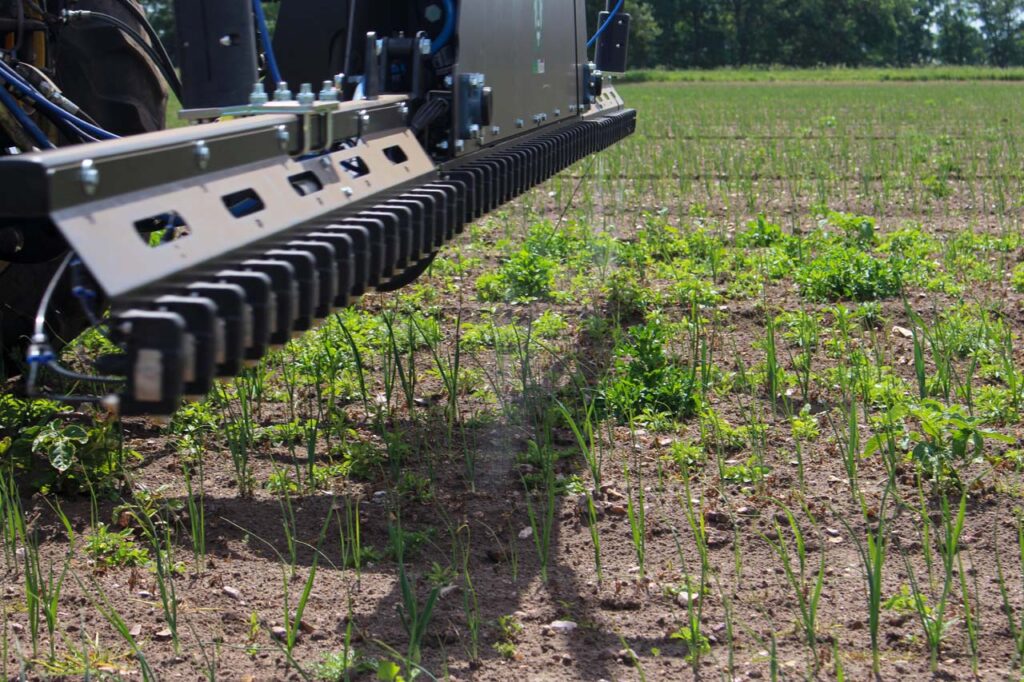
Yield benefits are more difficult to quantify without specific trials, but he suggests that the stronger onion plants are also more resistant to disease.
“It’s the right way to go, a grant helped with purchase but with the significant investment required, it’s going to be most suited to high value crops. We would consider using the Weed Wizard on our sugar beet when the algorithms are ready for that crop,” he says.
SoilEssentials SKAi
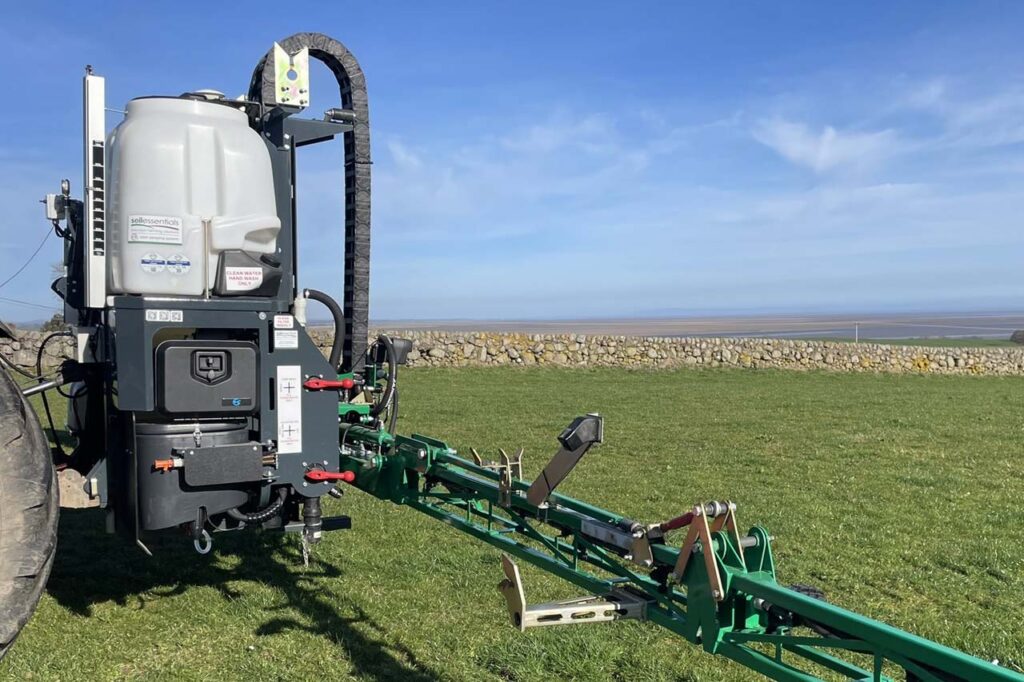
Developed by SoilEssentials and fitted to machines built by Team Sprayers, the SKAi system has been trained to work in a range of weed and volunteer plant situations – initially docks in grassland and now extending to other crops.
It uses ‘green on green’ AI to detect weeds and real time spray control to target only these weeds, protecting swards and clover. A tablet interface is used to monitor the operation and for cloud-based technical support.
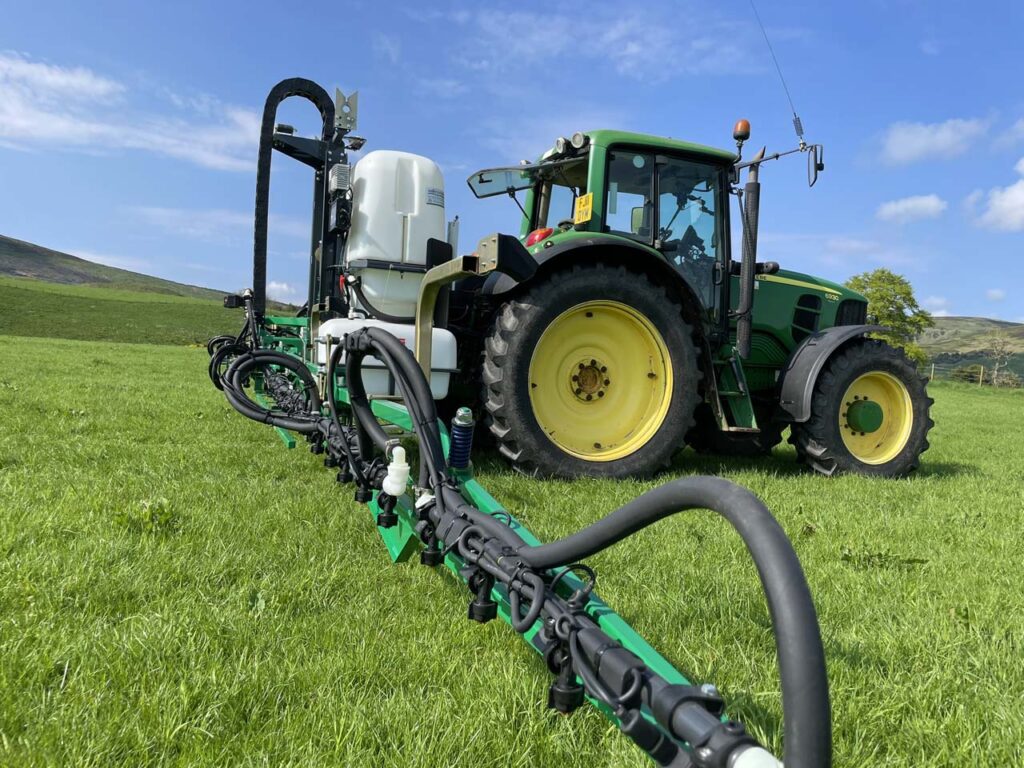
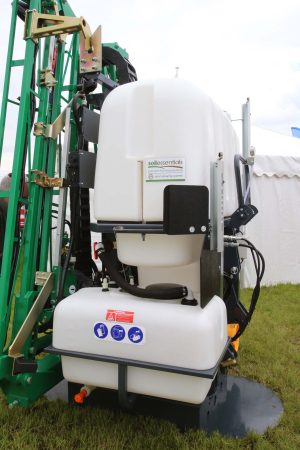
Water is held in 1,000- or 1,800-litre clean water tank, with a separate 200-litre spray mix tank, which makes it easier to estimate the amount of chemical required for the operation. The system can operate at up to 10km/h where large weeds are present in good light and smooth fields.
A new 24m working width SKAi sprayer is now available, alongside the existing 12m and 15m systems.
The AI recognition software has been expanded to include thistles, plus test targets in nettles, ragweed and soft rush. Recent updates for vegetable growers include models for onions, sugar beet and broccoli and for targets such as volunteer potatoes, thistles and groundsel.
SKAi can also be retrofitted to other brands of sprayer.
Spot spray contractor
SKAi user, Alistair Kingan, has a beef finishing unit at Kingan Farms in Dumfries and Galloway over four sites, is also offers contracting services.
“We wanted to find a niche market for our services, and there has been a lot of reseeding carried out in the area, so farms have good clover populations that they want to protect while controlling docks.”
He explains that blanket sprays were only carried out every two to three years to avoid knocking back the clover too much, but he can spray every year with the SKAi, keeping on top of the weeds.

“The docks need to be large enough to target and good weather is important too,” he explains. “It’s possible to adjust the tolerances to the weed size, and the algorithm now includes thistles, which is useful as they seem to be more of a problem than even docks after a reseed.”
While the crop effects are significant, Alistair reckons that chemical savings are also a benefit – using 15 litres of product for 70ha compared with 130 litres for a blanket spray.
Alistair’s service includes supply of the product as well as application but, he notes, dosage recommendations are not yet easy to come by for spot spraying.
“It’s simple and straightforward to use and links to the tractor GPS,” he adds. “Washing out is also easy because the main tank holds only clean water.”
Alistair has covered some 600ha with the with the SKAi, which has a 15m wide boom but, he says with hindsight, the new 24m model would have been better. “We are considering also having the system retrofitted to our 24m Horsch trailed sprayer next year.”