Safe and faster filling
Label requirements and substantial grants from government and water companies are focusing more attention on Closed Transfer Systems (CTS), which safely dispense products in a completely sealed loop.
Research shows CTS cuts operator exposure to pesticides by up to 98% and has a significant impact on reducing point source contamination, which is responsible for between 40% to 70% of pesticides found in surface waters.
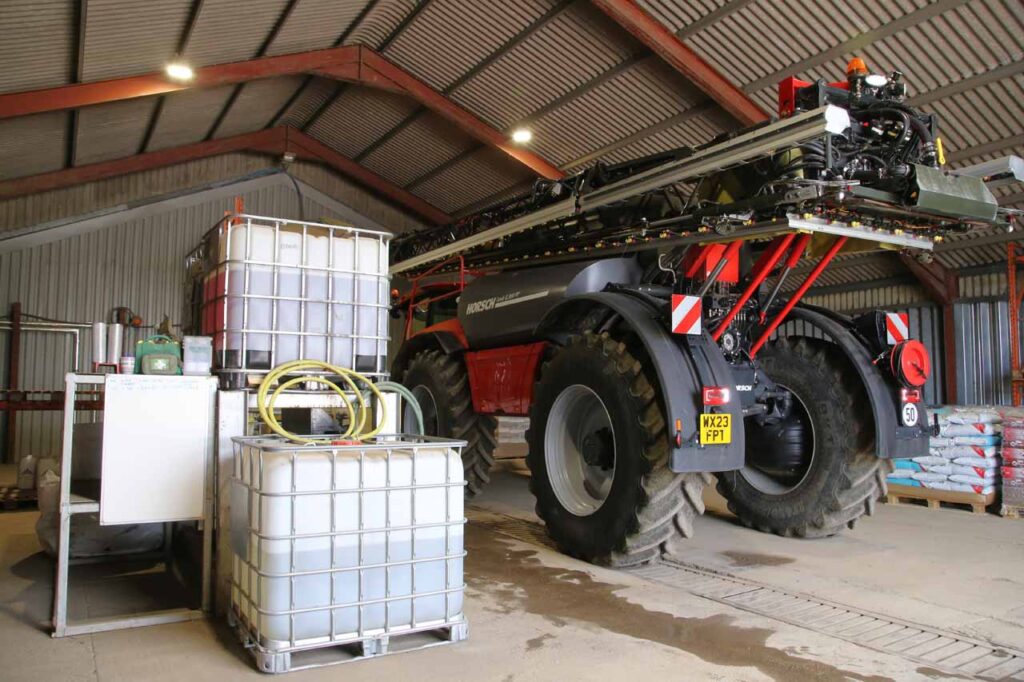
Experienced users also add CTS is not only much safer for themselves and the environment, it also makes filling faster and easier. This is particularly the case when making a switch to using bulk deliveries in IBCs, which require no manual handling and, because they are returnable, there’s not disposal issues to worry about.
Currently there’s burgeoning interest in CTS for dispensing products from IBCs, using the Wisdom Systems FasTran 850.
“When reapproval for Crown MH was granted by CRD in 2020, it required a container with a top-mounted discharge valve for use with a closed transfer,” explains Nick Badger, who has focused solely on CTS for Frontier for the past three years.
“This wording now applies in approvals for all plant crop protection products supplied in IBCs,” he adds.
Grant funding
Demand is being driven by operators, assisted by 50% government grant funding for the past two years, as well as other support from water companies, he continues.
“Crown MH is a popular product and can be applied at rates of up to 11 litres/ha. For operators, filling from an IBC is considerably easier and safer than lugging 20-litre cans about and carefully pouring into the induction hopper can be a real strain, bearing in mind that each weighs 24kgs,” adds Nick.
Proven CTS technology
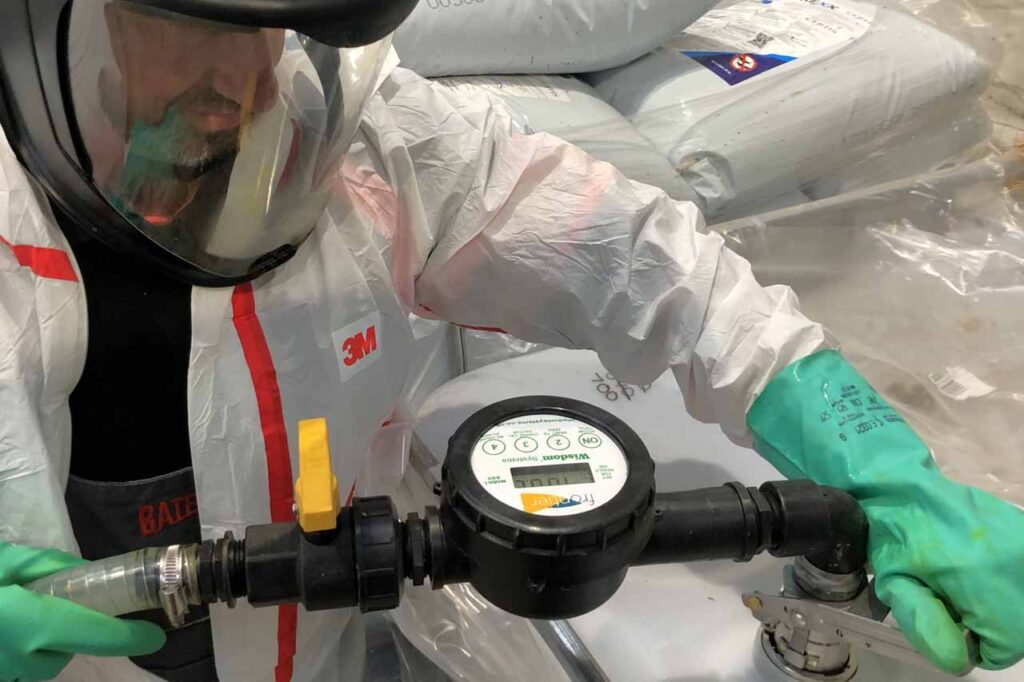
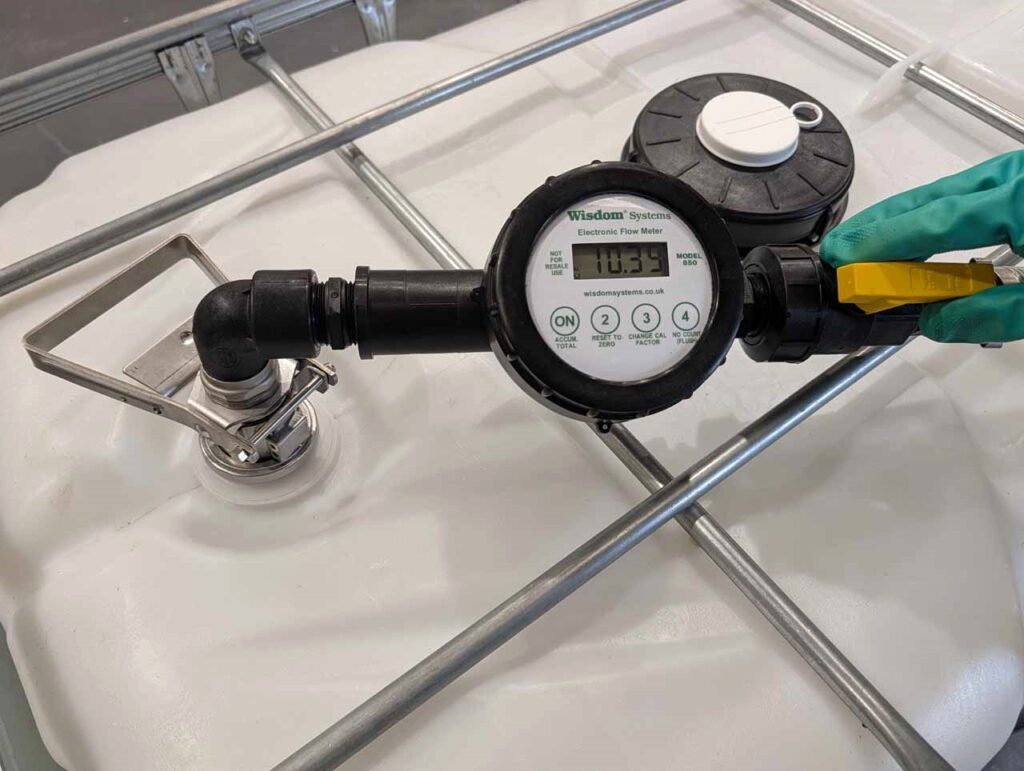
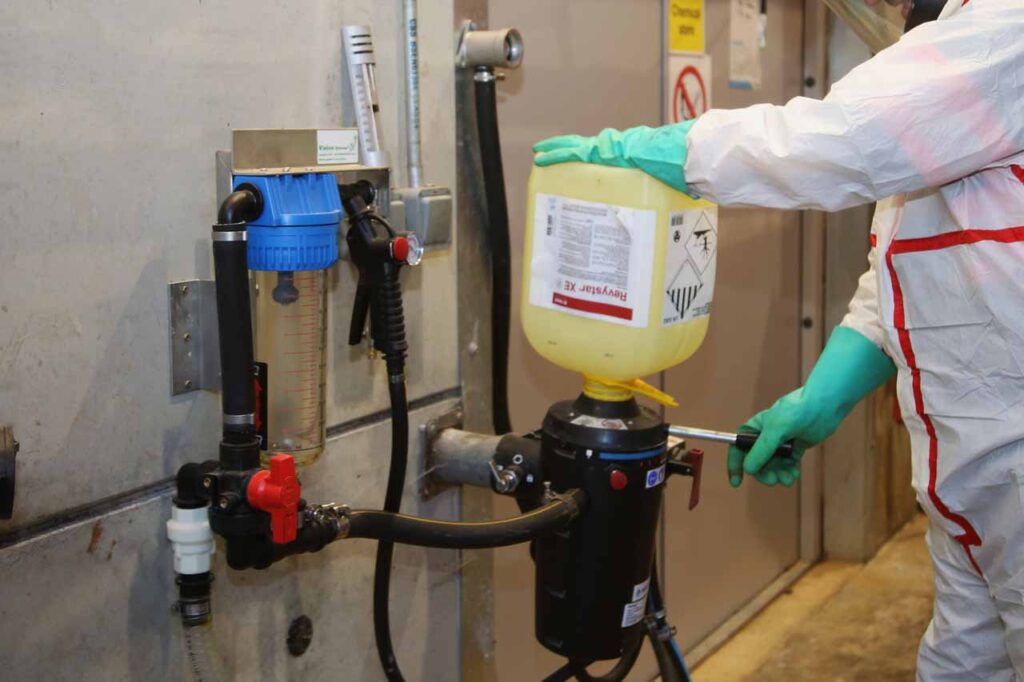
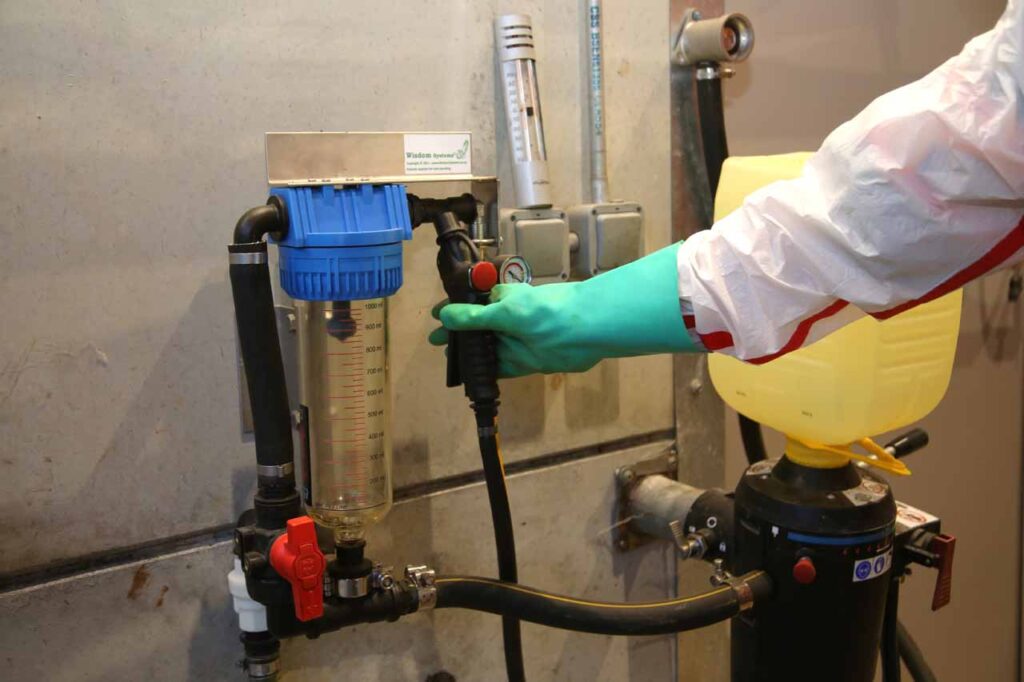
The most common CTS for filling from IBCs is the Wisdom Systems’ FasTran 850, which connects straight onto the ‘dry break’ coupling pre-installed on top of the IBC.
Liquid is drawn from the IBC through pipework plumbed directly into the sprayer’s induction venturi. This connects to a dry break coupling on the sprayer, and if not fitted as standard, can be specified as an option on most modern machines.
Operators need to key in the ‘Cal Factor’, which is printed on the IBC product label. This is to calibrate the digital flowmeter, which is accurate to -/+ 0.5%, to match the product viscosity.
Rinsing involves simply drawing in clean water through the CTS and back to the tank.
Committed to CTS
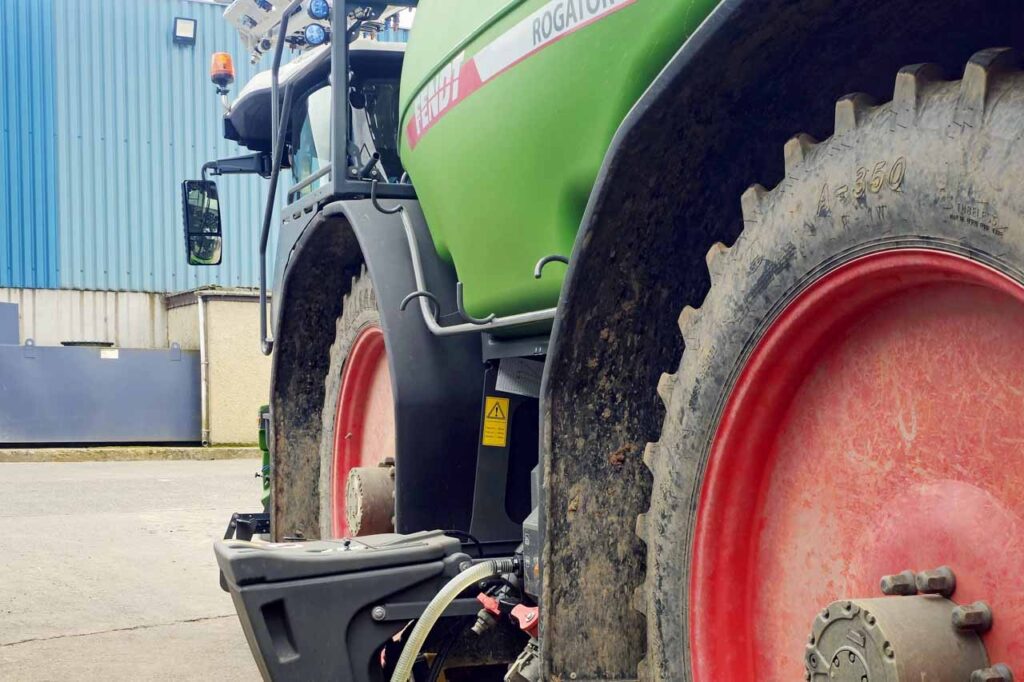
With a busy schedule spraying predominately potatoes and cereals for W.R Logan, based at West Garleton, Haddington, E.Lothian, Danny Milazzo is completely committed to using IBCs and filling using a Wisdom FasTran CTS system.
He operates a nearly one year old Fendt Rogator 655, which is fitted with the Ecofill option, enabling the CTS dry break coupler to plug straight into the filling station.
“It’s much easier than filling from containers as well as being faster and safer for me and the environment. We unload the IBCs with the forklift and I don’t have to manually handle products in the store,” explains Danny.
Products are supplied by Frontier and he always specifies them in IBCs if available. This now includes Crown MH, Roundup Energy and Stabilan as well as trace elements.
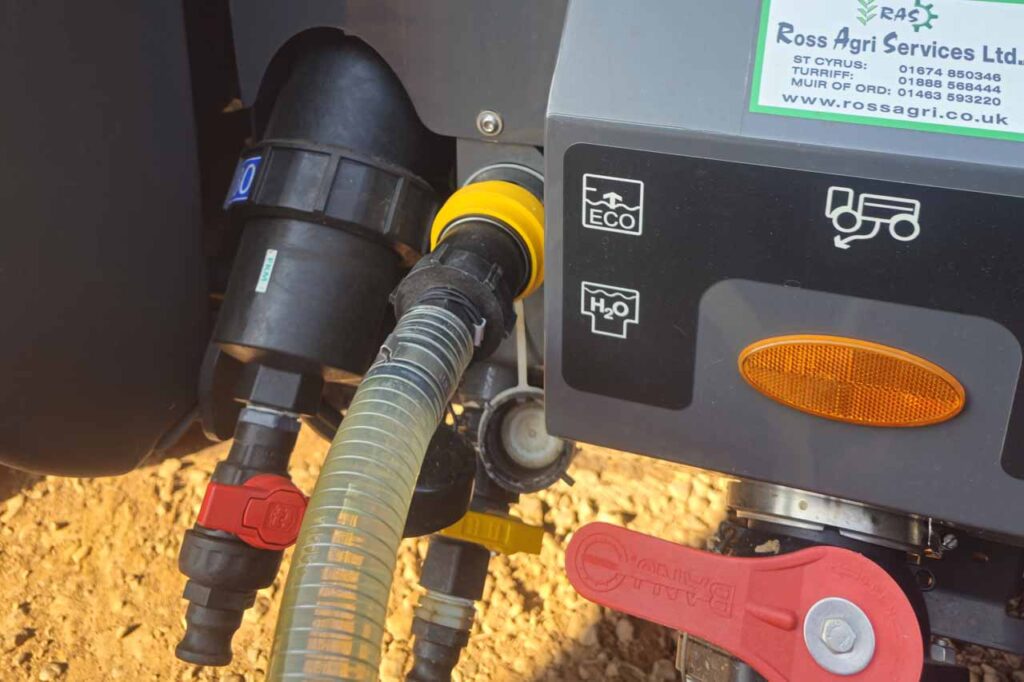
“It is so easy to use – it’s about working smarter not harder. Simply connect up, put in the Cal Factor and that’s it. I’ve heard people say it’s slow, but I think that depends on your filling pump – mine’s very fast. Besides I am not lifting containers and have time to do or check other things.”
Rinsing the system is also quick and easy, he adds. “I fill the induction hopper with clean water and place the CTS intake hose into that and it draws the water through and back to the tank.”
Standardised caps
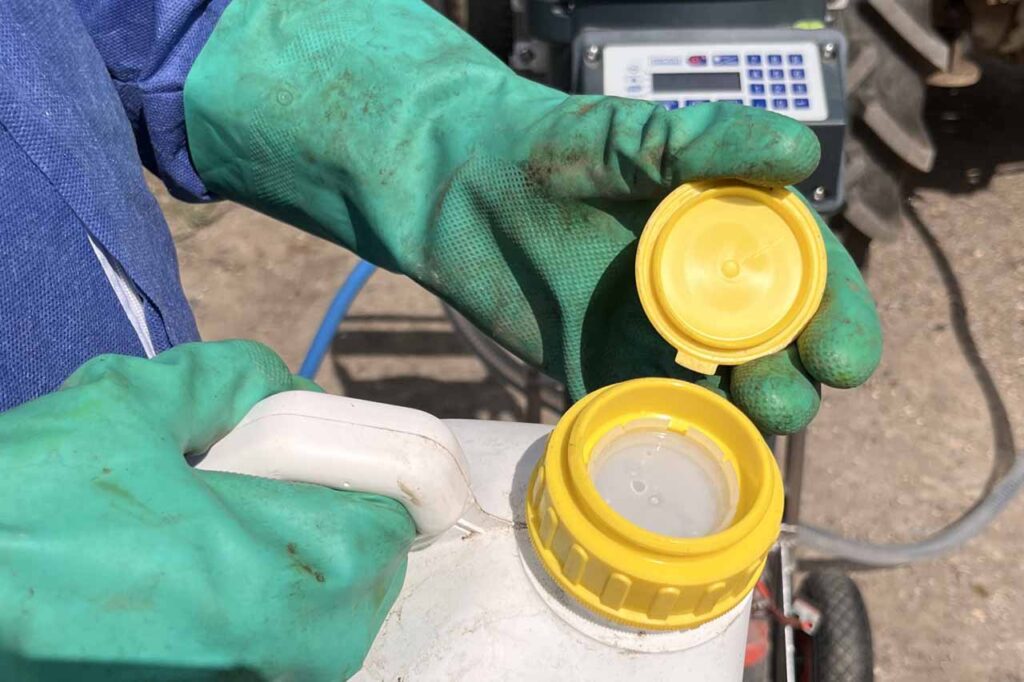
More than ten of the industry-leading chemical manufacturers have already committed to fitting the ‘easyconnect’ cap on their containers up to a maximum of 20 litres. This provides the standardisation required for universal adoption by users and the specifications to which manufacturers can design new closed systems.
Mechanical operation
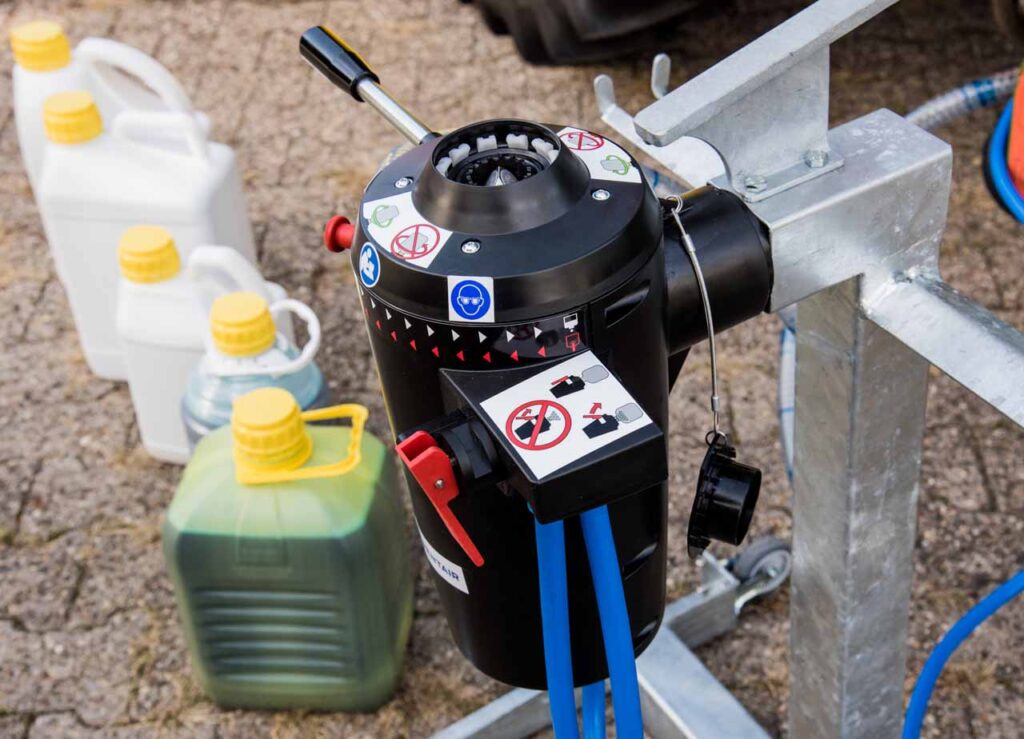
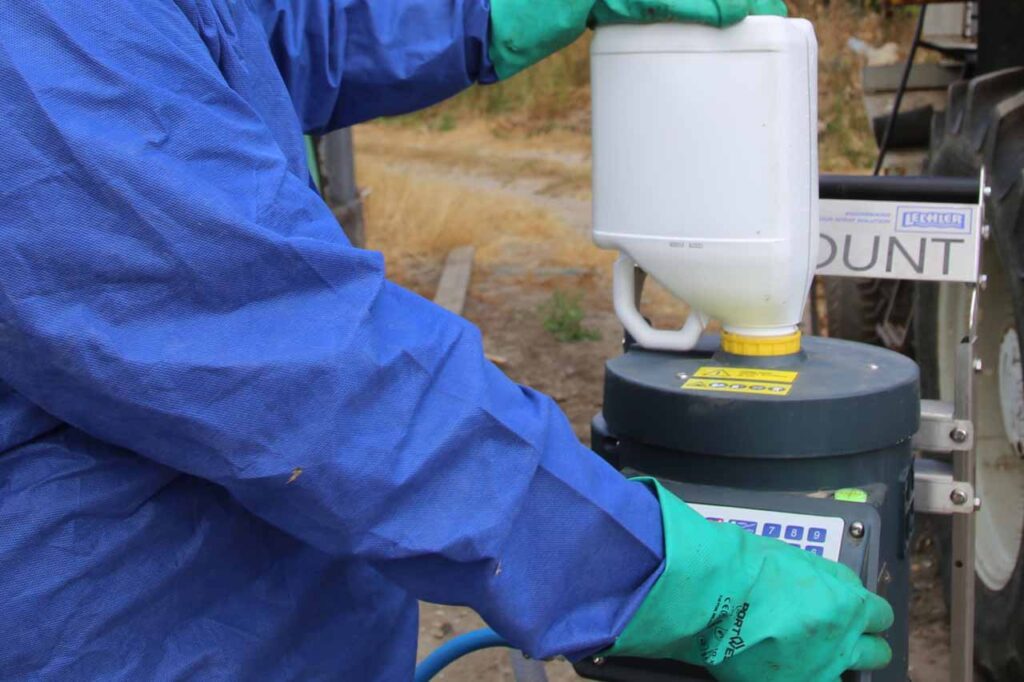
Designed for use with standard ‘easyconnect’ caps and up to 15-litre containers, the Cleanload Nexus from Pentair is entirely mechanically operated using just two manual controls. After using a lever to lock the cap in place, this can then be rotated to control the emptying rate, which is between 0.5 and 1 litres/sec, depending on liquid viscosity.
Safe and fast
Iain Robertson has closely followed CTS developments since first attending a workshop to assess equipment for the ISO standard, as well as partaking in contamination trials.
He has tried a wide range of prototypes and now uses a Pentair Cleanload Nexus for all his work for a large farming business in the west country. He also uses a Wisdom FasTran for filling from IBCs.
“I like the Pentair system because it is simple, proven, mechanical technology. There is nothing on it that is not easy to fix – so it won’t hold me up. CTS is easier and faster than pouring from containers – allowing me to complete one more load a day. I have a routine – after the can empties I turn on the rinse, rotate the can and then remove it to drain. The next can is ready and goes in place and as it is decanting I get the next one ready. Basically three things are happening at the same time. The whole process takes 30secs to a minute to complete.
“It is also much safer. I took part in the contamination trials. Even though I am very careful when filling using an induction bowl, I was astounded by how the trials revealed how CTS cut the amount of contamination it detected on my PPE compared with pouring,” he says.
Iain says measuring out part cans is not as difficult as often reported. “If the measurement is more than 1 litre I used the scale on the container. For smaller volumes I have a Wisdom Measure unit for the Cleanload Nexus. Like many operators, however, I try to work out the loads so I don’t need to use part cans,” he explains.
Keypad control
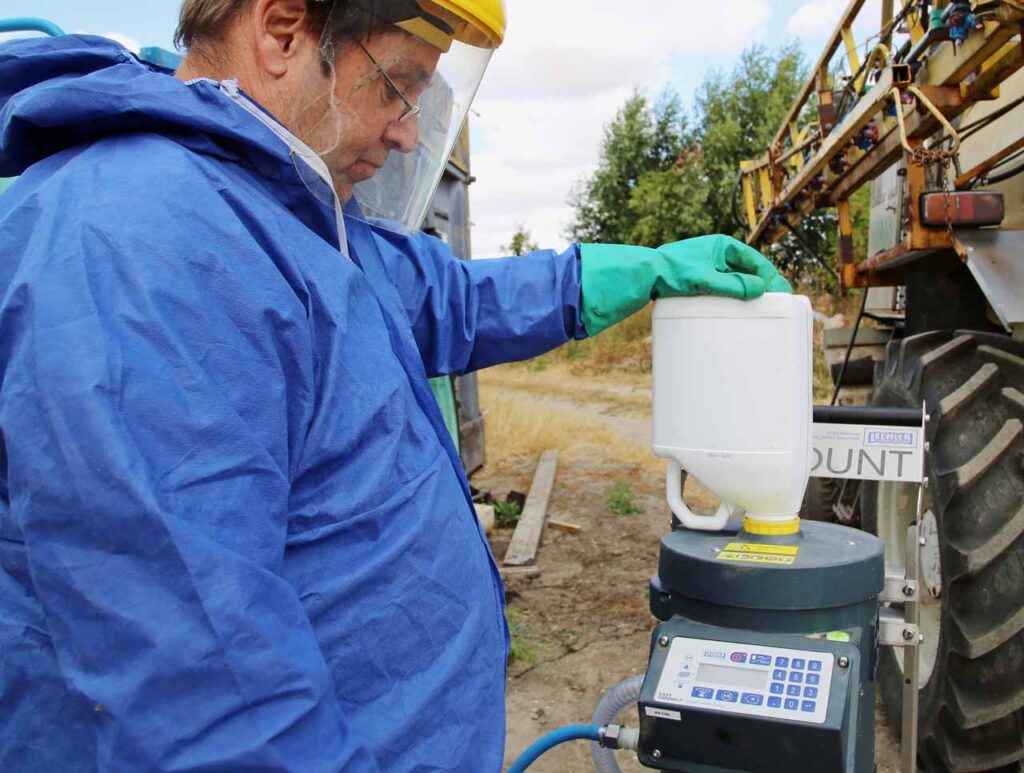
Also designed for use with easyconnect caps and 1 litre to 20-litre containers is the Lechler XAMOUNT. It is electrically powered, operated on a keypad and measures part loads by weight, not volume to an accuracy of +/- 2.5%, which is not influenced by the liquid’s viscosity.
While it needs calibrating with the specific weight for each product, Lechler explains this is found on the Safety Data Sheet and, in future, will be listed on its own App.
Containers are rinsed by water injected via the extraction probe, which is equipped with two, angled rinse nozzles. These also rotate and move up and down to rinse the container’s internal surfaces.
Simple measuring
Gary Lander, who farms cereals on a small farm in Lode, Cambridgeshire is one of the first users of the new Lechler CTS unit. “I’m now spending more time on the farm after previously being part-time. I needed to update my spraying set-up and was able to obtain a 50% grant from Anglian Water to help buy the unit,” he explains.
“I also advise other farmers and agronomists about application technology and have tried all the CTS systems. I chose the Lechler because of the ease to dispense part cans. My area is too small for IBCs and I often have to measure smaller quantities. I’ve not had a problem finding the specific weights on the product safety data sheets.
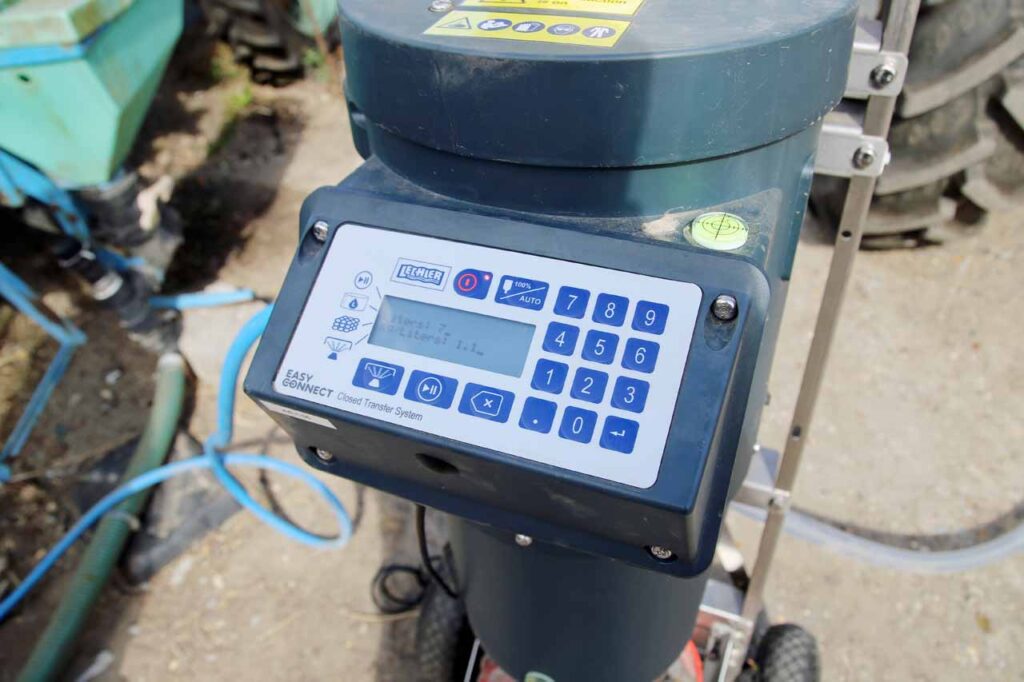
“I appreciate it needs to be kept steady and requires power, but I’ve mounted it on a trolley with a 12V battery. The only other alteration was to fit the dry break coupler onto the sprayer,” he explains.
He says he finds it easy to use. After placing the container onto the connector and pressing start on the keypad, the system automatically pulls it into position.
“Then I can choose to empty a full can or I key in the amount required and press ‘enter’. After the can’s dispensed, it’s rinsed with a rotating probe or it closes the cap and washes the coupler on a part can,” he adds.
Electronic control
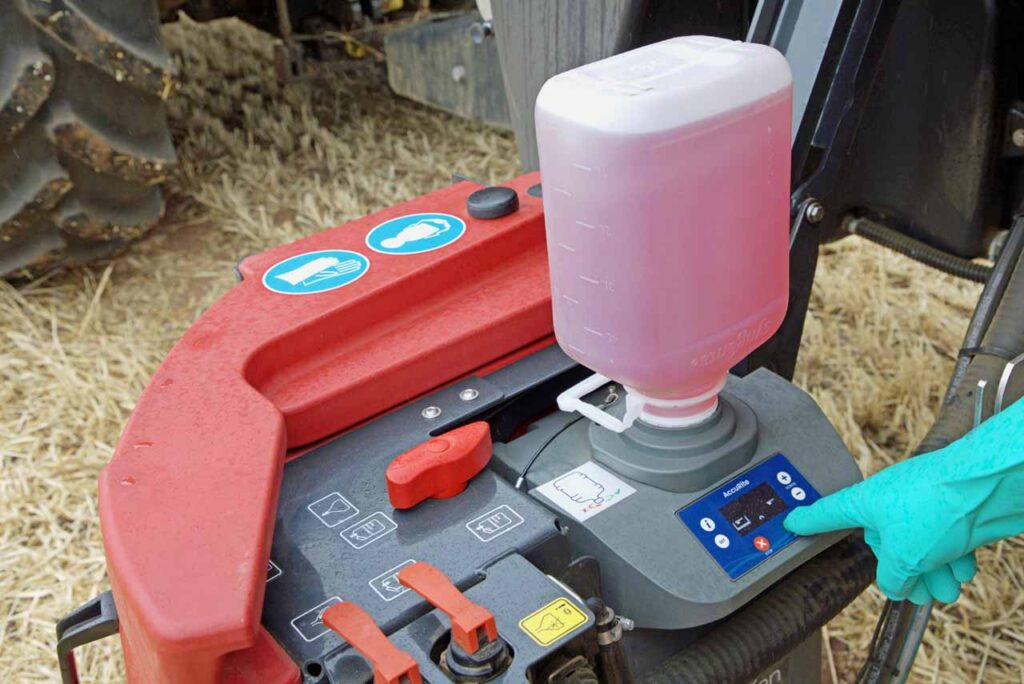
A further option is the Tefen AccuRite system, it’s currently being demonstrated on a Kverneland sprayer, but as yet, there is no UK distributor.
Fully electronically controlled, the system works with easyconnect caps and with containers from 1 litre to 20-litres. It runs automatically and dispenses either the entire contents or partial loads in 10ml increments to an accuracy of +/- 2.5%.