How to find what you need
While few operators are likely to consult the HSE website out of curiosity, it does play a fundamental role in the authorisation, guidance and monitoring of pesticides.
While there is a substantial amount of information on the HSE website, finding what you want to know can be a little tricky. While you can use a search engine, like Google to search, unless you know exactly what you are looking for you are unlikely to find it.
Here we provide some direct links to the most important information to stay legally compliant when handling, using and storing products.
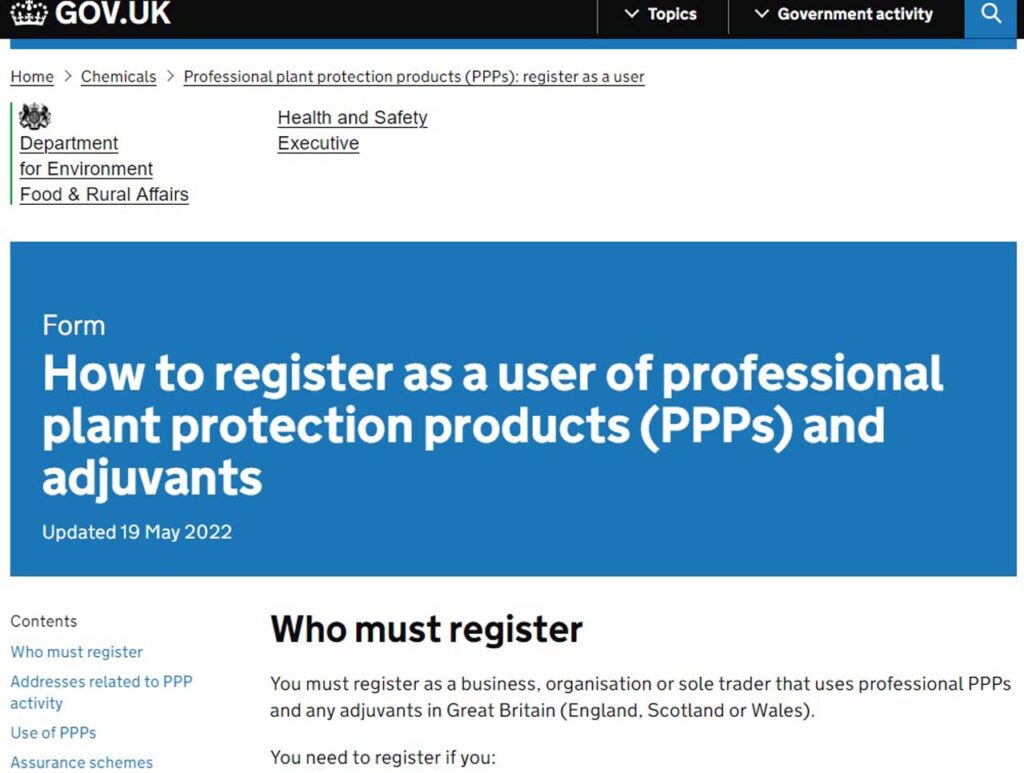
Professional User Register
Since June 2022 all users of plant protection products (PPPs) must have registered their storage and use on an HSE database. Results from recent inspections, however, show the failure to register is one of the most common non-compliances.
Who needs to register?
- If you use professional PPPs as part of your work
- Have professional PPPs and any adjuvants applied by a third party as part of your work in agricultural, horticultural, amenity or forestry.
What do you need to register?
- Your name
- Your business address
- Information about the PPPs you use and/or store in a typical year.
How do you register?
Full details on how to register are available HERE:
Pesticide Register Database
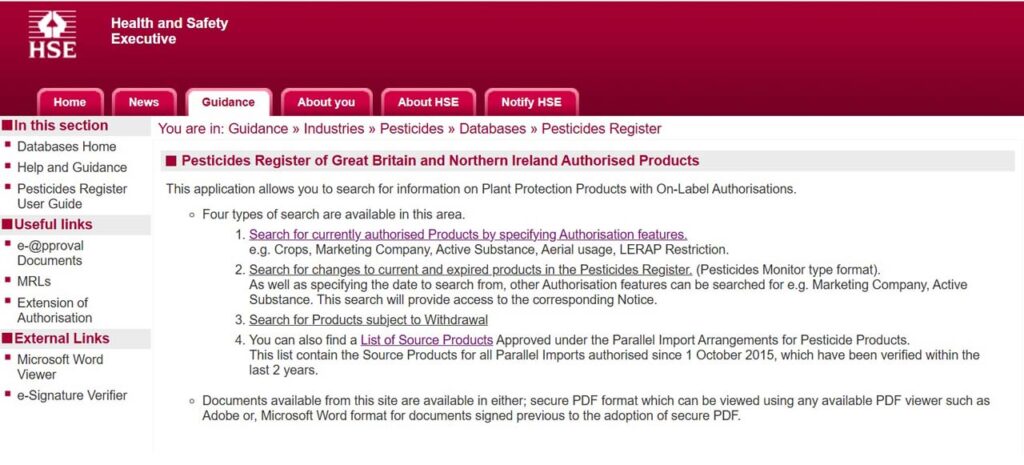
The ‘Pesticide Register’ database can be used to check individual products by inputting one or more of its details. The easiest way to search for a product’s details is to input its MAPP number into the database and hit the ‘get results’ button.
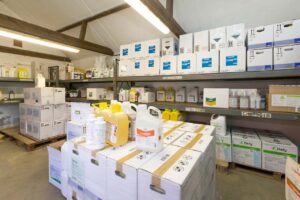
It is illegal to hold any withdrawn products in a pesticide store. Operators must regularly check stores for any that are soon to be withdrawn and ensure they are either used by the appropriate date or disposed of correctly.
To access the register, click HERE:
EAMU database
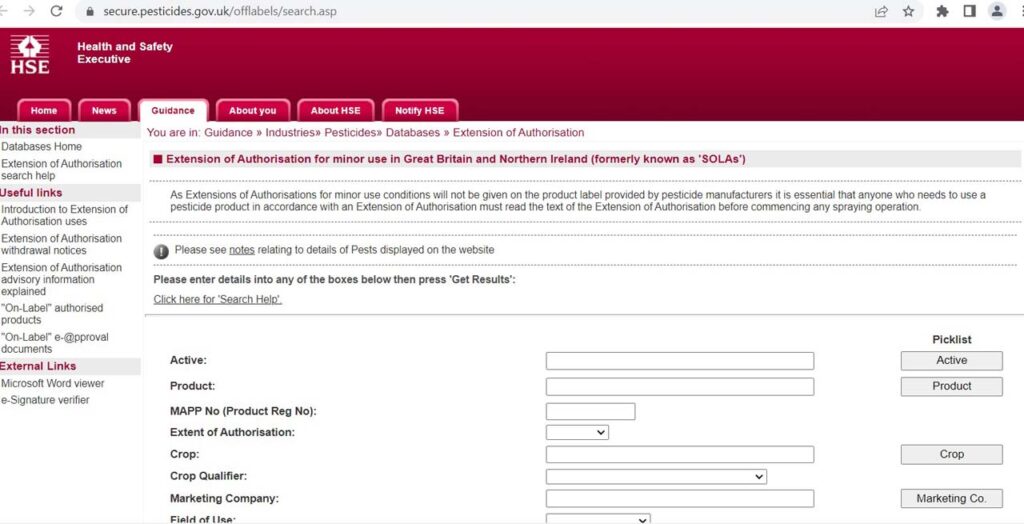
An ‘Extension of Authorisation for Minor Uses’ (EAMU) allows products to be applied to crops and in situations that are not given on product labels. This document details the terms of the extension and provides statutory information operators must follow, such as maximum dose rates (litres/ha), number of treatments, etc for the individual crops.
Agronomists typically provide EAMU details on any recommendations for treatments, but operators should be aware of the conditions laid down for the individual EAMU approvals. Operators must also record all details of an EAMU application.
All relevant details can be found on the EAMU database, which is also linked to the product database, HERE:
LERAP
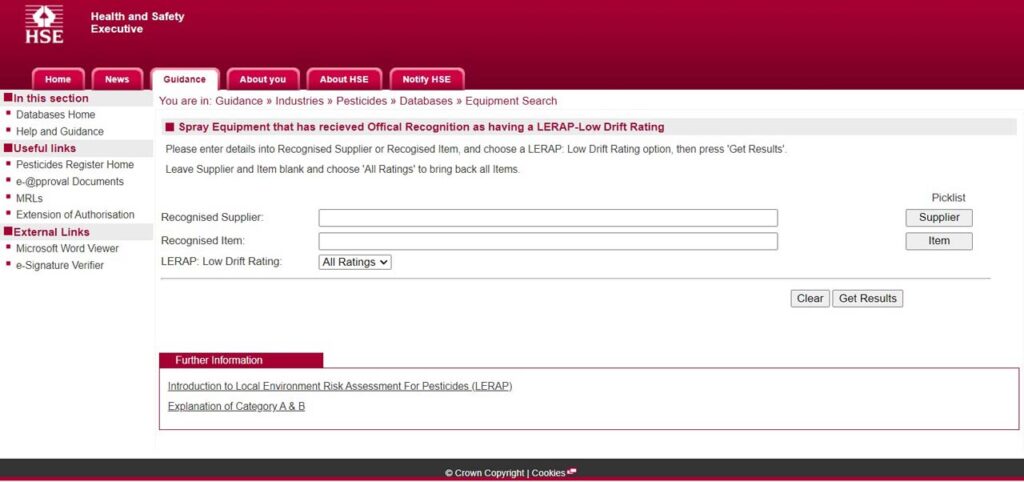
Operators should be aware of the need to ensure they are following label buffer zone requirements for protecting water when applying pesticides to adjacent areas. If you wish to reduce the size of the buffer zone on the label you must undertake a Local Environment Risk Assessment for Pesticides (LERAP).
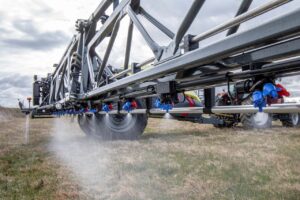
Many operators will be aware of the use of star rating for nozzles as part of LERAP buffer zone reduction planning. These specify the drift reduction potential of a sprayer nozzle: a higher star rating indicates a higher drift reduction potential.
Tested and approved nozzles can be found on HSE website. You will find the star rating of tested machines and/or nozzles, listed according to manufacturer, nozzle type and size and, importantly, the pressure at which it gains the star rating – it can be accessed HERE:
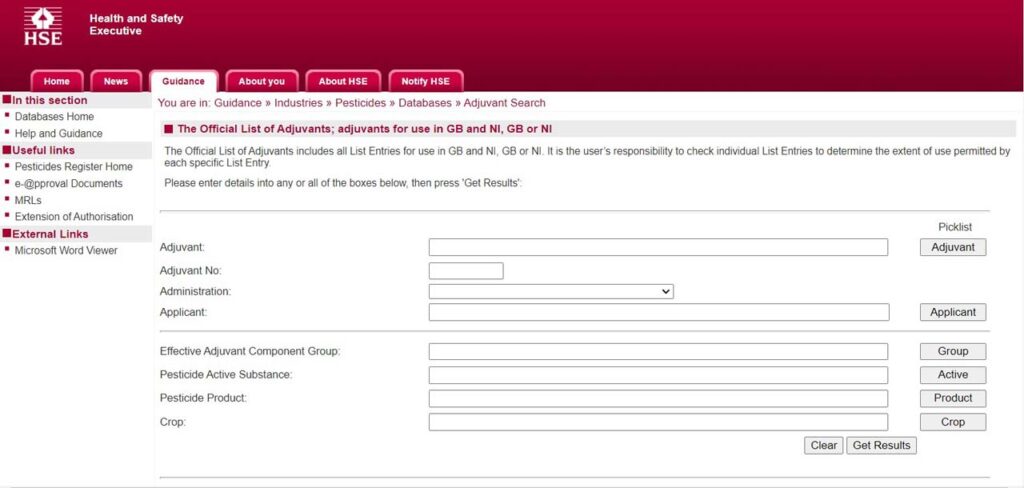
The official list of adjuvants
Adjuvants must be authorised for use in the UK and, like pesticides, the HSE maintains a database of adjuvants, which contains some information about their legal use. It is particularly important to ensure that adjuvants are applied at the correct rate and by the approved latest application date in specific crops.
The Official List of Adjuvants includes all entries for use in GB and NI, GB or NI can be found HERE:
Pesticide code of practice
Everyone involved with pesticides must ensure they follow the requirements given in the ‘Code Practice for the Use of Plant Protection Products’ (CoP). This contains advice on how to comply with the law with guidance on what is reasonably practicable when handling, using and storing pesticides.
The CoP has a special legal status. If someone is prosecuted for a breach of the law, and it is proved they did not follow the Code of Practice, a court can find them at fault unless they can show they have complied with the law in another way.
Print copies are not widely available, but it is available online HERE:
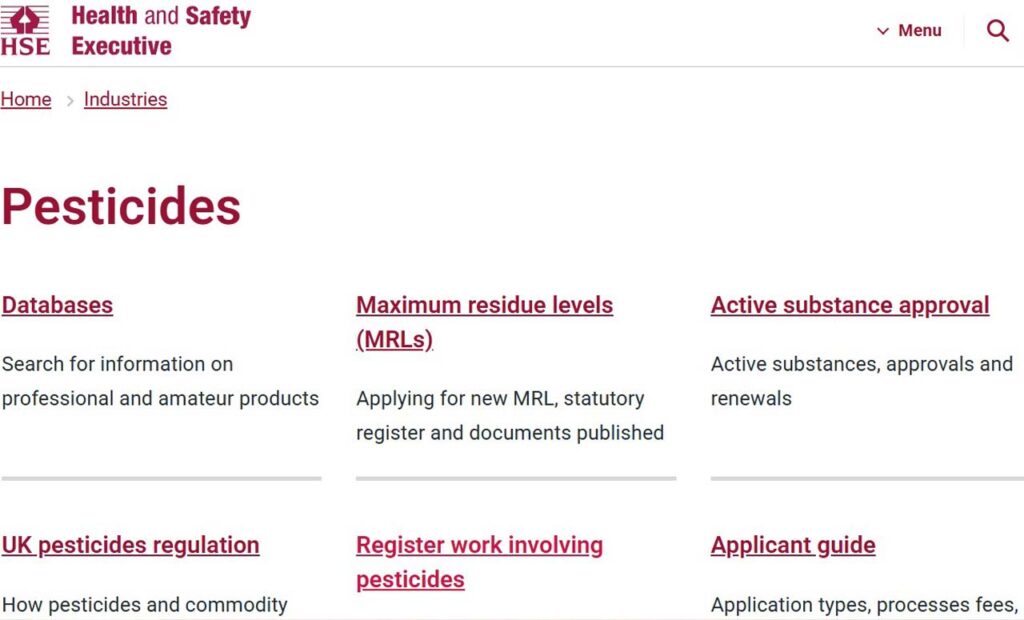
HSE pesticides
For further information about pesticides and HSE involvement the best place to start is the landing page for pesticides which you will find HERE: